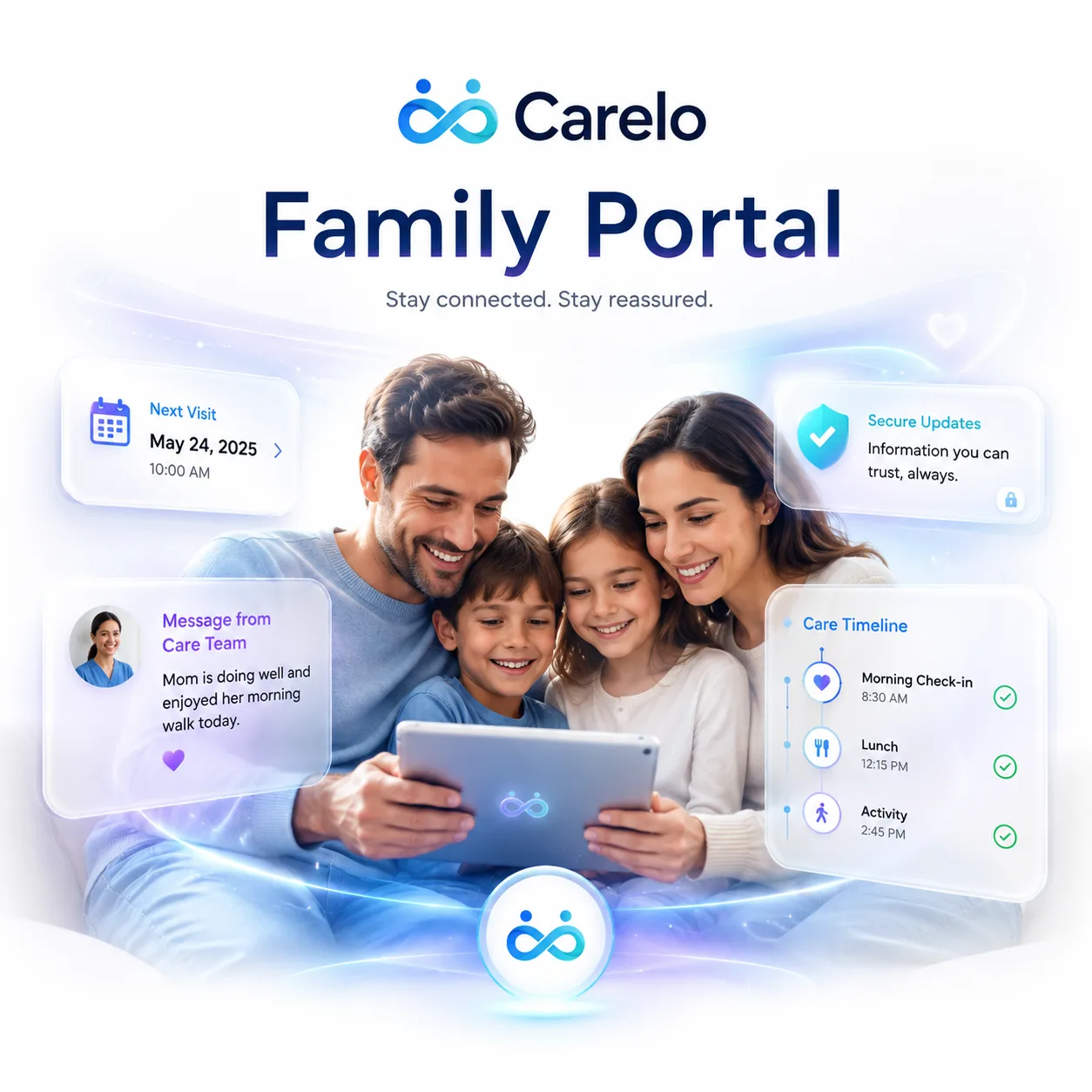
In most families one person ends up running a parent's care: the one who lives nearest, or the one who said yes first. The others want to help and want to know, and the only way they can is to ask. So every evening there is a phone round, and every week a small argument about something somebody was not told. This page is about sharing the care in a way that gives everyone the same picture, every day, without anyone having to relay it.
The sibling who manages the care carries two jobs. The first is the care: the rota, the carers, the medicines, the appointments. The second is the reporting: telling everyone else what happened, answering the same questions three times, and absorbing the worry of people who cannot see for themselves. The second job is the one that wears people out, and it is entirely avoidable, because the information already exists. It is just in one person's head and phone.
What they do not need is the ability to change things. One person runs the rota and the carers; the rest see. That division is what keeps the arrangement calm.
Most sibling arguments about a parent's care are not really about the care. They are about information: who knew what, when, and why someone was not told. A brother who can see for himself that the carer came at 7:31 and that Mum ate breakfast does not need to ask, and does not need to wonder whether he is being told the whole story. The sibling doing the work is no longer the only witness, which protects her as much as it reassures him.
The hard decisions come eventually: more hours, a live-in carer, whether home is still safe. Families decide these badly when each person has a different picture, assembled from different phone calls. They decide them well when everyone has read the same month of notes, seen the same refused doses and the same two falls, and can talk about what to do rather than what happened.
Distance makes the problem worse and the solution more valuable. A daughter in Sydney cannot ring at tea time. She can open an app at her breakfast and read the whole of yesterday. Families with a member abroad often say this is the first time that person has felt part of the care rather than a worried spectator.
One household, one record. The person who runs the care sets up the household, the carers and the rota. Everything the carers record lands in one place.
The family app for everyone else. Each family login opens the Carelo family app and sees the loved ones you choose: today's visits as they happen, every note, the medication log, and a message line to the household. They see; they do not change the rota.
The first login is included. Each extra family login is £10 a month, up to five, and you choose whether you pay or they do.
More than one parent. A household covers up to three loved ones, each with their own calls and record, and you decide which family members see which.
The same evidence for everyone. When a decision is needed, print or export the month and everyone reads the same thing.
Not from a family login. Family logins see the record and can message the household. The person who runs the household manages the rota and the carers.
You choose which loved ones each family login can see. Within a loved one's record they see the visits, notes and medication log.
If she has capacity, yes, and most parents are glad their children can see the care. If she lacks capacity, the person with authority to act for her decides. The record is held for her household, under UK data protection law.
Yes. The family app works anywhere with internet. The record itself stays in the UK.
£30 a month per household, or £288 a year with 20% off, with the first family login included. Extra family logins are £10 a month each, up to five.
£30 a month. Fourteen days free. Set up within one working day.
Start your free trial