After a care assessment the council offers two routes. It can arrange the care itself, usually by commissioning an agency, or it can give you a direct payment and let you arrange it. Families are often told the second is "more work", which is true, and "more flexible", which is also true, and little else. This page sets out what each route actually involves, where direct payments win, where agencies win, and how to have most of the agency's safeguards while employing carers yourself.
A registered agency recruits, checks and trains the carers, plans the rota, covers sickness and holidays, keeps the care record and the medication chart, holds the insurance, runs the payroll and answers to the regulator. You get a service and a phone number. What you do not get is a say in who comes, much control over when, or continuity: many families see a different face most days, and calls are timed around the agency's run, not the person's day.
The same money, or close to it, paid to you to spend on the care in the plan. Most families use it to employ carers directly, often called personal assistants. Because there is no office or margin, the money buys more hours. You choose the carers, so your parent sees the same two or three people. You set the times, so the morning call is when she wakes, not when the run arrives. Carers who are chosen and known tend to stay, and the care tends to be better for it.
The employer duties frighten families most and cause the fewest problems, because there are services to do them. The risk that actually bites is the record. A family that cannot show the hours, the visits and the medication is exposed in three directions at once: to the council at review, to a hospital when something goes wrong, and to a carer dispute about pay or holiday. Agencies keep this record because they are made to. Families have to decide to.
Many families run a mix: their own carers for the regular calls, an agency for nights or for cover. Councils allow a direct payment to pay an agency as well as employ. The practical difficulty is that the agency's record and the family's record are in different places, so nobody sees the whole week. Where the agency agrees, putting its carers on the family's own record solves that.
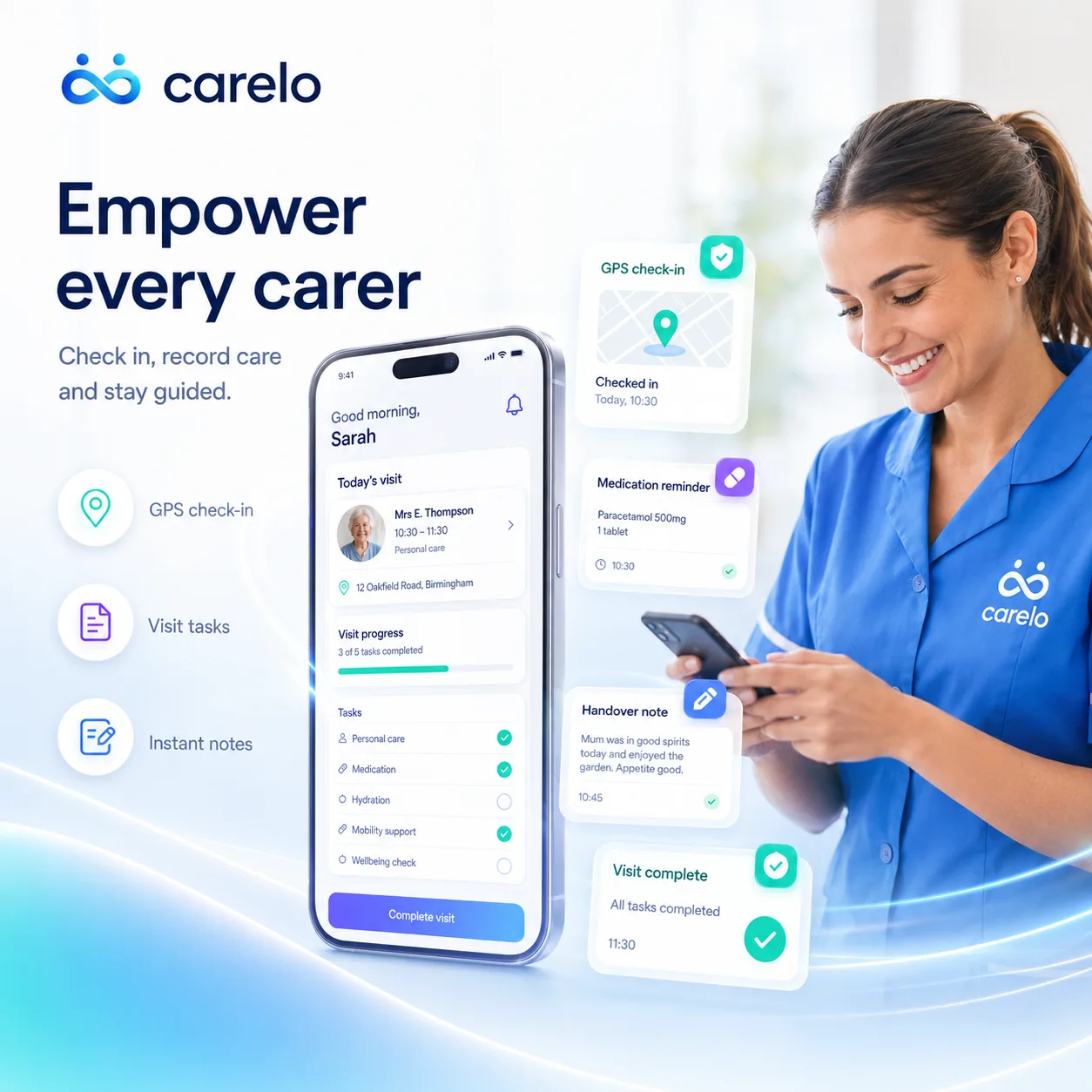
The agency's real safeguards are not the office; they are the rota, the check-in, the note and the medication chart. Carelo's Personal plan is the system UK care agencies use for exactly those things, with the company parts removed and the pages built around one person.
Rota: plan the week once; each carer sees their own calls in the app; holidays approved with the gap shown. Check-in: time and location at your door, with a late call shown while it is happening. Notes: written at the call, read by the next carer and the family the same day. Medication: every dose recorded with initials, the MAR chart there the same day. Hours: timesheets from the check-ins for your payroll service, and DBS and right-to-work dates with a warning when one runs out.
What it costs is £30 a month per household, or £288 a year, against agency rates that charge that for about an hour. Many councils accept it as a cost of managing the care; ask yours.
Yes. Ask the council for a direct payment at your next review or earlier. You can keep the agency during the change and move calls across as you recruit.
Yes. Tell the council and it will arrange care again. Keep the record you built; it helps the agency start well.
It is usually set at what the council would have paid for the hours in the plan. Because there is no agency margin, it typically buys more hours of care, but it also has to cover employer costs such as insurance and payroll, which councils generally include.
You do, with help from the council's support service: references, right to work, and a DBS check which councils strongly recommend. Carelo keeps the dates so you know when a check runs out.
The Personal plan shows a late or missed call on your home page as it happens, so you can ring the carer or a backup rather than finding out at the next visit.
£30 a month. Fourteen days free. Set up within one working day.
Start your free trial