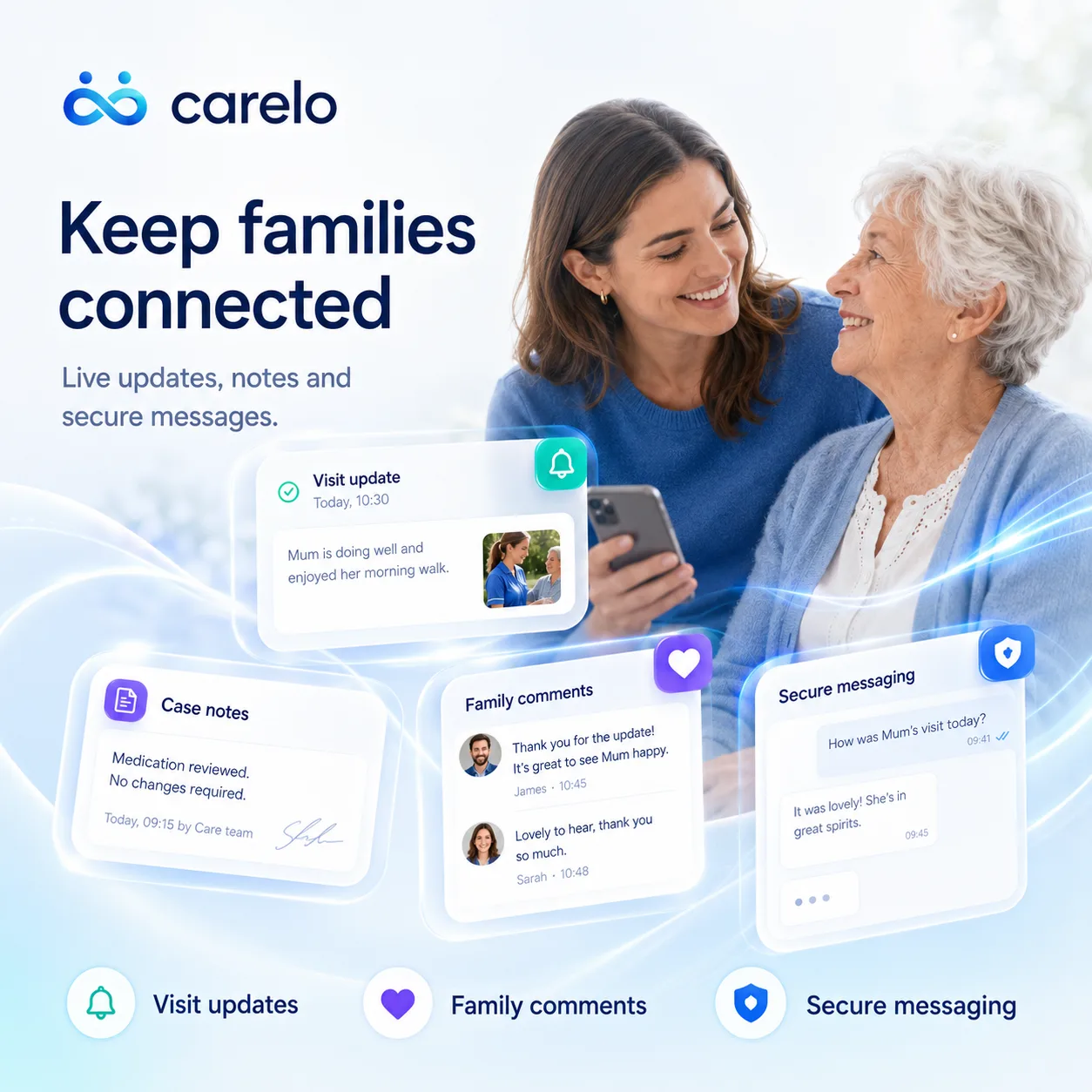
The morning carer saw that Dad was off his food and a little short of breath. The lunch carer did not know, so did not mention it to the family. By the bed call he was worse. Nothing was hidden; the note simply never got from one person to the next. In a care agency this is called handover, and the whole system is built around it. Families employing their own carers have to build it themselves. This page is about the note, where it goes, and who reads it.
Hourly carers rarely meet. One leaves at nine, the next arrives at one. Whatever the first one noticed is in their head on the drive to the next job. Families try to bridge this with a notebook on the side, which is read by whoever remembers to open it, or a group chat, which is read by whoever has their phone out. Both fail the same way: the note is optional, and the reader is optional, so on the day it matters, neither happens.
A good note takes a minute. It is not an essay. "Ate half a sandwich, refused tea, seemed low, said his knee hurt on standing" tells the next carer and the family everything they need.
A group chat mixes the care with everything else: shift swaps, birthday wishes, a photo of the dog. The note about Dad's breathing is forty messages up by tea time. It cannot be searched by date, printed for a GP, or shown to a council review without showing everything else. It is also on each carer's personal phone, with the family's private life on it, after the carer has left. Providers are not allowed to run care this way and families should not have to.
The next carer, before their call. Not at the door, before. The note should be the first thing they open.
The family, the same day. Not a summary relayed by one tired daughter; the carer's own words, read by whichever family member wants to.
The GP or nurse, when asked. A run of notes over two weeks answers "how has he been?" with evidence.
The council, at review. Notes written at the time are the best evidence that the care plan is being met.
A note written at the call, by the carer who was there, with the time it was written, is a record. A note written afterwards from memory is a story. The difference matters when something goes wrong: a fall, a hospital admission, a safeguarding question. Families with notes made at the time can show what was seen and done. Families without them are asked to remember, under pressure, months later.
The note is part of the call. Before checking out, the carer writes what happened in the Carelo app. It is stamped with the time and their name.
The next carer reads it first. Every carer on the household sees the diary before their call: what the last carer wrote, and every note before that, by date.
The family reads it the same day. Every note appears in the family app as it is written. A son in another city reads the morning in the carer's words at lunchtime.
Nothing lives on a personal phone. The record is the household's. A carer who leaves takes nothing with them, and the notes stay.
Print any period. Two weeks of notes for the GP, or a quarter for the council, in a few clicks.
They do when it is part of checking out and takes a minute. Carers who have worked for agencies already expect to. Most families find the notes are better than the ones they used to get in the notebook, because they are written while the call is fresh.
You can message the household and the carers through the app, so a question about this morning's note reaches the carer who wrote it.
The note stands as the carer's account, with its time and name. You can add your own note. A record that cannot be rewritten is what makes it trustworthy to a GP or a council.
If she wants to, yes, through a family login. Many families find it reassuring for the person to see what has been written about them.
£30 a month per household, or £288 a year with 20% off, including the carer app and the family app. Fourteen days free, no VAT added, cancel any time.
£30 a month. Fourteen days free. Set up within one working day.
Start your free trial