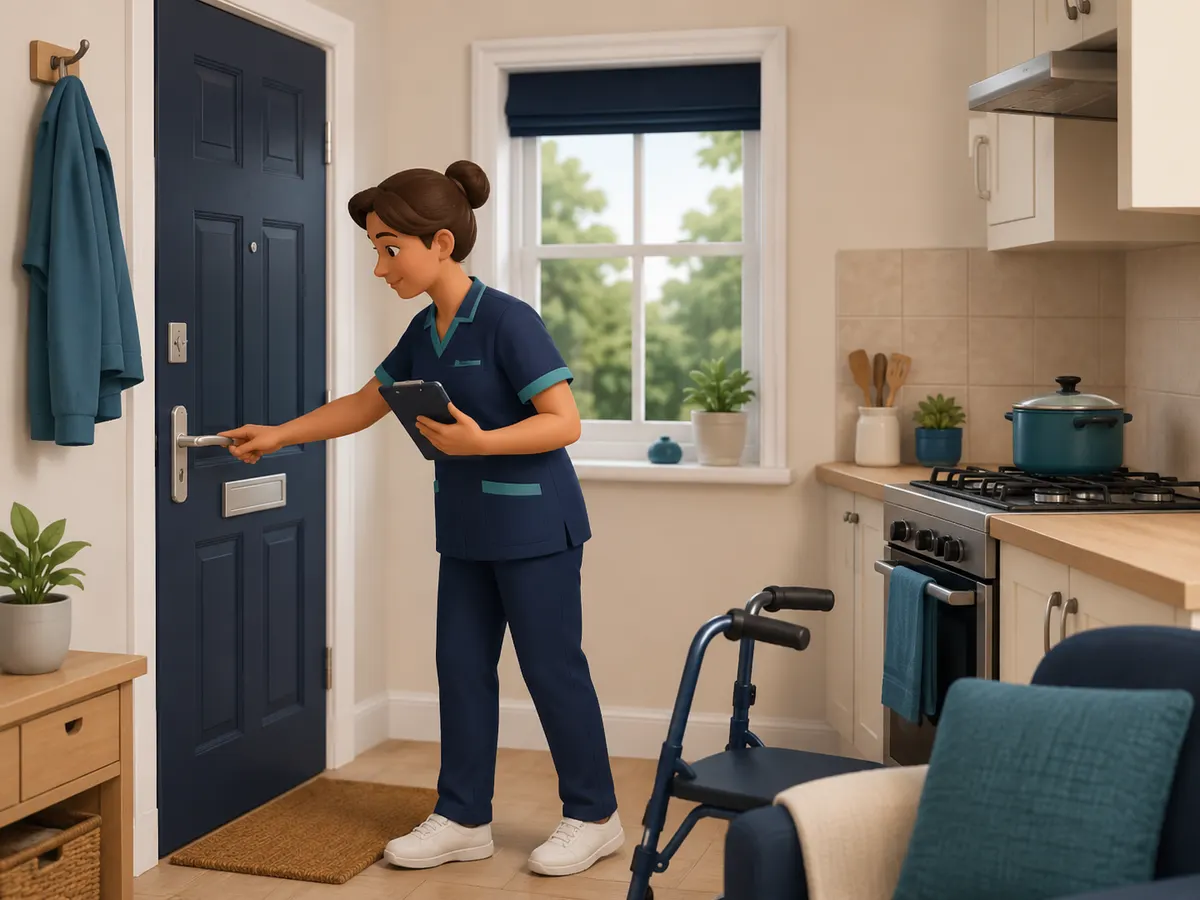
You cannot look after anyone else if you don't first look after yourself.
A carer's body is the most important tool they have, and the back is usually what gives way first when care work goes wrong. Back injuries caused by poor moving and handling are one of the most common reasons carers are forced to leave a job they're good at and enjoy — which makes protecting your back every single day a genuinely career-long habit, not a box to tick in training.
Good posture starts before any lift or transfer — feet planted, knees bent rather than the back, the load kept close to the body, and the movement led by the legs rather than the spine. Twisting while lifting is one of the most damaging habits a carer can fall into under time pressure, and it's worth consciously turning the whole body instead.
The instinct to catch someone who is falling is powerful, and it is exactly the instinct that causes some of the worst injuries in care work — both to the carer's back and, often, to the person falling too. It is almost always safer to guide someone down to the floor in a controlled way, protecting their head, than to try to hold their full weight upright.
Hoists, slide sheets, transfer boards and other moving and handling equipment exist because the human body was never designed to lift another adult's full weight safely, no matter how careful or how strong the carer. Equipment is used exactly as trained, every time it's needed, never skipped because "it'll only take a second" — those are the moments injuries actually happen.
Much of home care happens with just one carer and one client, often behind a closed front door, which is exactly why lone working is treated so seriously. Being alone with someone doesn't mean being unsupported — it means the systems around you need to work quietly and reliably in the background.
Your schedule, your visit times, and your location should always be known to the office, whether through a rota, a check-in system, or a simple call. This isn't about being watched — it's about making sure that if something ever goes wrong, someone notices quickly and knows exactly where to send help.
A carer's instincts, built up over time, are worth trusting completely. If a situation at a client's home ever feels wrong — an unfamiliar person present, raised voices, anything that doesn't sit right — there is no obligation to walk further into it. Stepping back outside, calling the office, or simply not going in is always the right call, and never something to feel embarrassed about afterwards.
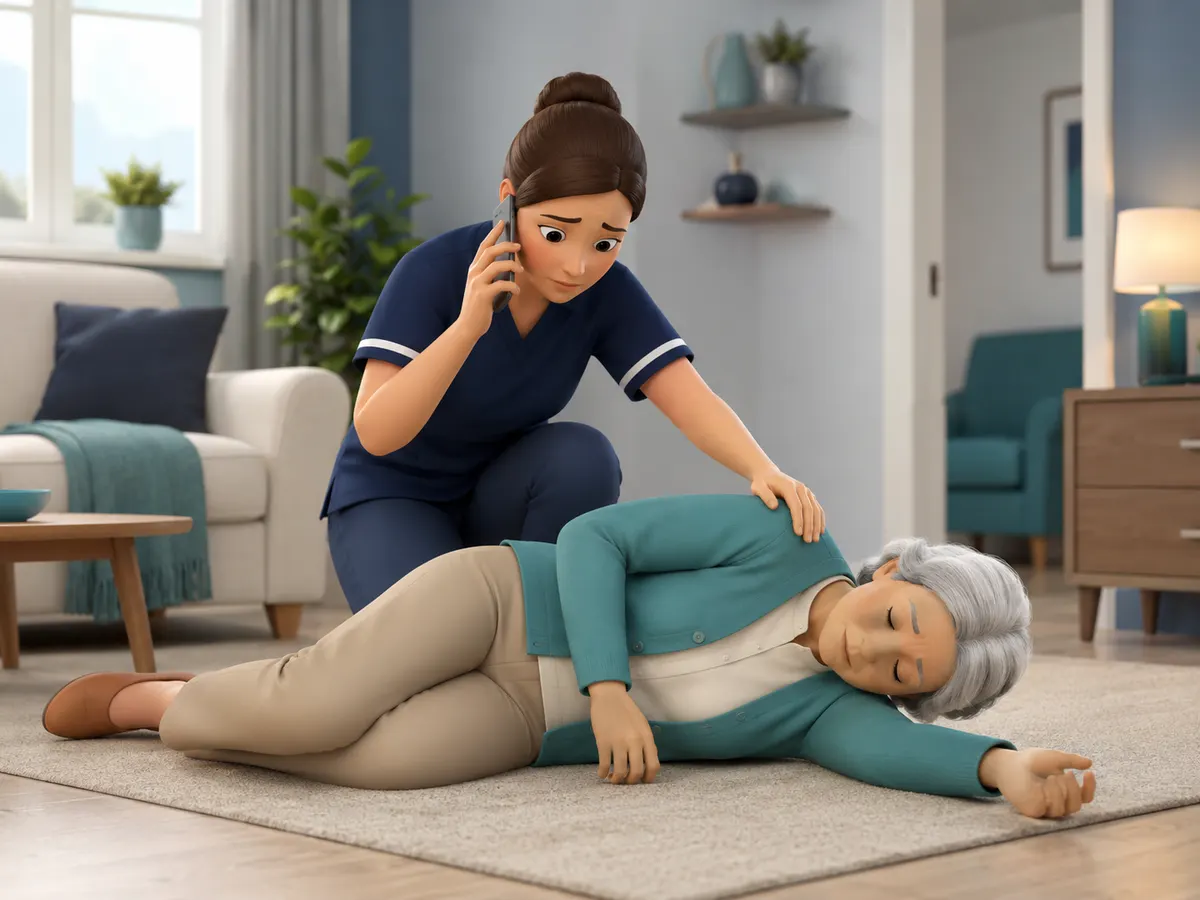
Knowing how to make a clear, calm emergency call is a form of personal safety as much as it is a skill for helping a client. Address first, then a clear account of what's happened, matters just as much when the emergency involves the carer as when it involves the person they're caring for.
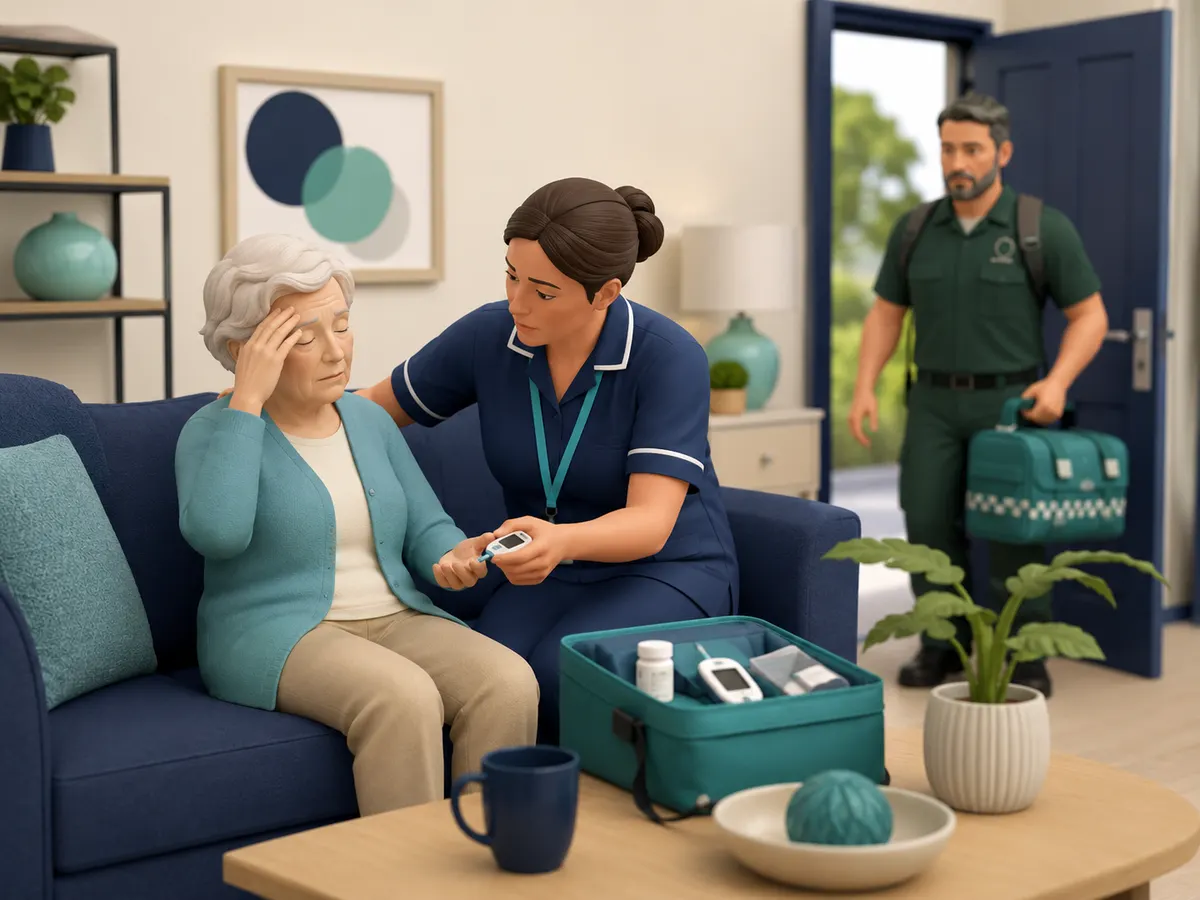
No carer is ever expected to handle a serious situation entirely alone. The office is there to be called, day or night, and emergency services exist precisely for the moments that go beyond what any one person should manage by themselves. Asking for backup is never a sign of struggling — it is exactly what the systems around a lone worker are there for.
Gloves, aprons and, when needed, masks are talked about mostly in terms of protecting the person receiving care, but the protection runs both ways. Bodily fluids, infections and everyday household chemicals pose a real risk to a carer's own health, and PPE is there to guard against all of it, every single visit.
Fresh gloves and a fresh apron for every task, changed between clients and between different jobs within the same visit, keep a carer protected from whatever they're handling — and stop them carrying anything from one home into the next.
A carer who moves between several vulnerable people every day is also, unavoidably, at higher personal risk of picking things up along the way. Thorough handwashing, sensible use of PPE, and staying home when genuinely unwell protect a carer's own health, not only the people they look after.
Keeping up to date with recommended vaccinations — flu, and any others advised for care workers — is a sensible, professional habit rather than a personal choice made lightly. It protects the carer, and it protects every person on their rounds who would be far more vulnerable to catching something serious.
A busy rota with back-to-back visits can create real pressure to rush between calls, and rushing behind the wheel is where accidents happen. It is always better to arrive at a visit a few minutes late than not to arrive at all — and the office should always be told if a schedule genuinely isn't leaving safe travel time.
Simple habits make a real difference: keeping a phone hands-free and out of reach while driving, taking a proper break on a long day rather than pushing through tiredness, and keeping the car itself properly maintained, with fuel, tyres and lights checked regularly rather than left to chance.
Caring for people, especially those who are unwell, frightened, or nearing the end of their life, carries a real emotional weight, and it accumulates over time whether or not it's talked about. Bottling up a hard day is not professionalism — recognising when something has affected you, and saying so, absolutely is.
Talking about a difficult visit with the office, a colleague, or whatever support the service offers is a sign of strength and self-awareness, not weakness. A carer who looks after their own emotional health is a carer who can keep showing up, fully present, for the people who depend on them.
Respect runs in both directions. Every carer has the right to be treated with courtesy by clients and families, to work somewhere free from aggression, harassment or abuse, and to say so clearly and without guilt when a line has been crossed. Any incident of aggression or abuse towards a carer, verbal or physical, should always be reported to the office — a carer's safety and dignity matter exactly as much as the client's.
Asking for support is not a weakness in a carer. It is what makes a good carer sustainable.
Carelo gives carers the app this handbook was written for: calls, GPS check-in, notes and medication at the door. From £59 a month for agencies; £30 a month for families who employ their own carers.
Book a demo