The definitive visual reference to the instruments of home care — what each one is for, and how it's kept safe.
Moving someone safely — in or out of bed, into a wheelchair, across a room — relies on the right piece of equipment for that specific person, matched to their needs by an assessment, never guessed at. This section covers the full family of moving and handling equipment used in home care: hoists in their different forms, slings, slide sheets, transfer boards, wheelchairs, and walking frames.
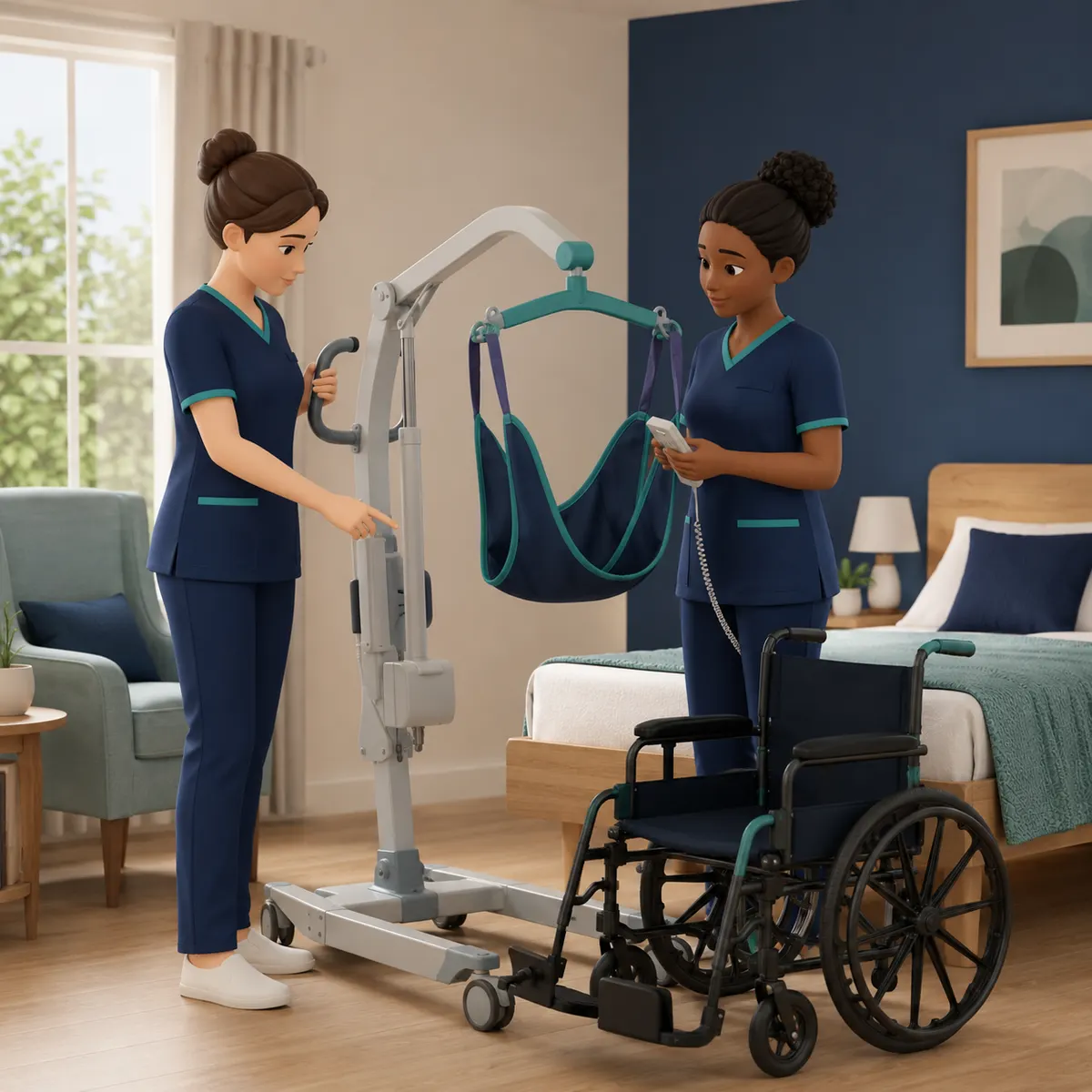
Before anyone is moved, two carers check the hoist and sling together against what the care plan specifies — the right sling type and size, brakes and clips in good order, and a clear path to wherever the person is headed. This short pause, talked through out loud, is what turns a hoist transfer into a genuinely safe one; skipping it is one of the most preventable risks in home care.
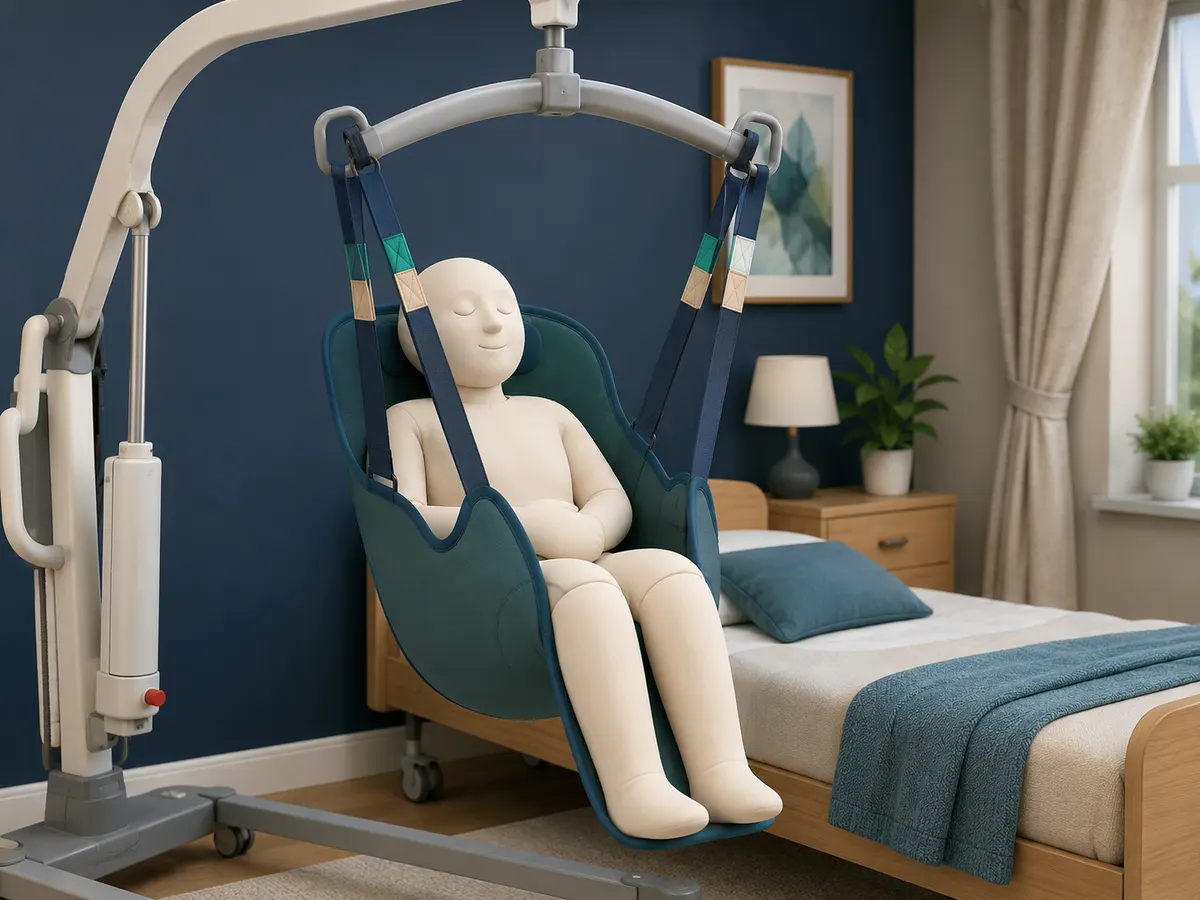
A full-body sling supports someone from shoulders to knees while a hoist lifts them, with colour-coded straps that clip onto the hoist's spreader bar at matching lengths on both sides so the person hangs level and comfortable rather than tilted. The size and style used should always be the one named in that person's own care plan — a sling borrowed from someone else's kit rarely fits properly, and a poor fit is what makes a lift feel frightening rather than safe.
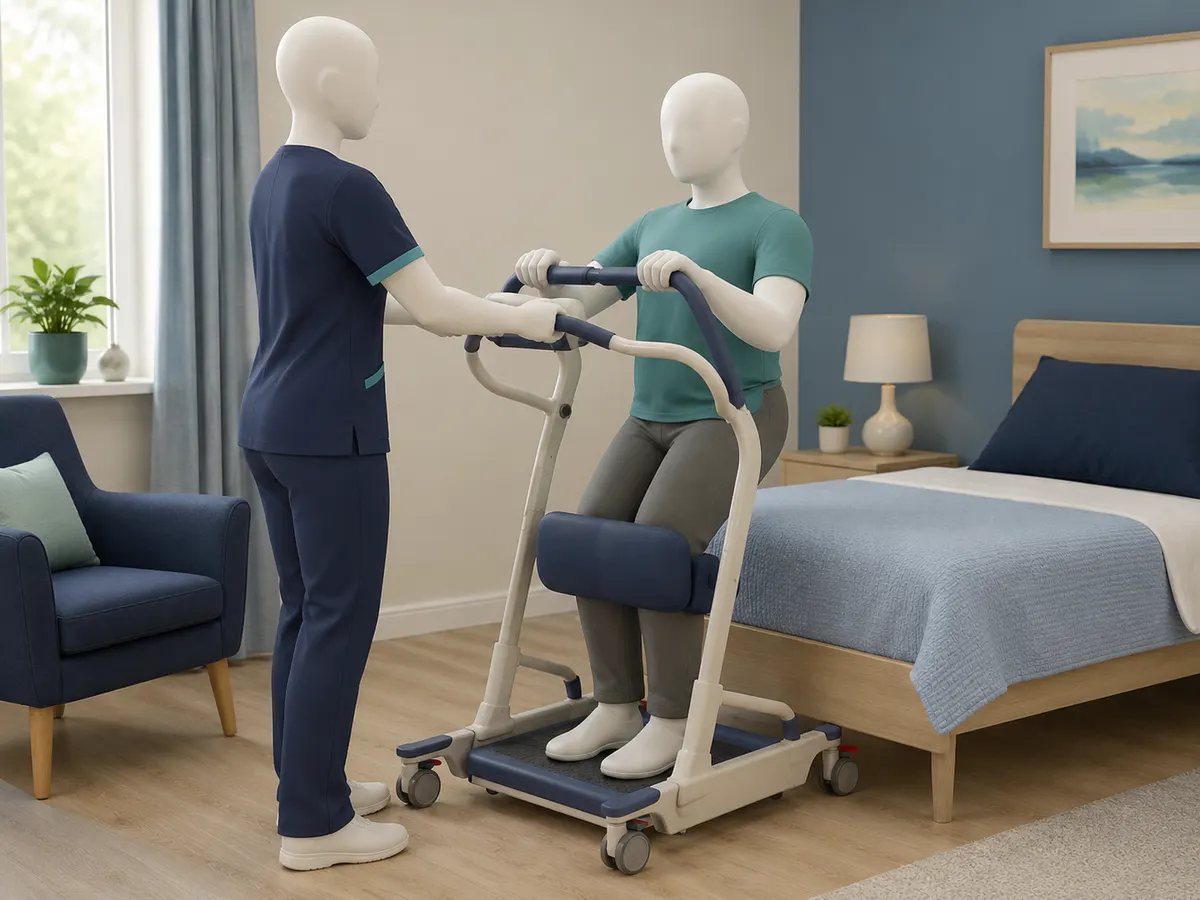
For someone who can still bear some weight through their legs but needs help finding their balance, a standing hoist offers a halfway option — the person grips handles and rises with their own strength while a padded knee pad and frame take the strain off balance. It is only ever used for someone specifically assessed as able to bear weight this way; if that assessment says otherwise, a full sling hoist is used instead.
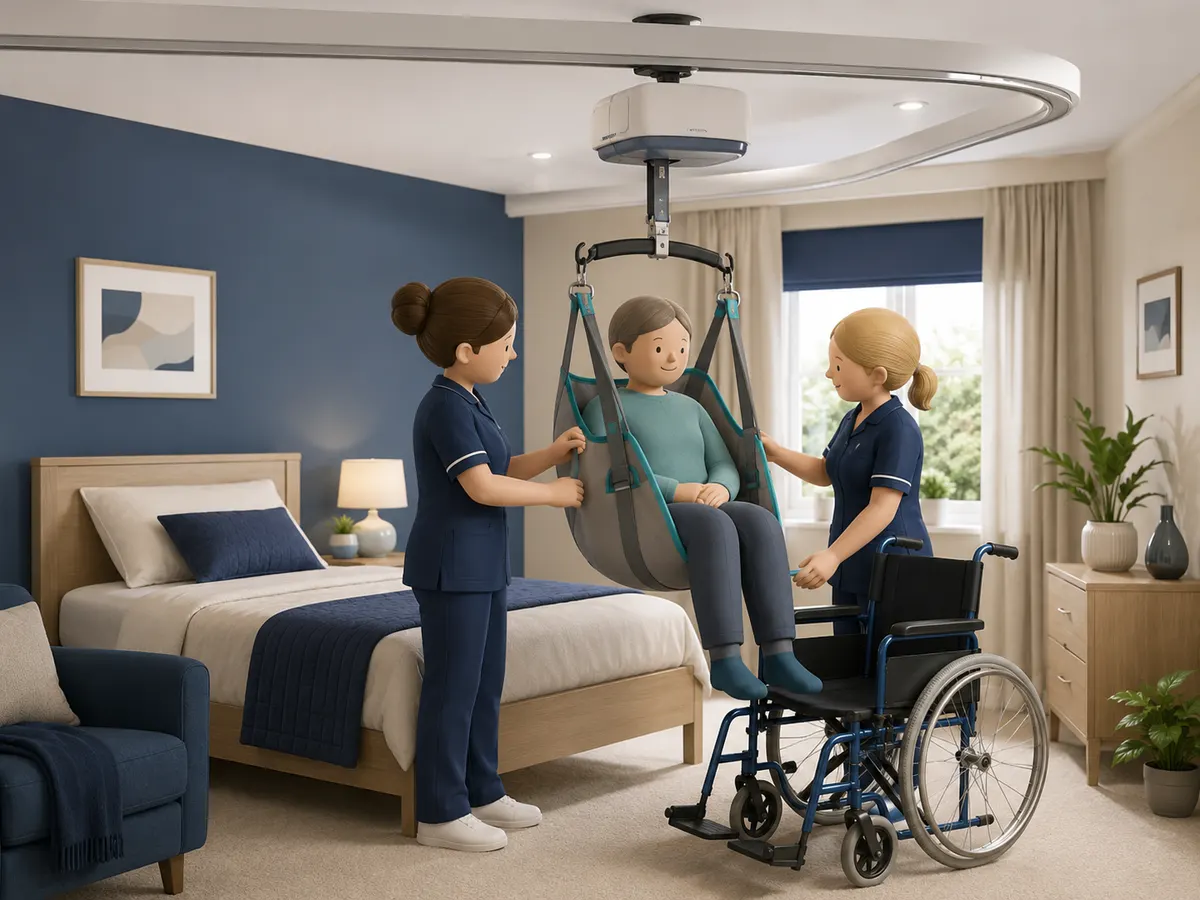
Fitted permanently into the ceiling, this type of hoist runs along a fixed rail and takes up no floor space at all, which is often exactly why it is chosen for a bedroom or bathroom that is otherwise tight. Because it is a fixed installation, its servicing and safe working load are checked as part of routine equipment maintenance, though a quick visual check — a clear track, nothing snagged — is always worth doing before use.
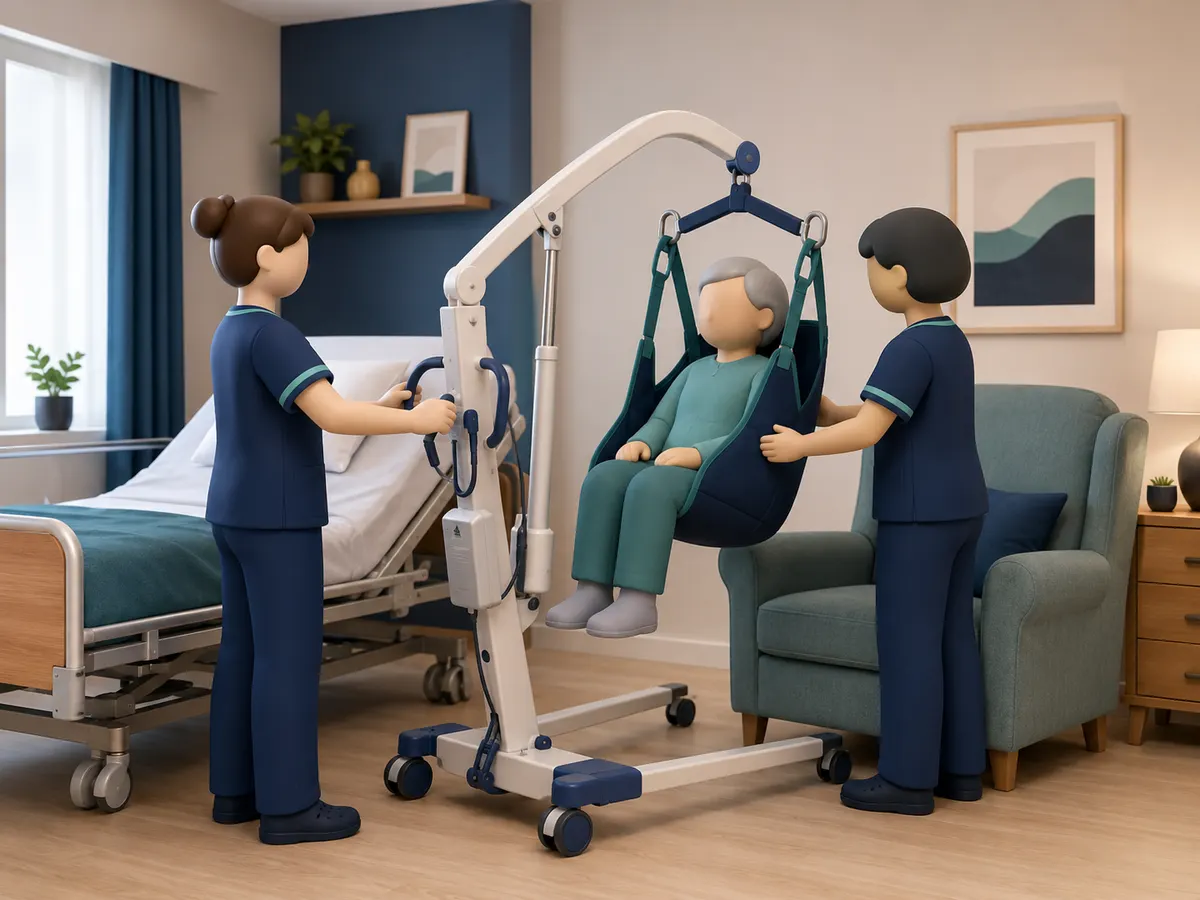
A hoist transfer is not finished the moment someone leaves the bed — it is finished once they are properly settled in the chair they were heading for. The receiving chair is positioned and checked for stability before the descent begins, and the last few inches are lowered slowly, with feet guided down deliberately rather than left to drop, so the whole movement ends as gently as it started.
A transfer isn't finished until the person is settled, not just set down.
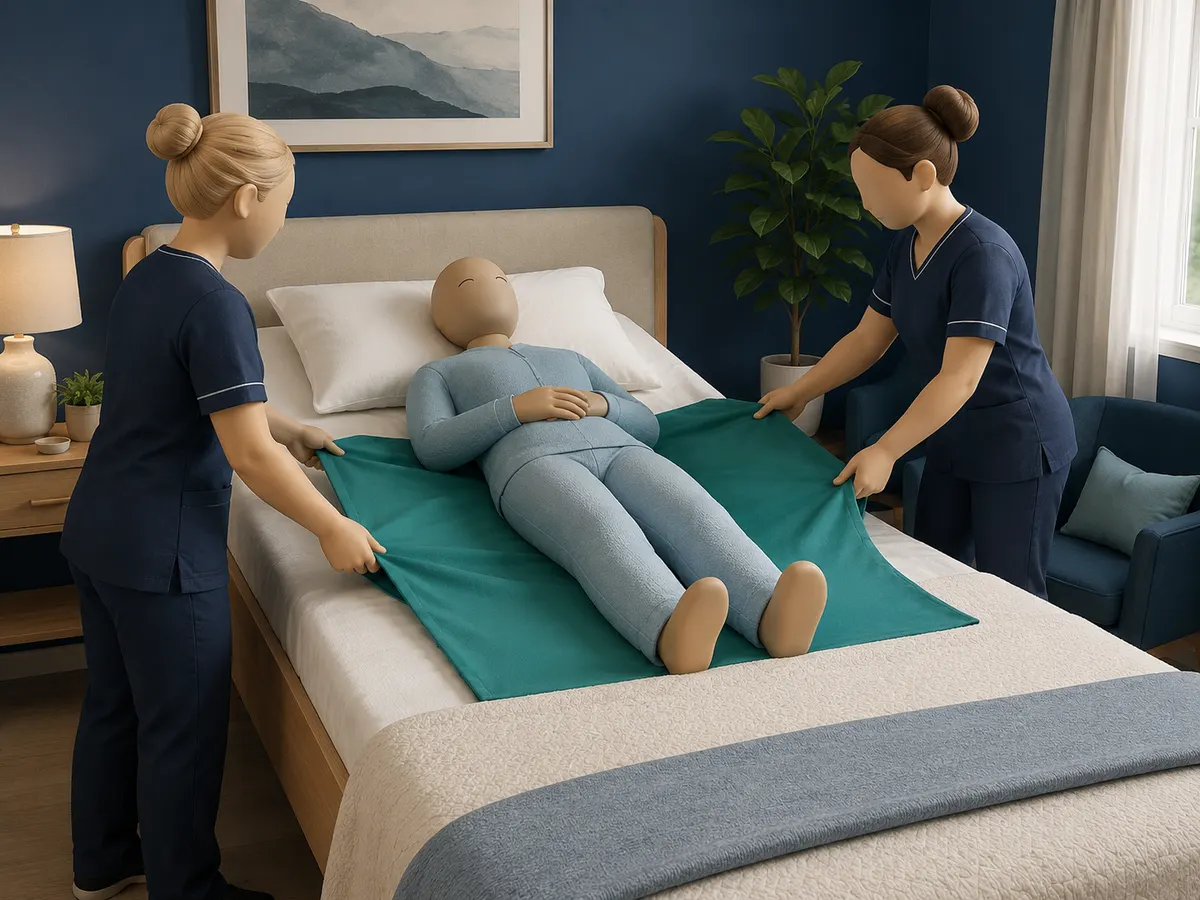
A low-friction slide sheet lets two carers reposition someone in bed — moving them up, over, or onto their side — without dragging their skin against the mattress underneath. Both carers move together on a shared count, letting the sheet do the sliding rather than gripping and hauling, and it is removed or rolled aside once the move is done rather than left underneath someone for hours.
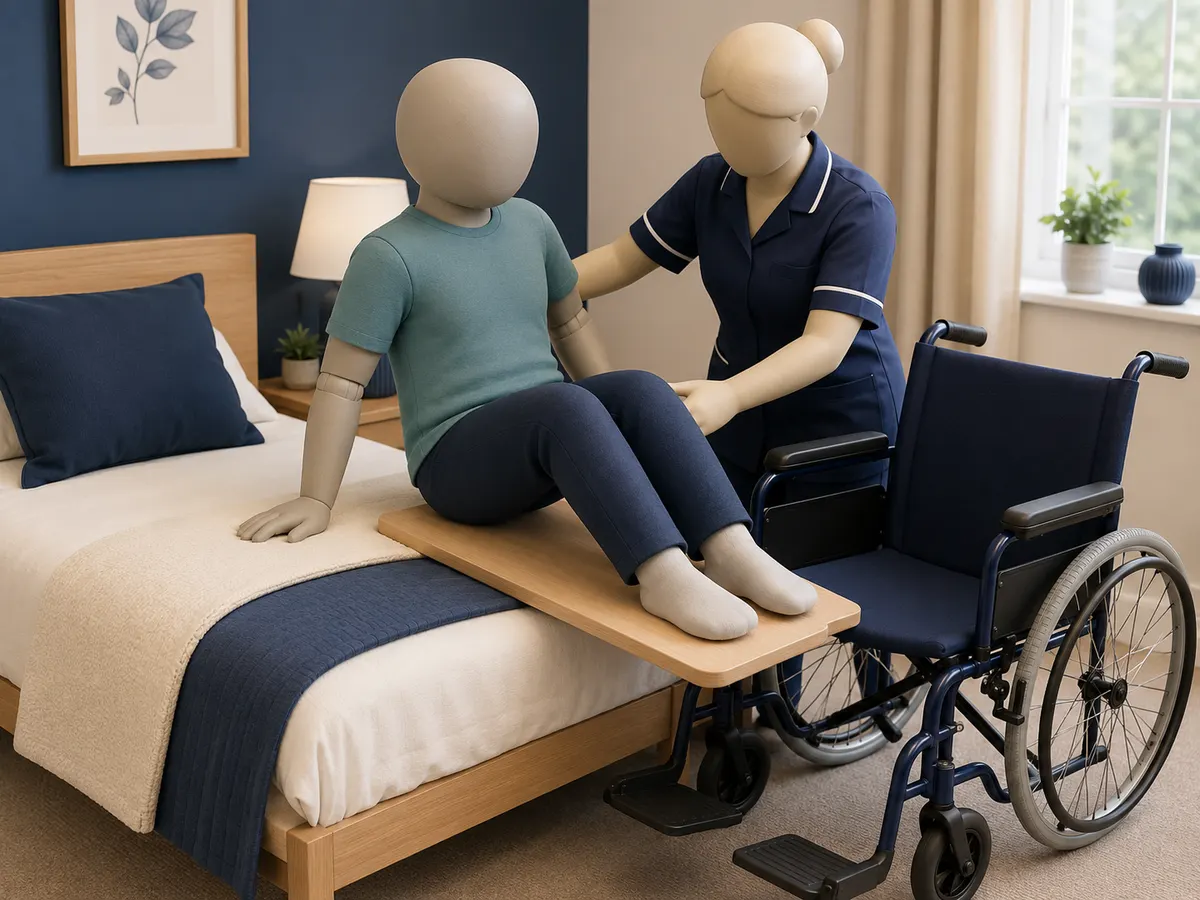
For someone who can sit but struggles to stand and turn, a transfer board bridges the gap between two seats — a bed and a wheelchair, say — so the person can slide across in small, controlled shifts rather than being asked to stand and pivot. Both ends of the board need a secure, checked resting point before any weight goes on it, and the receiving wheelchair is locked in position beforehand.
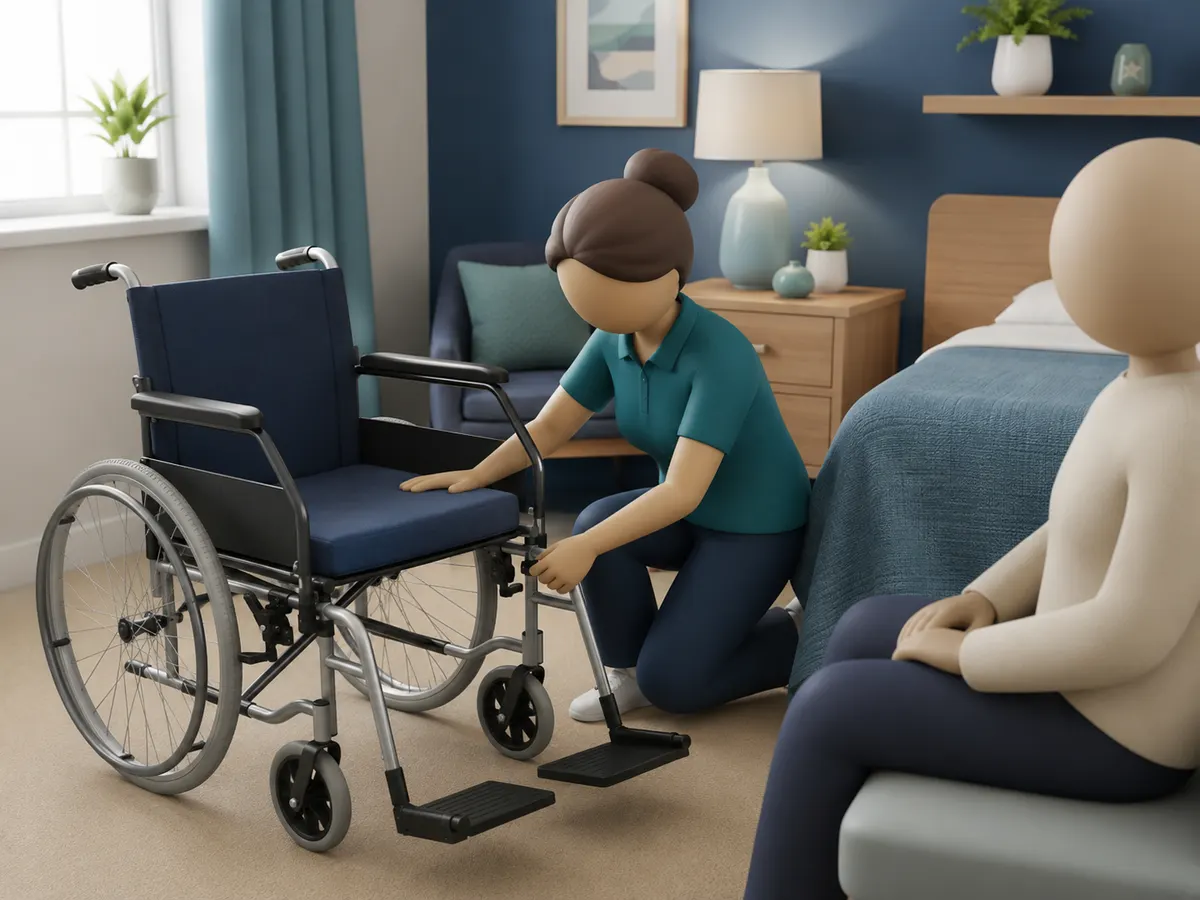
A wheelchair only does its job safely if it is made ready before someone sits down or is transferred into it — both brakes locked and checked by hand, footplates swung clear, armrests out of the way. A chair that rolls even a few inches during a transfer can turn a routine move into a fall, which is why this check happens every single time, however familiar the chair.
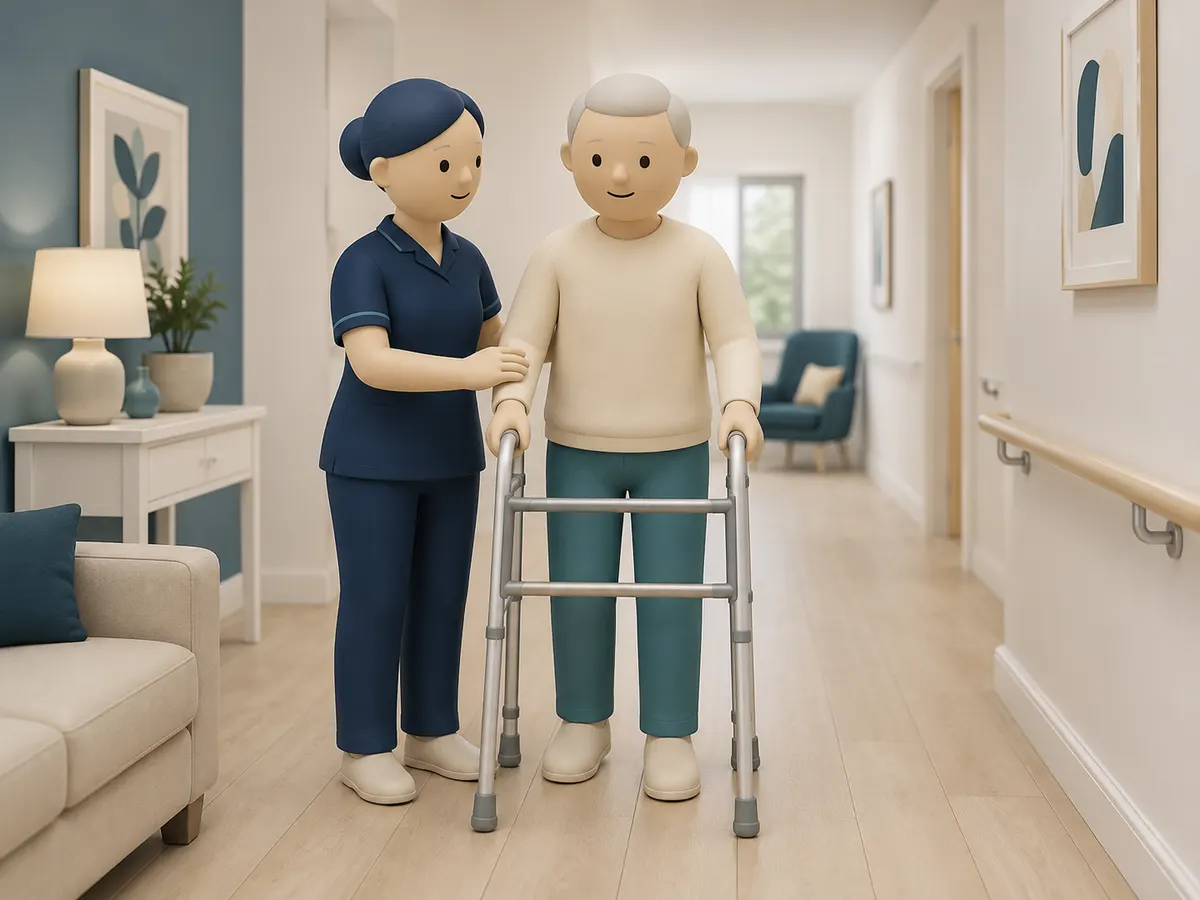
A walking frame takes weight through the arms so someone can walk with more confidence and stability, with handles set level with the wrists so posture stays natural rather than strained. The rubber feet, or ferrules, are worth checking regularly, since a worn or split one quietly loses its grip exactly when it is needed most — and a carer walks alongside, ready to support, rather than in front, blocking the space someone needs to move through.
A good bed does far more than provide somewhere to sleep. For someone with reduced mobility, it actively protects their comfort and their skin. Two pieces of equipment do most of that work: the profiling bed itself, and the mattress that sits on it.
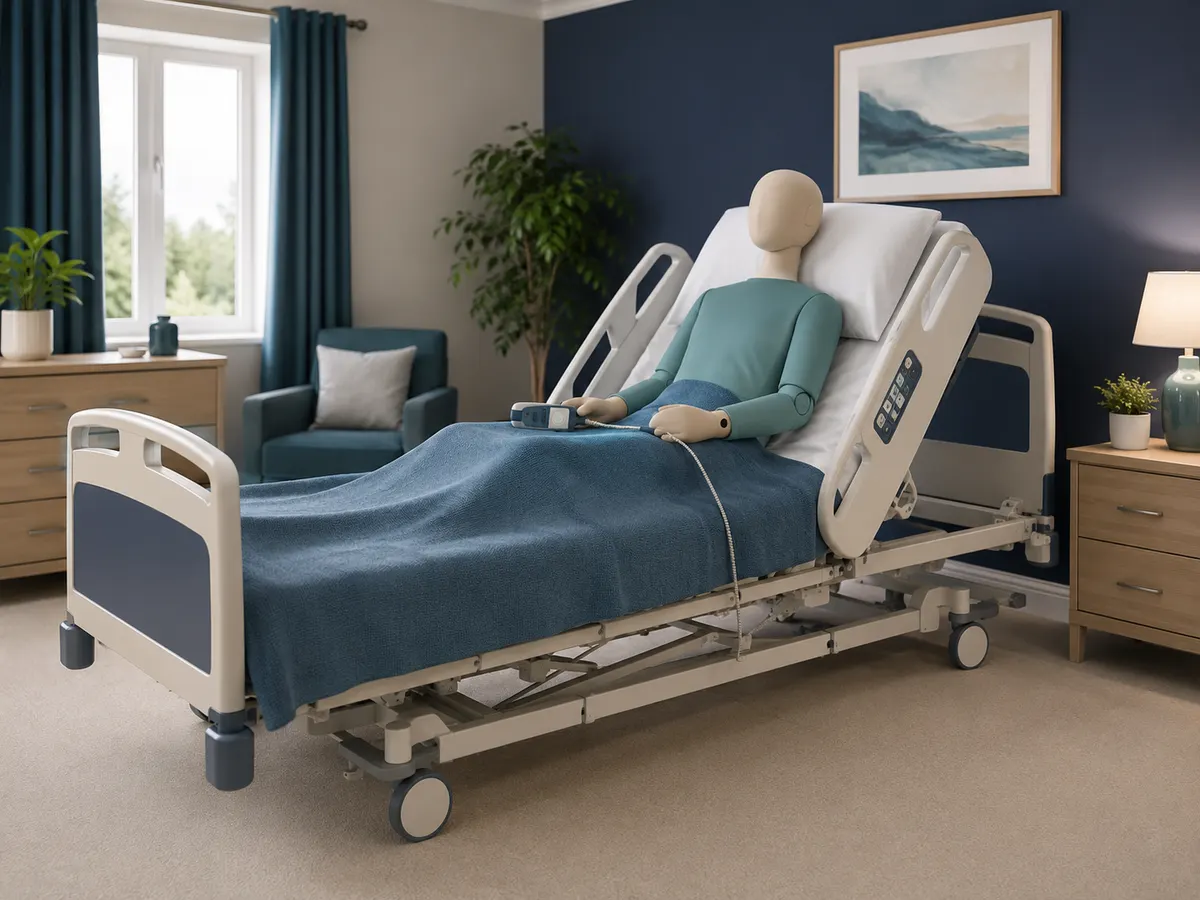
Controlled by a simple handset, a profiling bed changes shape — raising the head, bending gently at the knees — to support whichever position someone needs, rather than leaving them to slide down a flat mattress. Adjustments are made gradually and checked against how the person actually feels rather than moved straight to a guessed position, and the handset and call pendant are always left within easy reach before a carer leaves the room.
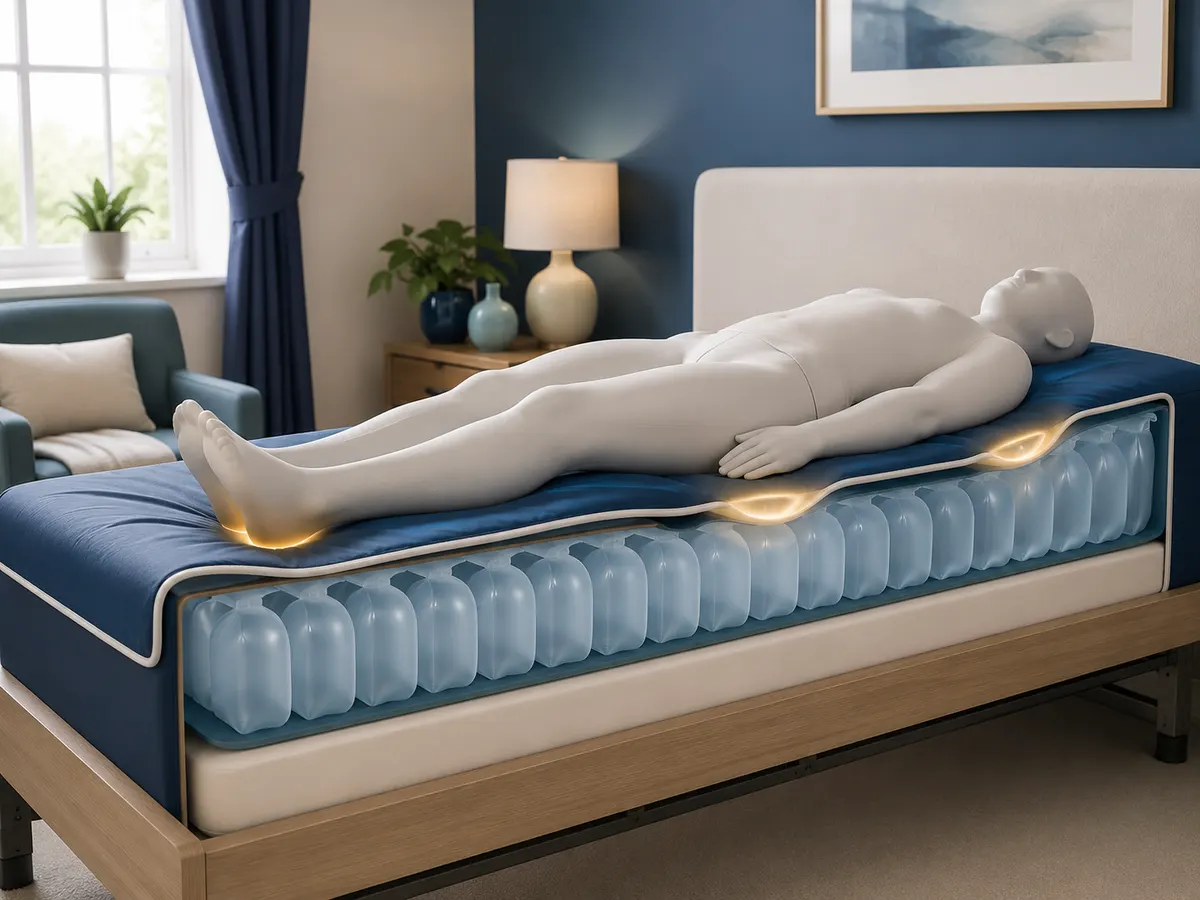
Built from rows of individual air cells rather than a single block of foam, this kind of mattress constantly shifts where someone's weight falls, easing pressure on the heels, hips, and lower back exactly where it tends to concentrate. Its settings need matching to the person's own weight and risk level to work properly, and bedsheets are fitted loosely — a tightly tucked sheet can flatten the cells underneath and quietly cancel out the whole point of the mattress.
Bathroom equipment and continence care sit close together in daily life, and both depend on the same things: fittings placed exactly where they are needed, and hygiene routines followed without exception, every time, by every carer.
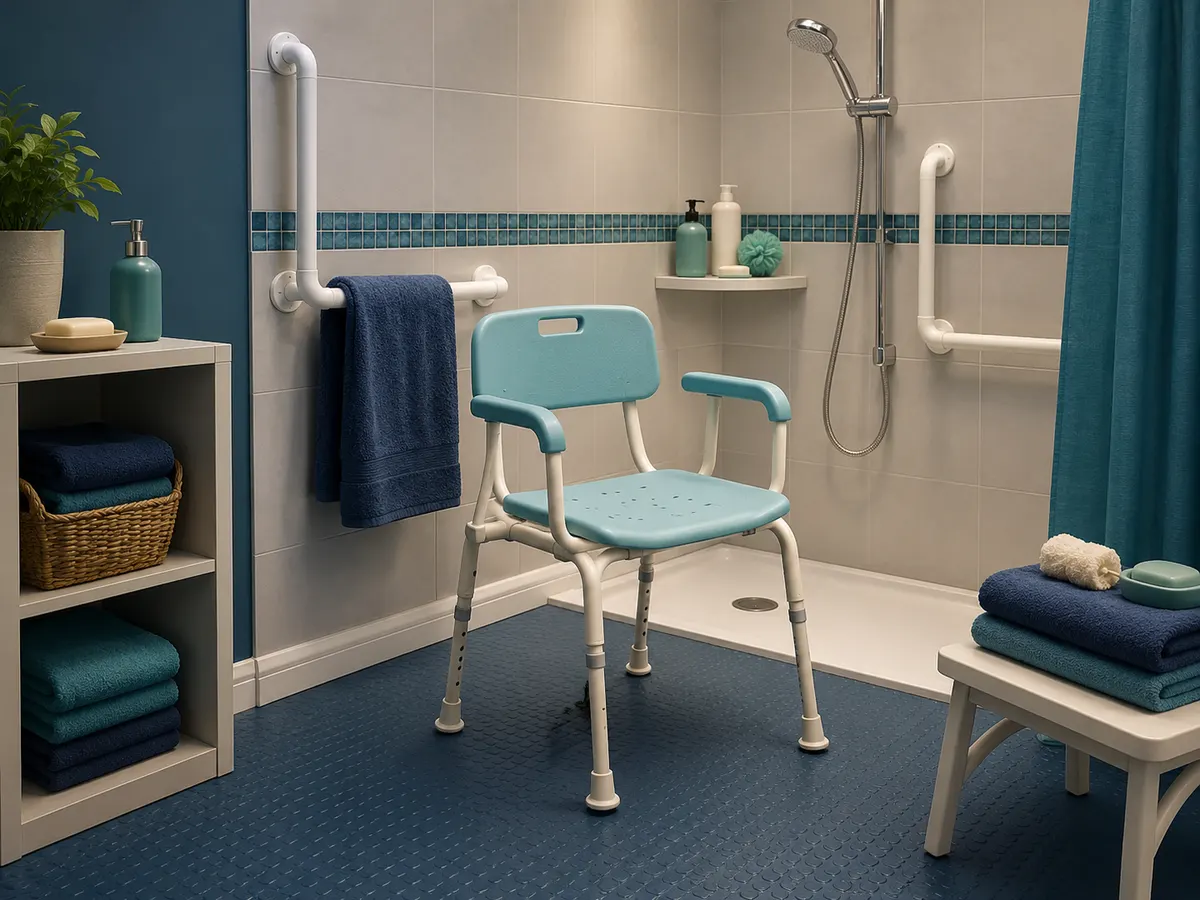
A level-access shower with sturdy grab rails and a height-adjustable shower chair turns washing from a risk into a simple, dependable routine. The chair should be set so feet rest flat on the floor and knees sit level with hips, its legs checked for a firm stance on the wet floor before anyone sits down, and toiletries and towels kept within arm's reach of the seat.
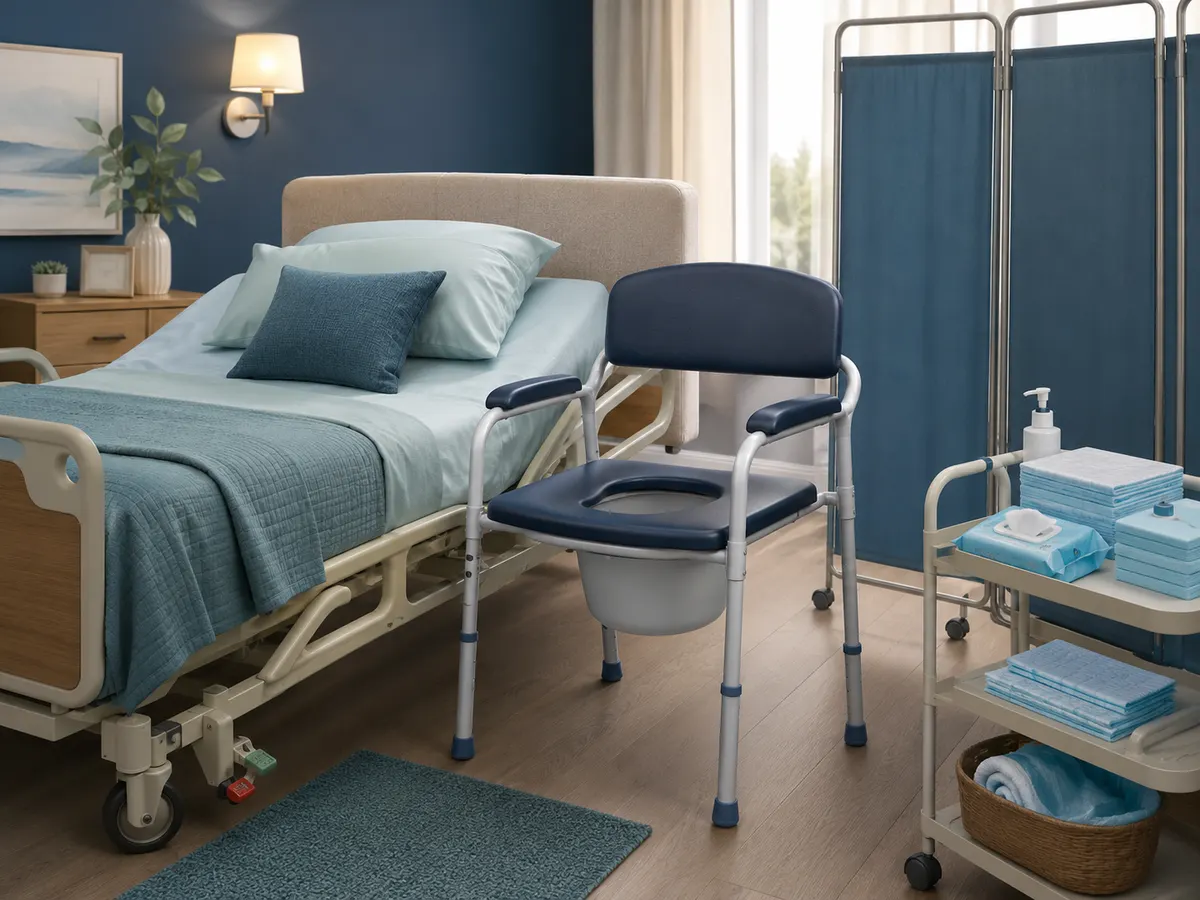
Positioned close to the bed rather than across the room, a commode shortens the distance between needing help and getting it, and a nearby supplies trolley keeps wipes, hand sanitiser, and clean towels within reach without a mid-task search. The pan is checked and emptied promptly after every use, the seat wiped down, and a privacy screen set up in advance — never fetched afterwards.
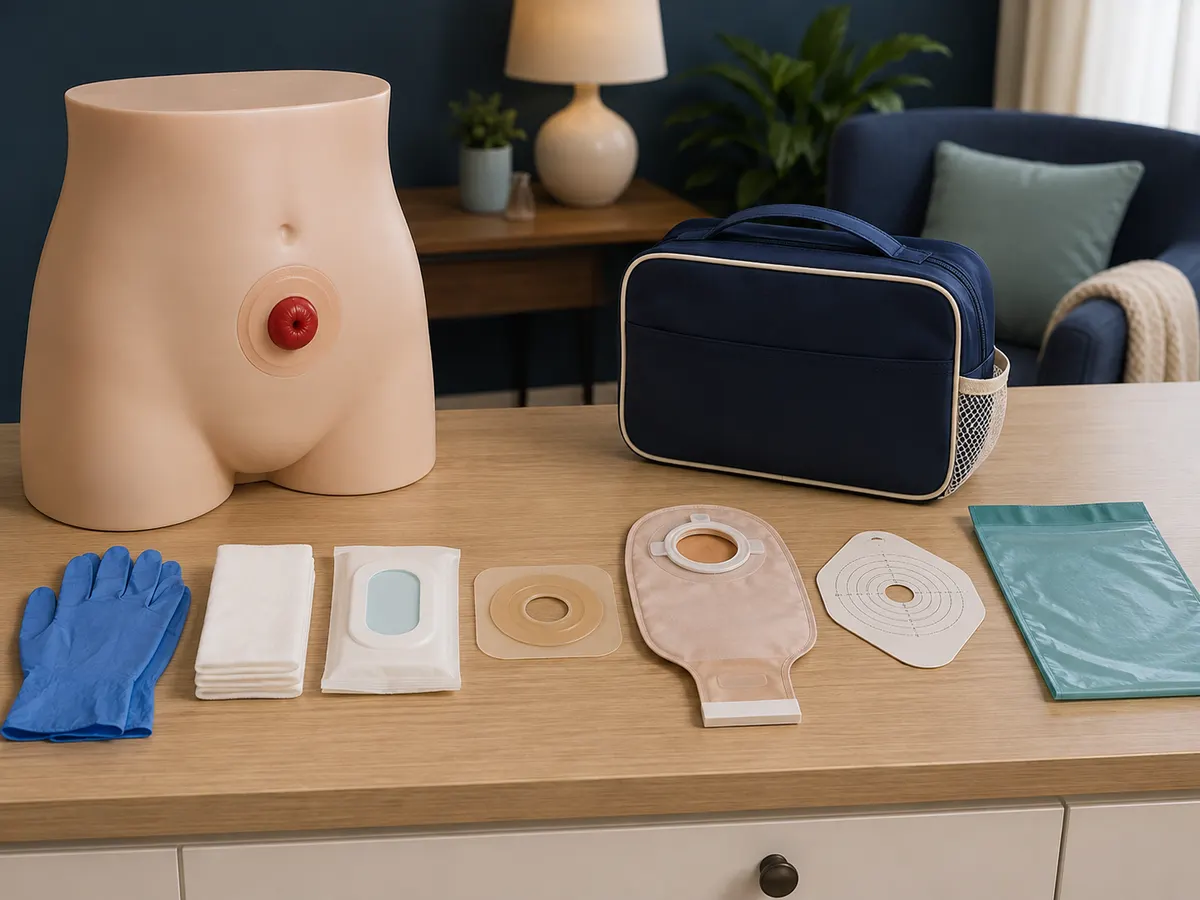
Laid out in advance, a stoma kit brings together everything a bag change needs: a measuring guide to match a new wafer precisely to the stoma's size, skin barrier wafers, drainable pouches, cleansing wipes, and a dedicated disposal bag. Checking the measuring guide against the stoma before fitting a new wafer avoids the badly fitting seal that causes most leaks and sore skin.
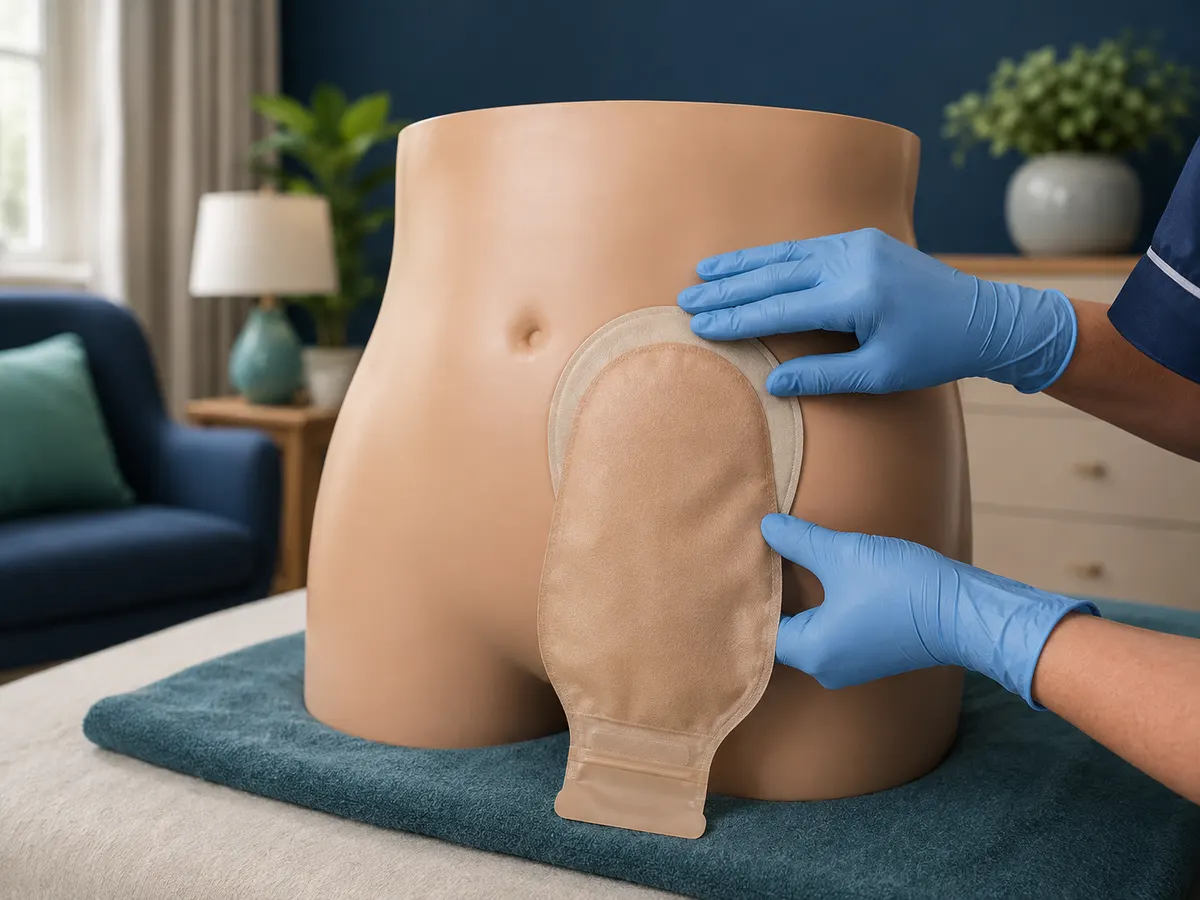
Good technique matters as much as the kit itself: skin cleaned and thoroughly dried first, since even slight dampness stops the adhesive bonding properly, then the new wafer pressed into place from the centre outward to push out any trapped air. Once fitted, the edges are checked all the way round for a full, even seal.
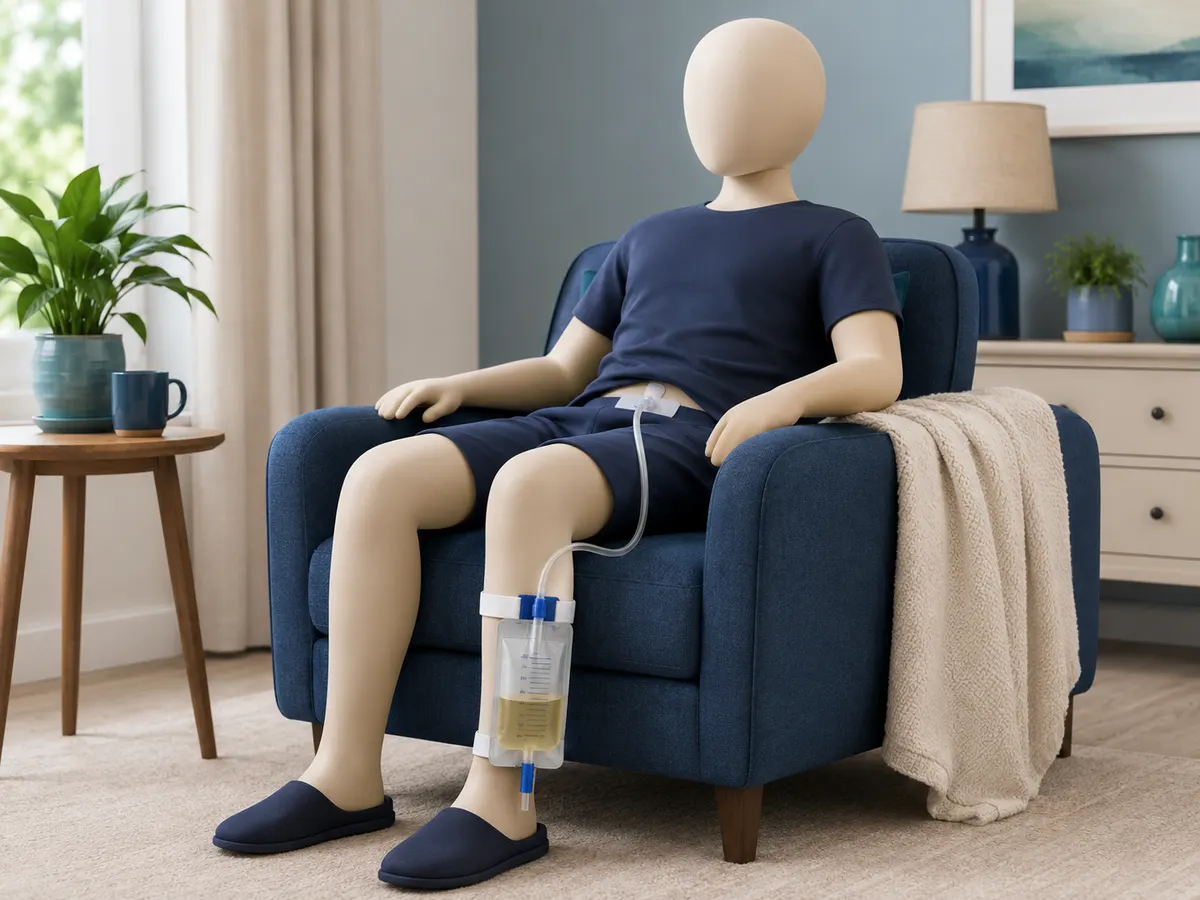
Worn strapped to the lower leg beneath everyday clothing, a leg bag lets someone with a catheter get on with an ordinary day, tube and bag tucked out of sight. Straps are fastened snug but not tight, checked once someone is seated as well as standing, and the bag always stays below the level of the bladder so it can drain properly — the tubing is worth a glance for kinks whenever the person changes position.
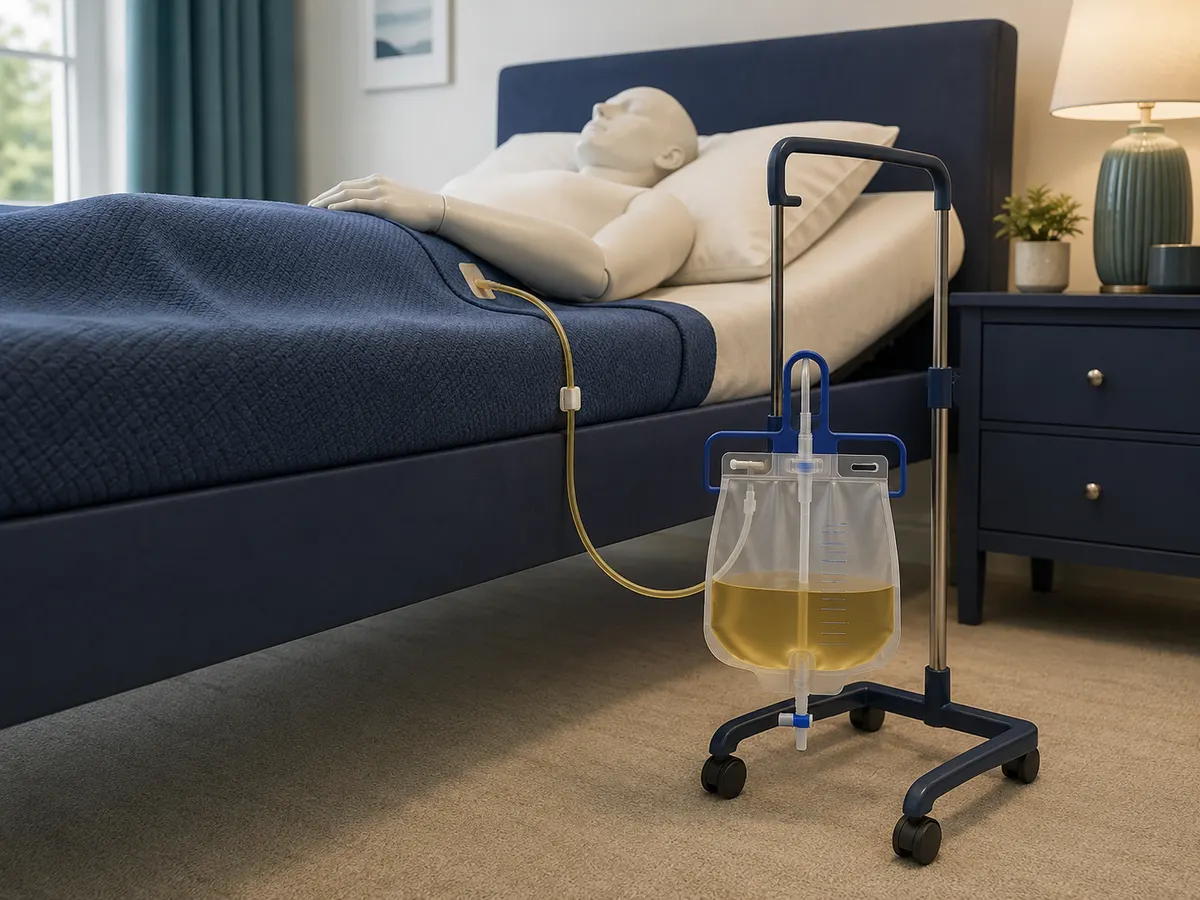
As evening comes, a larger drainage bag on its own wheeled floor stand replaces the daytime leg bag, holding far more overnight without needing to be checked or emptied while someone sleeps. Keeping the bag on its stand, below the level of the bed rather than looped over the frame, is what lets it drain properly through the night, and the stand is positioned so a sleepy movement cannot catch or tip it.
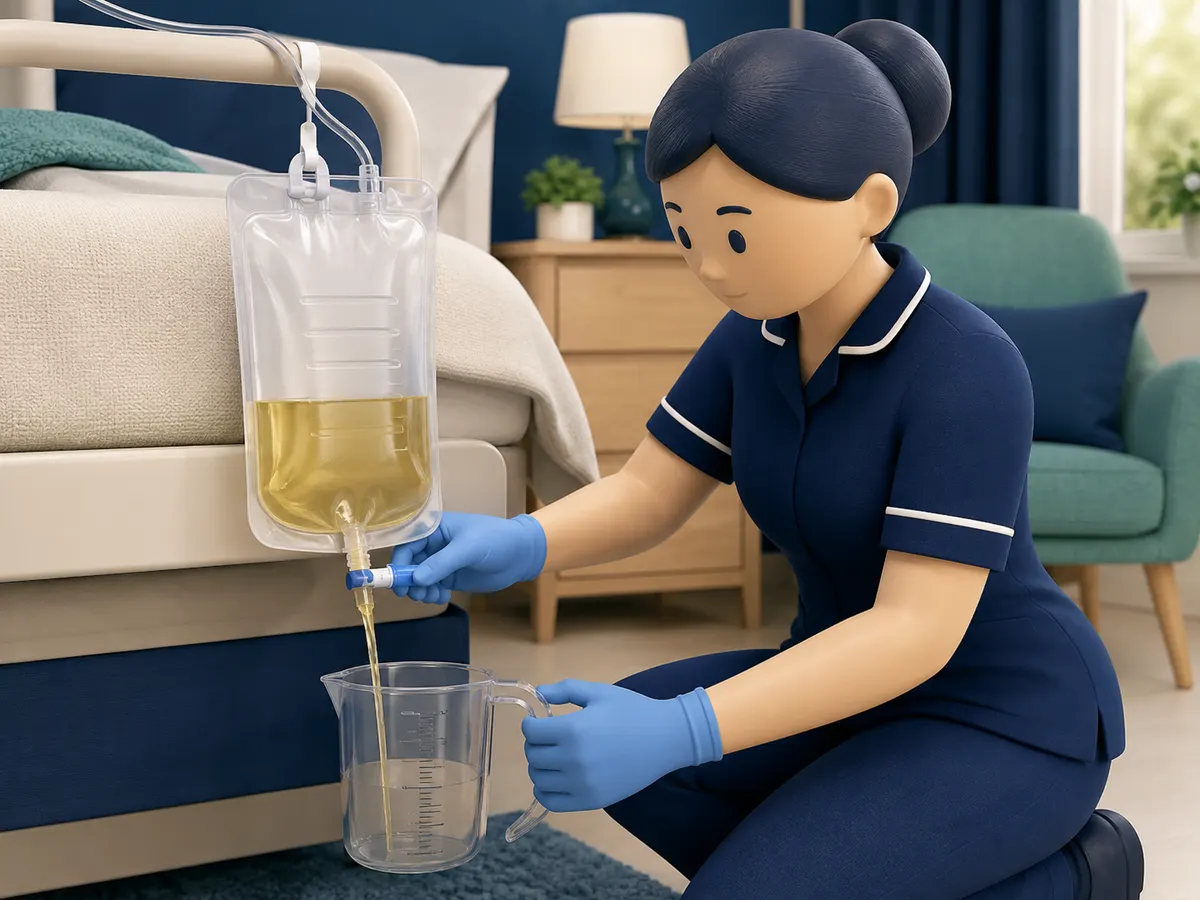
Emptying a catheter bag is a small task made significant by doing it properly: gloves on, the valve wiped clean before opening and after closing, and the amount read at eye level against the jug's graduated markings. Where the care plan asks for fluid balance recording, that figure is noted accurately — small changes here can be an early, useful sign worth flagging to the district nurse.
A small number of instruments belong to the most specialist end of home care — used only by carers with specific, additional training and delegation for that person, working closely with the district nursing or clinical team behind their care.
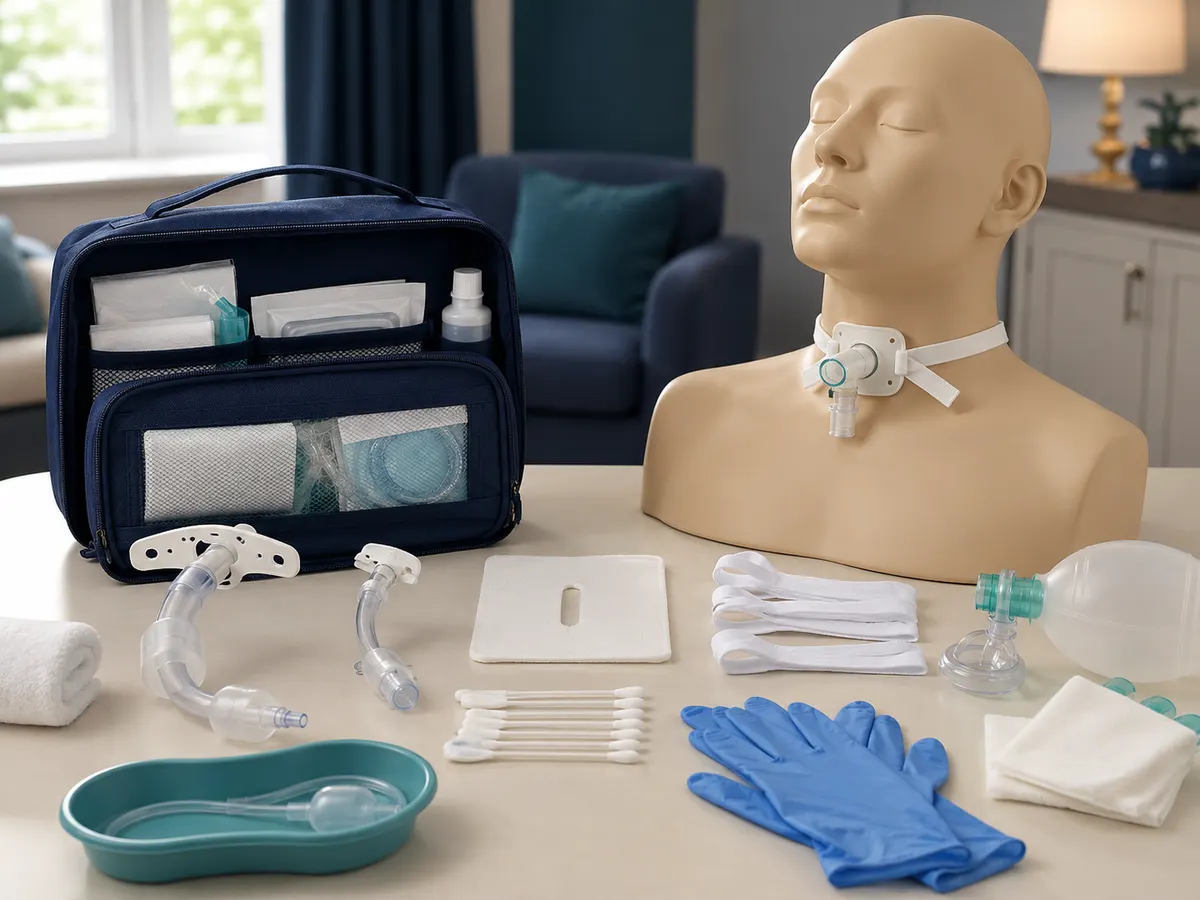
A complete kit — spare tube fittings, dressings, ties, cleaning supplies, and emergency resuscitation equipment kept close by — is what lets a highly skilled task happen calmly and without gaps. Checking the kit is complete, including the emergency items, before starting any tracheostomy-related task is part of the discipline that keeps it safe.
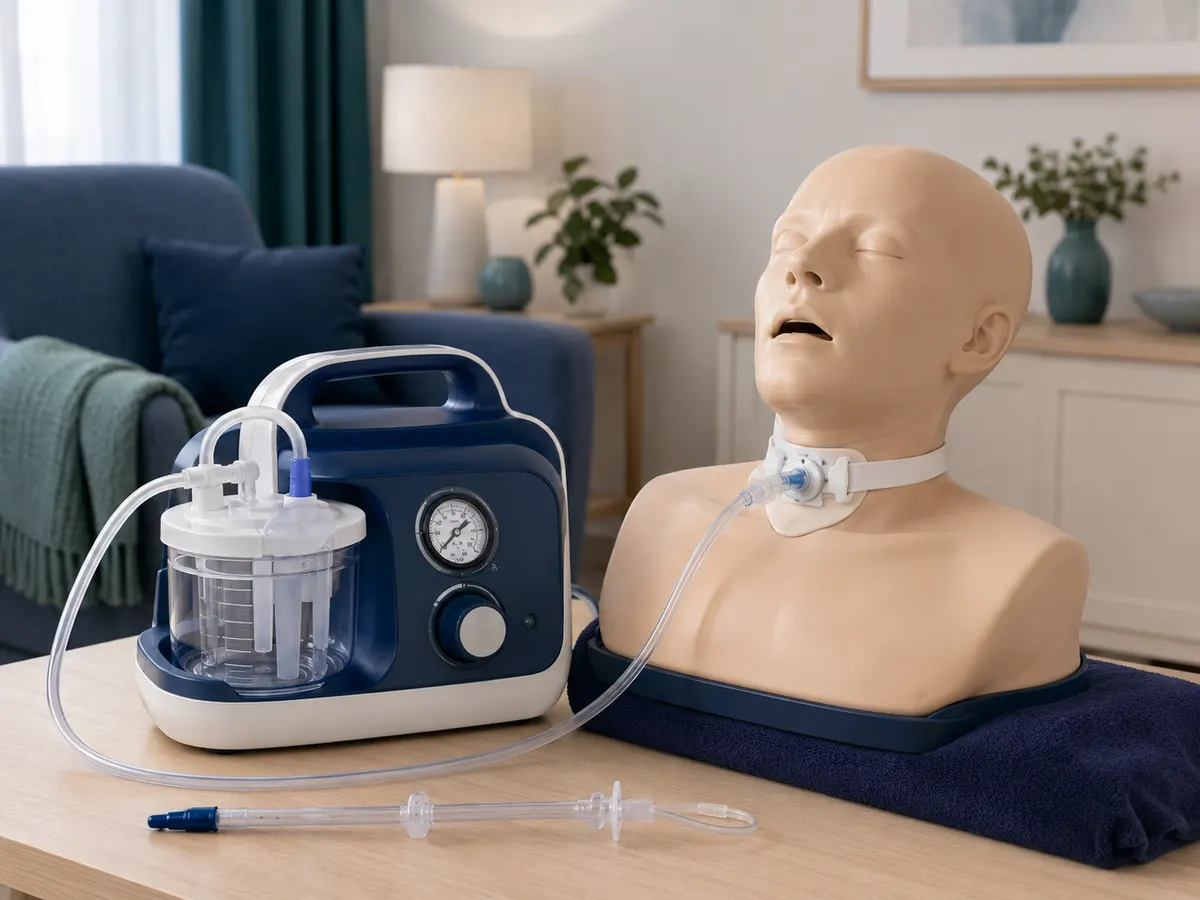
For someone with a tracheostomy, a suction unit clears the airway of secretions, used strictly by carers specifically trained and delegated for suctioning, following the exact plan the district nursing team has set. Its canister and tubing are cleaned, and where specified replaced, between uses to prevent infection.
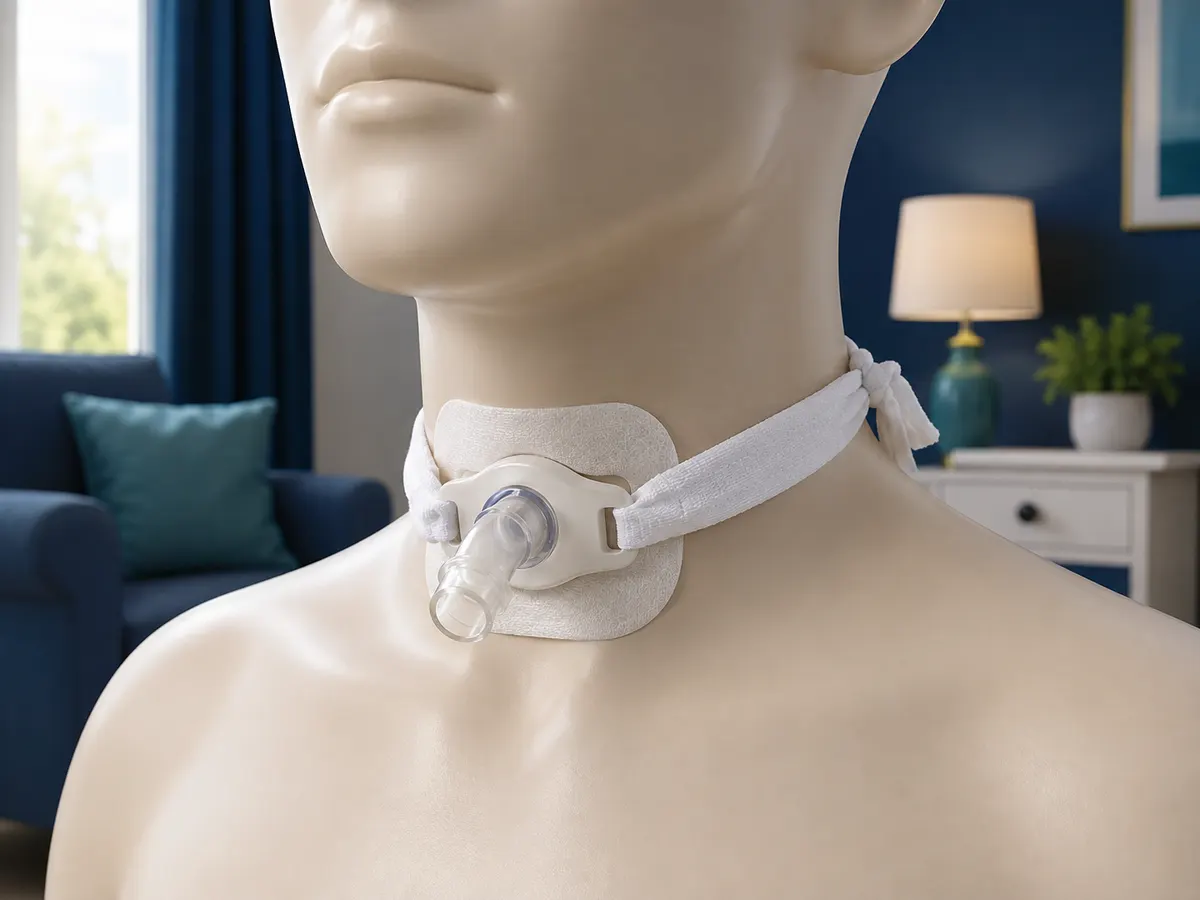
The ties holding a tracheostomy tube in place are checked for a snug but not tight fit — traditionally judged by fitting two fingers comfortably beneath them — since too loose risks the tube shifting and too tight risks irritation. The dressing beneath is changed regularly, and the skin around it checked at the same time, always by a carer trained and delegated specifically for this task.
Behind every piece of equipment in this chapter sits a simpler, constant layer of protection: gloves, aprons, hand gel, and proper waste disposal, used without exception whenever there is contact with skin, wounds, stoma or catheter equipment, or bodily fluids. None of it is glamorous, and that is rather the point — good infection control is meant to be so routine that it is barely noticed, which is exactly what keeps both the person being cared for and the carer safe.
Worn before any skin contact, wound care, or handling of catheter, stoma, or tracheostomy equipment — changed between tasks, never reused.
A fresh apron for tasks involving bodily fluids or close personal care, removed and disposed of straight after.
Hands washed thoroughly before gloves go on and after they come off — the single most effective infection control step there is.
Used dressings, pouches, and equipment go into the right waste stream straightaway, kept tidy and out of the way of the person being cared for.
None of the equipment in this chapter is something a carer sources, adapts, or improvises. Every item is arranged through a proper process, matched to that specific person's needs, and reviewed as those needs change.
| Who | What they do |
|---|---|
| Occupational therapist (OT) | Assesses the person at home and prescribes the right equipment — the correct hoist, sling size, mattress setting, or frame height for their specific needs. |
| The office | Orders, tracks, and arranges servicing or replacement of equipment, and keeps the care plan matched to what's actually in the home. |
| District nursing team | Sets the clinical routine behind catheter, stoma, PEG, and tracheostomy equipment, and trains and delegates carers for specific tasks. |
| The carer | Uses equipment exactly as assessed and trained — checks it, reports faults or a poor fit, and never adapts or substitutes equipment on their own initiative. |
Carelo gives carers the app this handbook was written for: calls, GPS check-in, notes and medication at the door. From £59 a month for agencies; £30 a month for families who employ their own carers.
Book a demo