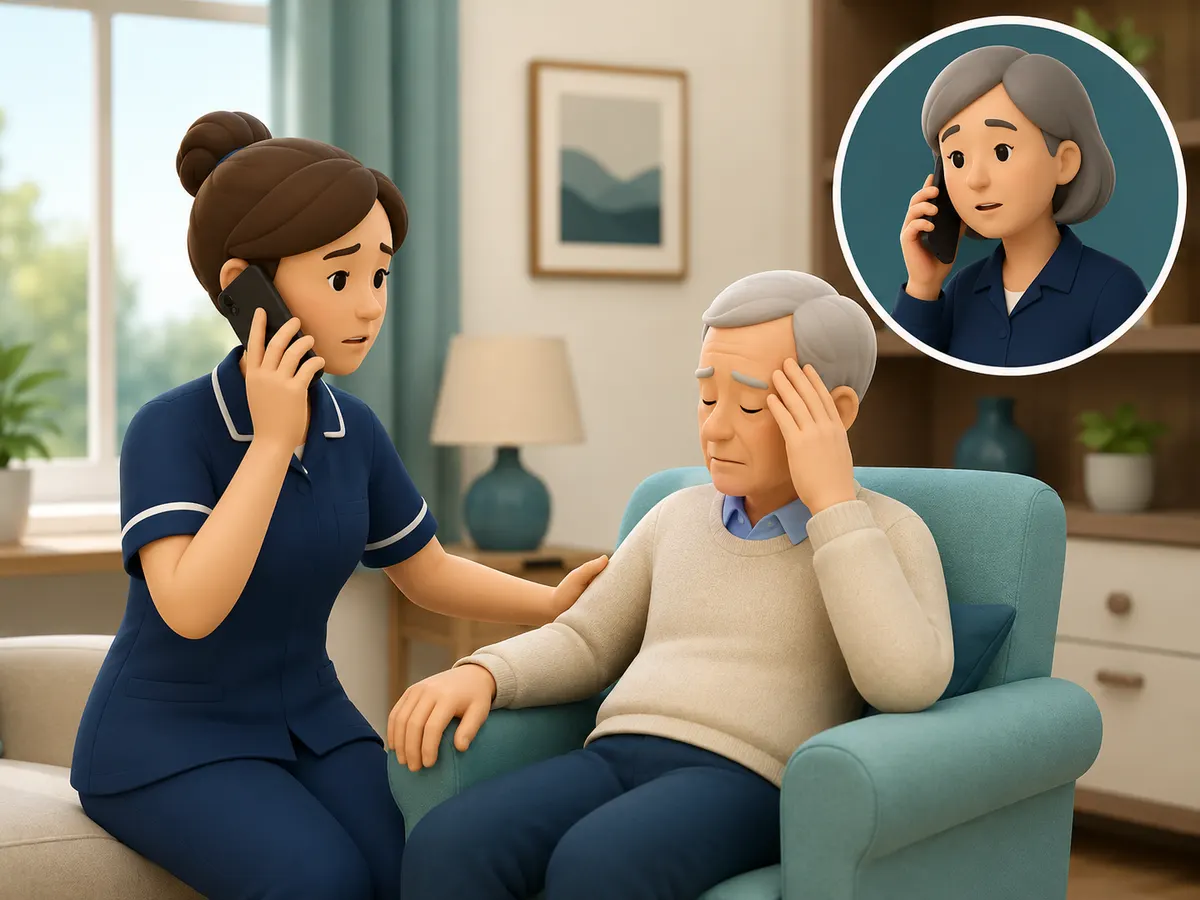
Why every note, every boundary and every login matters — the record protects the client, the carer and the company alike.
Everything a carer sees, hears and does during a visit only has value beyond that visit if it is reported. A written or spoken record protects the client, because their changing needs become properly known and acted on; it protects the carer, because there is clear evidence of what was seen and done; and it protects the company, as proof that safe, lawful care is genuinely being delivered.
Reports also do something an individual carer, however observant, cannot do alone: they reveal patterns. A single skipped meal noted in isolation might mean nothing. Three skipped meals across three different carers' visits, each one recorded honestly and read together back at the office, can flag a genuine decline early enough to act on it — long before it becomes an emergency.
Records also carry real legal weight. They can be examined during a safeguarding investigation, a CQC or CIW inspection, or a complaint, and in each of those situations, what wasn't written down is, in practice, treated as if it never happened. A carer's honest, timely reporting is one of the strongest protections they have.
If it wasn't written down, it didn't happen — at least not as far as anyone else can ever know.
A good report sticks to four things: facts actually observed, not opinions or guessed diagnoses; changes noticed, whether in mobility, appetite, mood, skin or confusion; concerns, even small ones that felt like nothing much at the time; and refusals, whenever a person declines care, medication or food, since that is their right but still needs to be tracked.
It helps to picture who actually reads a report afterwards: the next carer walking through the door with only minutes to get up to speed, a coordinator deciding whether a situation needs following up today or can wait, a family member anxious for real information, or occasionally a professional investigating a concern. Writing with that reader in mind, rather than simply as a box to tick before leaving, is what turns a report from a formality into something genuinely useful.
Two carers can write a note about exactly the same visit and produce two completely different pieces of evidence — one useless, one genuinely valuable — purely based on how specific and honest the writing is.

| Vague note | Honest, useful note |
|---|---|
| Client seemed fine today. | Alert and cheerful, ate full breakfast, mobilised to the bathroom independently. |
| Had a bit of a fall. | Found sitting on bedroom floor at 09:10, no visible injury, stood with one-person assist; office informed 09:15. |
| Didn't want to eat much. | Offered lunch at 12:30; ate two mouthfuls of soup, declined the rest; drank a full glass of water. |
| Skin looked a bit off. | Small red patch, roughly 2cm, on left heel; skin not broken; reported to senior carer for review. |
A vague note protects nobody, however well-meant. It gives the next carer nothing to act on, tells a family nothing useful, and would offer no defence at all if a decision ever had to be explained later. A specific, honest note takes barely any longer to write, and it is worth immeasurably more.
Warmth and closeness are exactly what good care requires, but they still sit within a professional relationship, and part of the job is holding a few boundaries firmly, however awkward that can feel in the moment. Gifts are the most common example — a grateful client offering something as thanks is genuinely touched, and turning it down can feel, wrongly, like rejecting the kindness itself.

Money is handled with the same care. Any cash or spending done on a client's behalf — shopping, top-ups, bill payments — is kept completely separate from a carer's own money, backed by receipts, and open to be checked at any time by the client, their family, or the office.
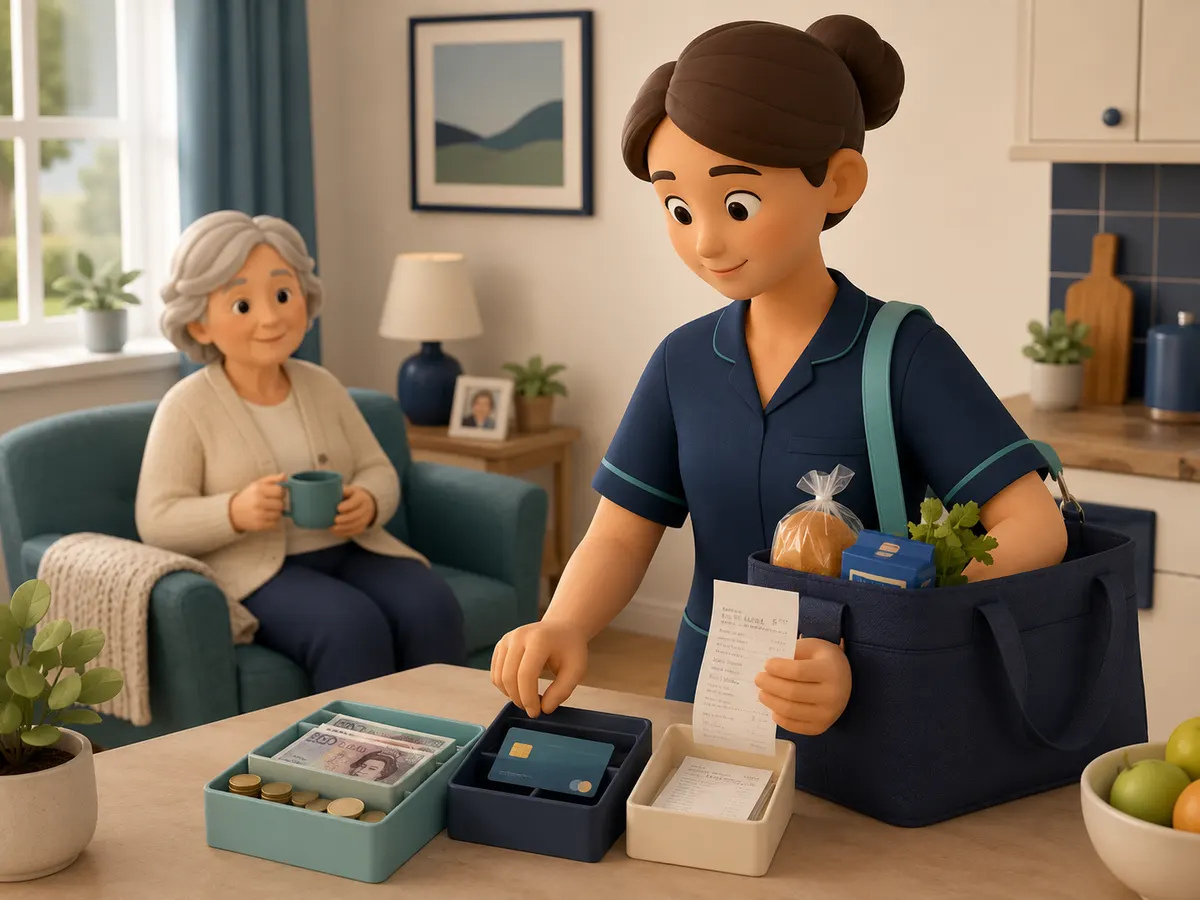
The same principle extends to personal relationships and favouritism: no lending or borrowing money privately, no cash-in-hand arrangements made outside the company, and no letting genuine fondness for one client translate into less attention or effort for another. These boundaries exist to protect clients from harm and carers from suspicion — they benefit everyone, even when they feel a little stiff in the moment.
What is written about a person deserves the same protection as what is said to their face. Paper files and tablet apps alike hold deeply personal information, and they are locked away or logged out of the moment they are not actively being used — in someone's own home just as strictly as it would be in an office.
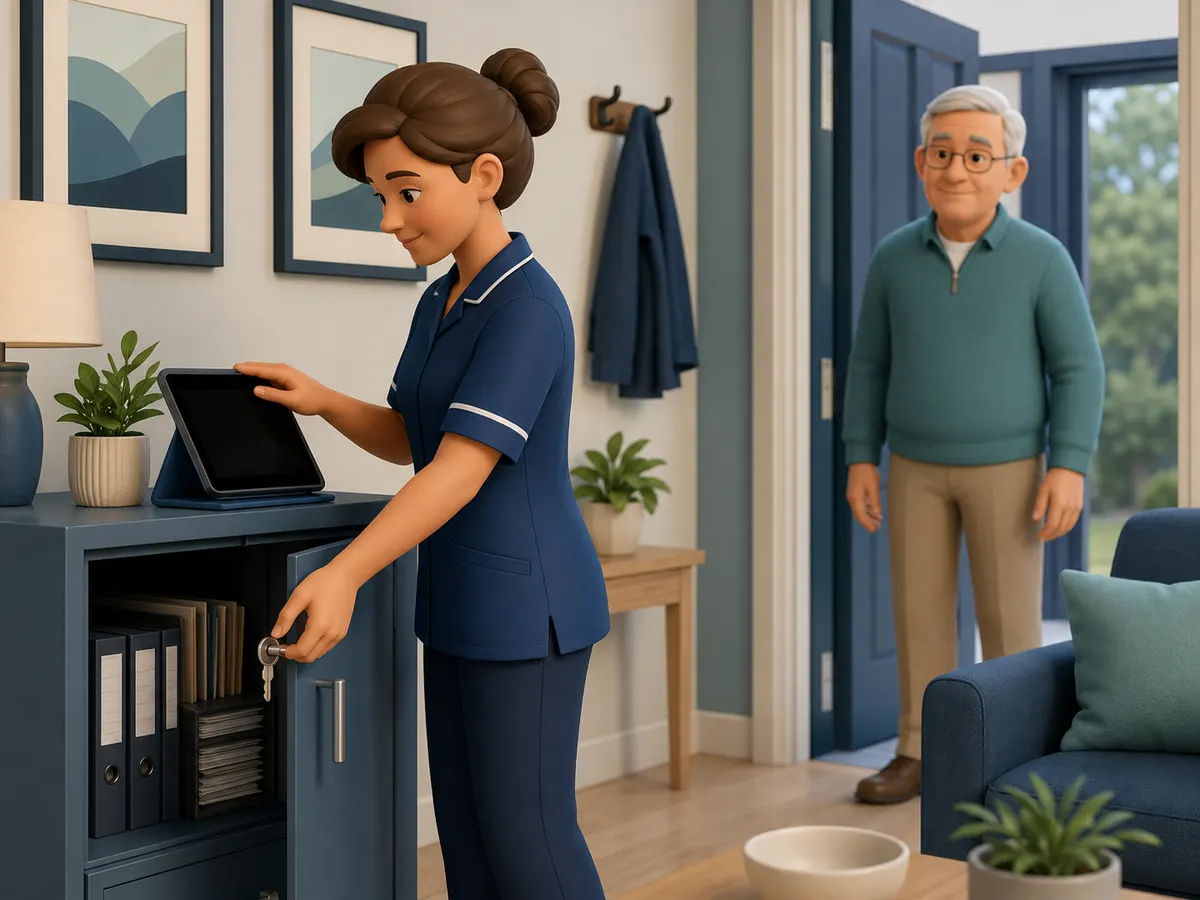
Confidentiality also extends well beyond the front door. Information about a client is shared only with colleagues and professionals who genuinely need it to provide care — never discussed on the school run, in the pub, or with a curious neighbour, however innocent the conversation might feel at the time.
The same standards of privacy and boundaries apply just as firmly online and on a personal phone as they do in person, and a few rules here are worth being absolutely clear about.
Never photograph a client on a personal phone, whatever the reason — not even a lovely moment worth remembering.
Work stories, even without names, stay off personal social media — recognisable details are often enough to break confidentiality.
A phone stays in a pocket, silenced, during care time — full attention belongs to the person in front of you.
These rules exist because it is remarkably easy to breach confidentiality without meaning to — a photo meant kindly, a status update with no name attached but an unmistakable location and story. Treating a client's privacy as absolute, online exactly as much as in conversation, is simply part of the job.
Turning up on time is one of the plainest, least glamorous forms of respect a carer offers, and it matters far more than it might seem from the outside. Many clients structure their medication, their meals and their toileting routines around an expected visit time — lateness for them is not a minor inconvenience but a real disruption to their day, and sometimes to their health.
Reliability also means telling the office immediately about any delay, staying contactable throughout the working day, and never shortening one call to make up time lost being late to another. A carer who is consistently on time, consistently honest, and consistently within the lines of a professional boundary is, in the end, simply doing the job properly.
Being on time, telling the truth, keeping the boundary — these are the small disciplines that add up to real professionalism.
Carelo gives carers the app this handbook was written for: calls, GPS check-in, notes and medication at the door. From £59 a month for agencies; £30 a month for families who employ their own carers.
Book a demo