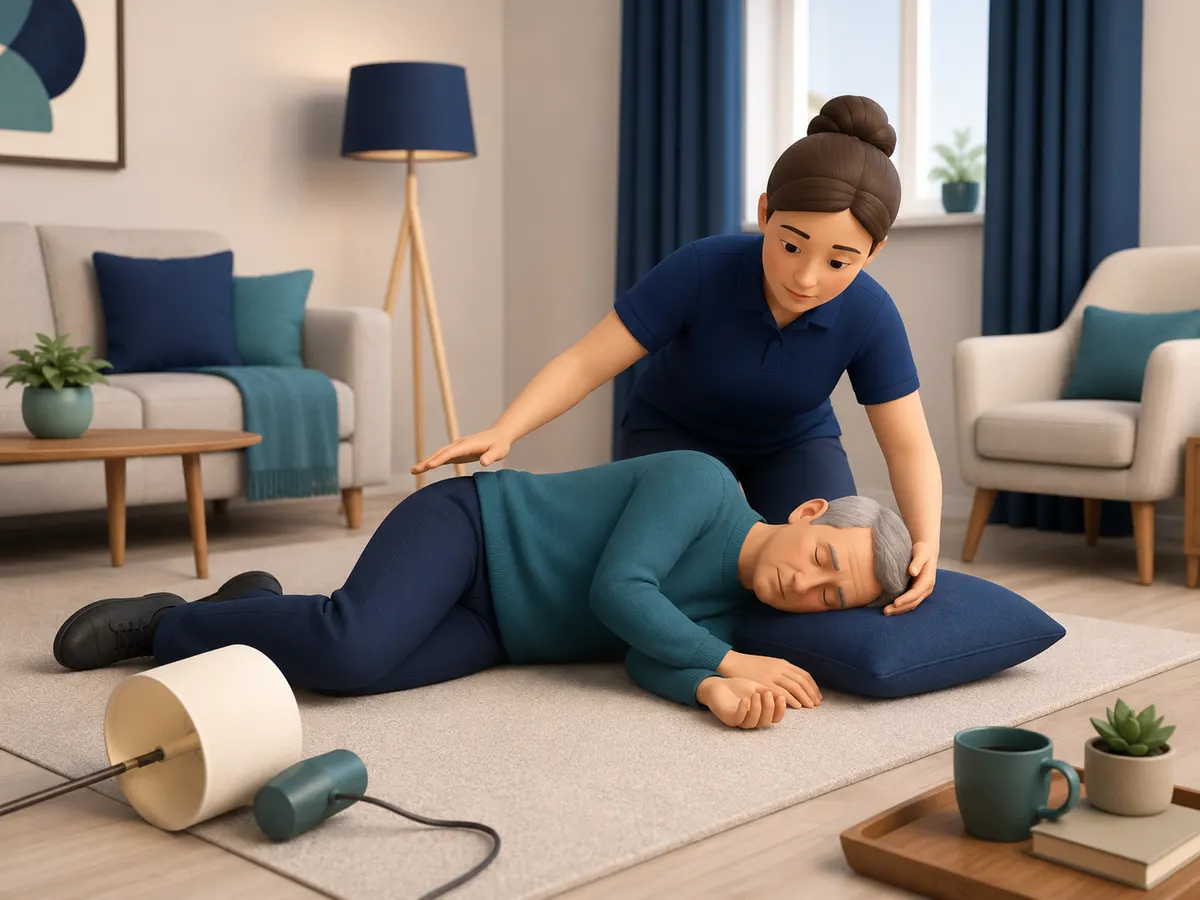
Spotting danger early is not a special skill — it is the daily discipline that keeps people safe.
Good care is not only about kindness and companionship — though both matter enormously. It is also about constant, quiet vigilance: noticing the things that could go wrong before they do, and knowing exactly what to do the moment they do. A carer who understands risk properly protects far more than good intentions alone ever could.
Every visit carries small, ordinary risks that most people never think twice about — a loose rug, a rushed meal, a plug left too near the sink. None of these look dramatic on their own, but together they are the everyday hazards behind the vast majority of harm that comes to older and vulnerable people at home. Learning to see them is not about becoming anxious; it is about becoming properly useful.
This chapter walks through the risks that matter most in home care — falls, pressure damage, choking, dehydration, malnutrition, scalds, hazards, and infection — and what a confident, well-trained carer actually does about each one. None of it is complicated. All of it saves lives.
Risk awareness is not extra to the job. It is the job.
Falls are, by a wide margin, the most common cause of injury for older people living at home. Most falls do not end in a serious injury, but some cause fractures, head injuries, or a loss of confidence that quietly changes the whole shape of someone's life afterwards. That is exactly why falls deserve more attention than almost anything else in this handbook.
| Sign | Why it matters |
|---|---|
| Unsteady on their feet, holding onto furniture | Balance may be failing before a fall actually happens |
| New dizziness or looking pale | Could point to low blood pressure, dehydration or illness |
| Reluctant to get up or move around | May be masking pain, weakness or fear of falling again |
| Slippers or socks worn without proper support | Simple to fix, and one of the most common causes |
| Clutter, trailing wires or loose rugs on the floor | The hazard itself, not just a sign of one |
The instinct to immediately help someone up is completely natural, and it is exactly the instinct to resist. Moving someone who has broken a bone, hurt their neck or back, or is bleeding can turn a manageable fall into something far more serious. The first job is always to stop, look, and understand what has happened — are they conscious, are they breathing steadily, are they in pain, is there any sign of injury — before any decision is made about moving them at all.
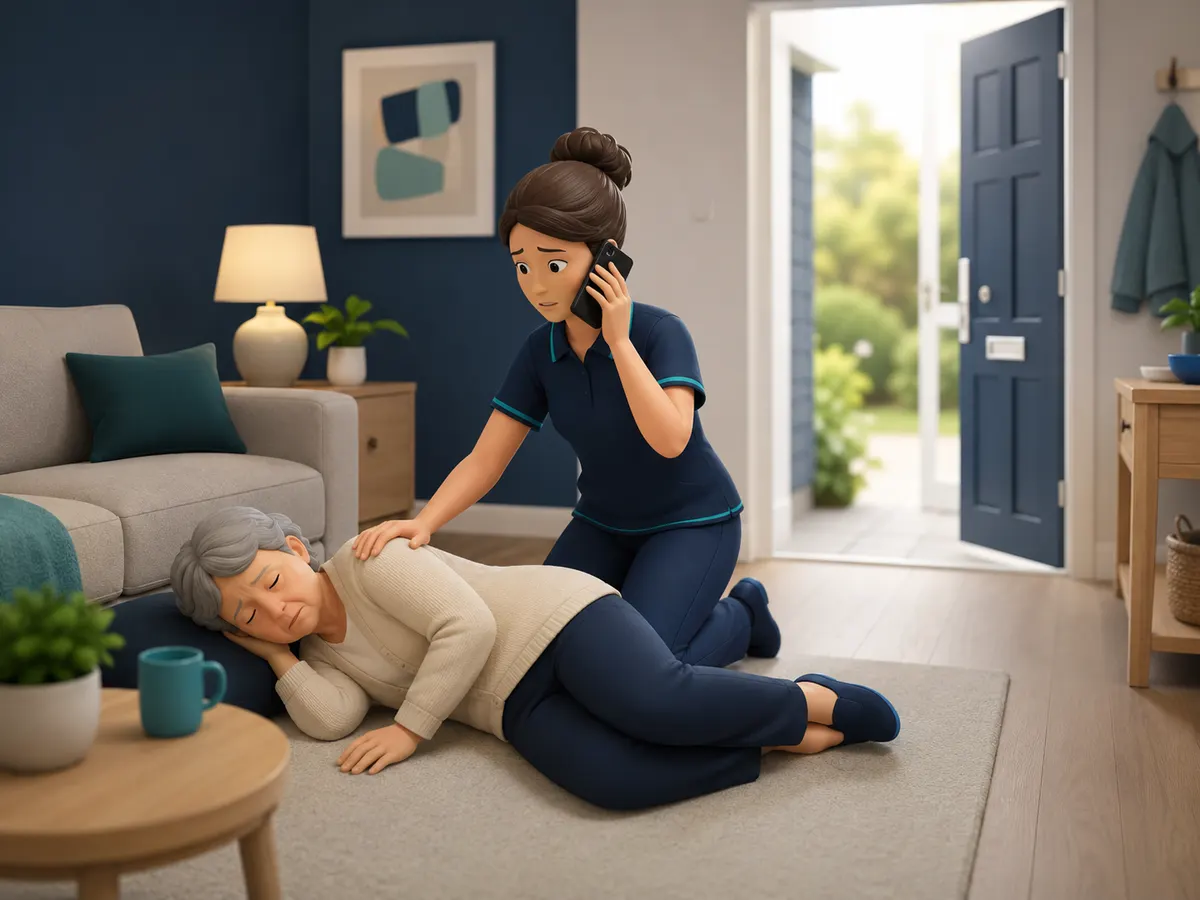
If there is any doubt at all about whether it is safe to move someone, the right call is 999, made without leaving their side. Give the address first, then explain clearly what has happened, whether they are conscious and breathing, and anything relevant about their health. A steady, calm voice does two jobs at once — it helps the call handler get the details right, and it reassures a frightened person that they are not alone.
Pressure damage — sometimes called a pressure sore or bedsore — happens when skin and the tissue beneath it are starved of blood because of constant, unrelieved pressure, usually over a bony area like a heel, hip, elbow or the base of the spine. It can begin far faster than most people expect: unrelieved pressure on vulnerable skin can start causing real damage in under two hours.
The people most at risk are those who spend long periods sitting or lying in one position — someone in bed for much of the day, someone in a wheelchair, or someone too weak or too frightened of falling to shift their own weight regularly. Poor nutrition, dehydration, and thin, fragile older skin all make the risk worse still.
Skin that stays red or discoloured after pressure is removed, rather than fading within minutes, is often the very first sign.
An area of skin that feels unusually warm, sore to the touch, or harder than the skin around it needs attention straightaway.
Heels, hips, elbows, shoulder blades and the base of the spine carry the most pressure and deserve the closest attention.
Changing position regularly, following the person's care plan, is the single most effective way to prevent damage before it starts.
Any early sign is reported the same day, never left until the next visit. Pressure damage that is caught early can often be reversed with careful repositioning and skin care, but damage that is missed can develop into a deep, serious wound within days.
Choking can happen in seconds, and the right response depends entirely on how severe it is. Reading that correctly — not acting too soon, and not waiting too long — is one of the most important judgement calls a carer ever has to make.
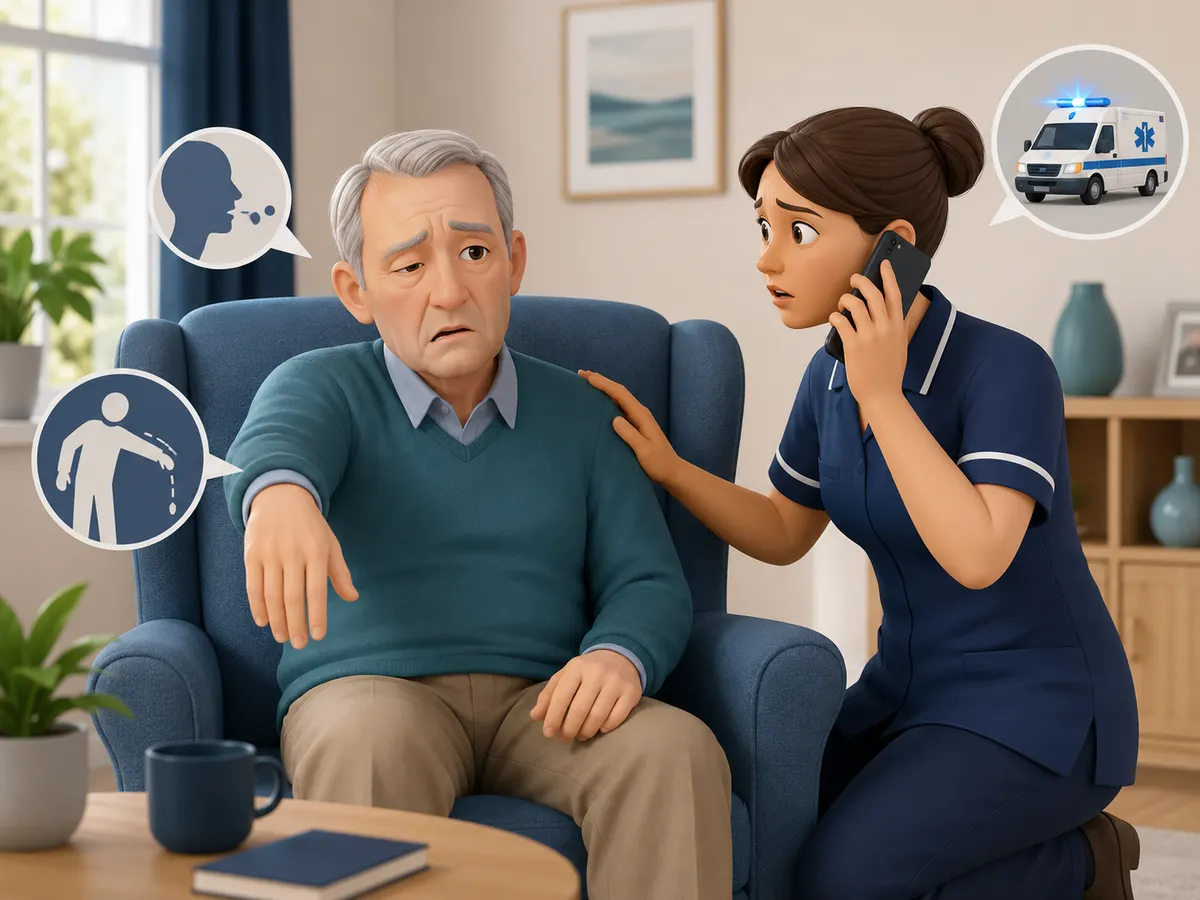
While someone can still cough forcefully, speak, or make sound, the airway is not fully blocked, and coughing is usually the most effective way for it to clear on its own. The right thing to do is stay close, offer calm encouragement, and resist the urge to interrupt with back blows or thrusts — a person who is still coughing is still fighting it off themselves.
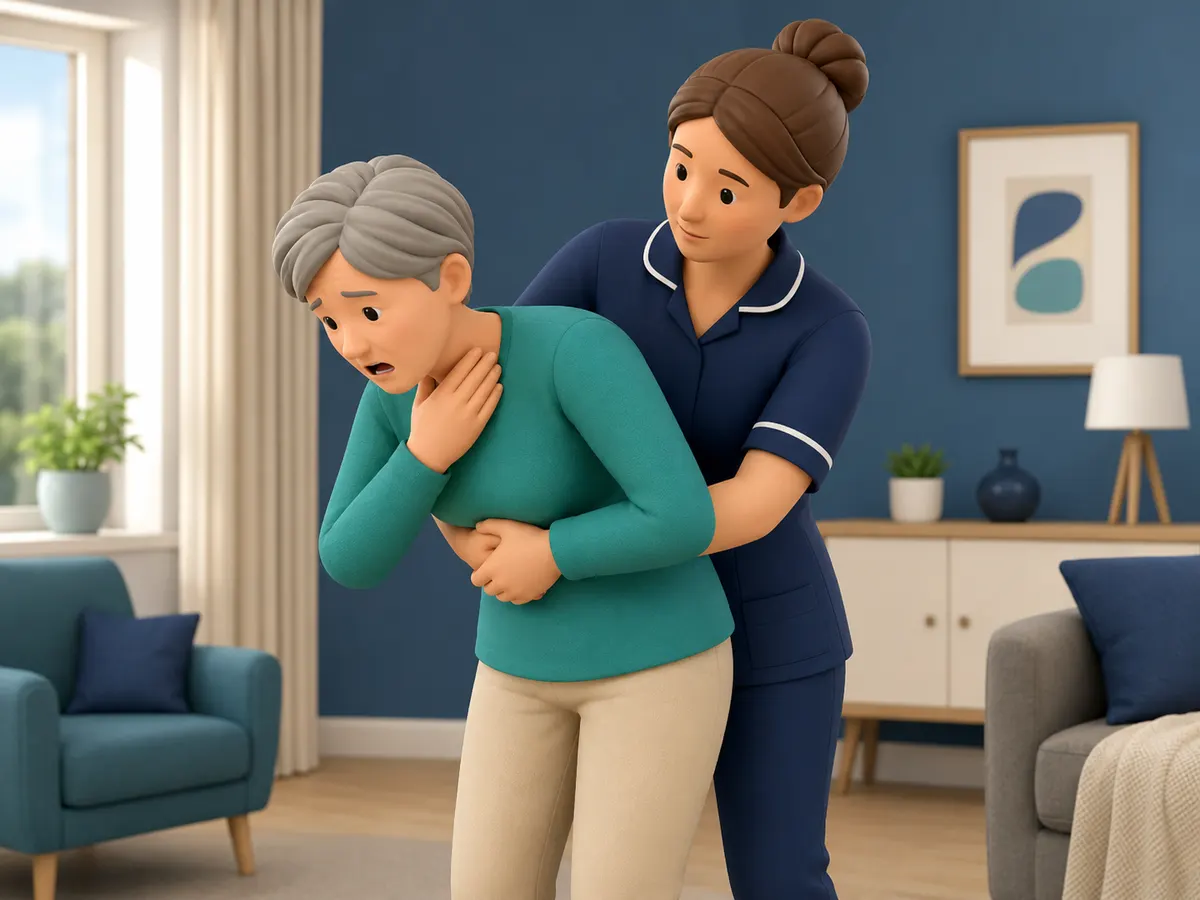
When coughing stops, or no sound or air is moving at all, the situation has become severe and calls for immediate action. This is exactly the moment first aid training exists for: firm back blows between the shoulder blades, followed by abdominal thrusts, repeated in cycles, with 999 called alongside it. Even once the blockage clears, the person should always be checked over by ambulance crew, since the thrusts themselves can cause injury that needs a proper review.
Falls and choking announce themselves. Dehydration and malnutrition rarely do — they build slowly, over days or weeks, and are easy to miss in someone who otherwise seems fine. Older people often feel thirst and hunger less strongly than they once did, which makes a carer's attentiveness even more important.
Along with dark, strong-smelling urine or noticeably less need for the toilet, these are among the earliest signs of dehydration.
A sudden change in how alert or clear someone seems is one of the most common — and most overlooked — signs of dehydration in older people.
Notice not just whether food is offered, but whether it is actually being eaten, and say so if a pattern starts to appear.
Unplanned weight loss often shows up first in how clothes and jewellery fit, long before it shows on a scale.
A cup of tea left going cold, or a plate barely touched, is worth mentioning even if it seems too small to matter. Encouraging small, regular sips of fluid throughout a visit — rather than one large drink at the end — and gently prompting at mealtimes both make a real difference, and any pattern of reduced eating or drinking should always be reported to the office.
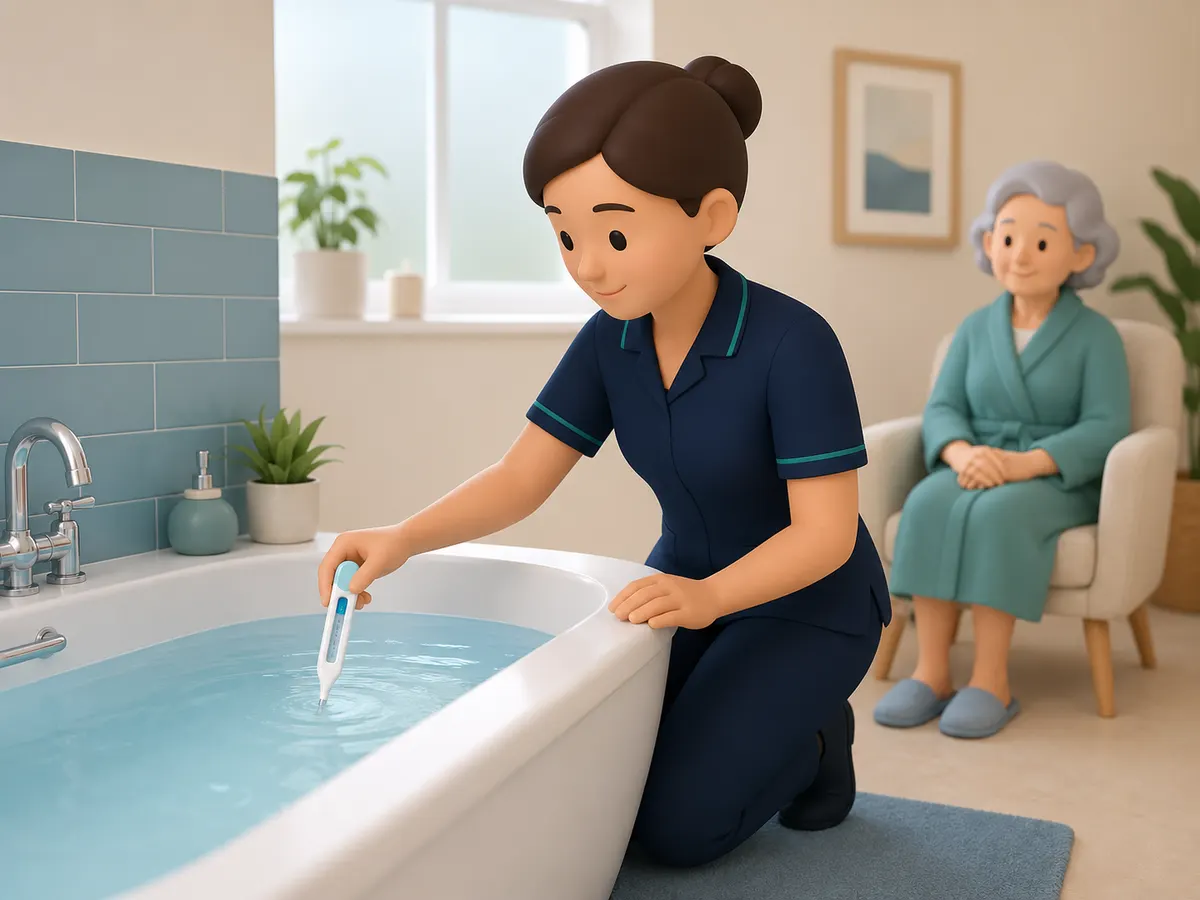
Skin becomes considerably more sensitive to heat with age, and reactions slow too, which means a bath that feels fine to a carer's hand can genuinely burn someone else. Water temperature should always be checked with a thermometer before the person is anywhere near the tub, and if hot water needs topping up once they're in, cold should always go in first to avoid any sudden change.
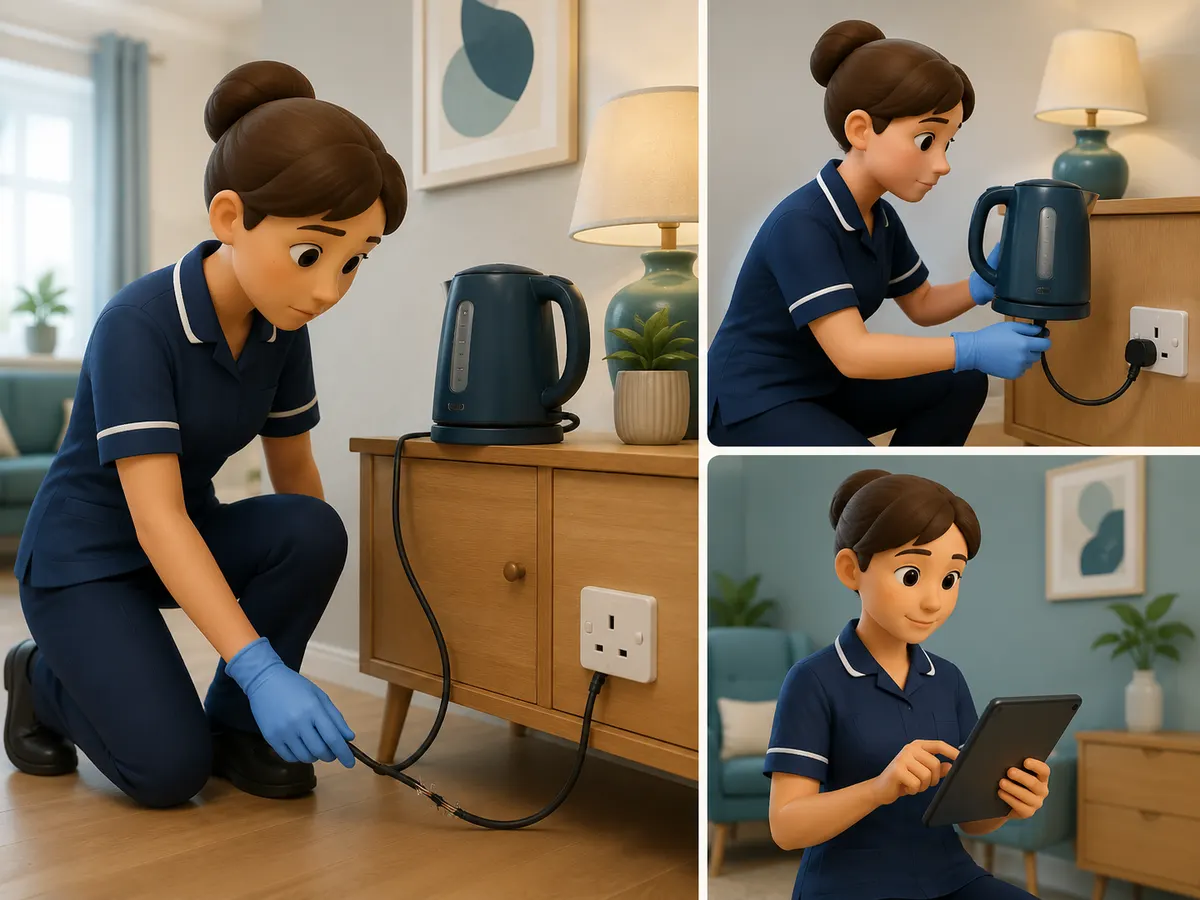
Frayed wires, warm plugs, overloaded sockets, and old appliances are common in homes and easy to walk past without a second glance. Any of these should be unplugged straightaway and not used again until checked, with the hazard reported the same day rather than left for the next visit — noticing it is never about blame, only about keeping the home safe.
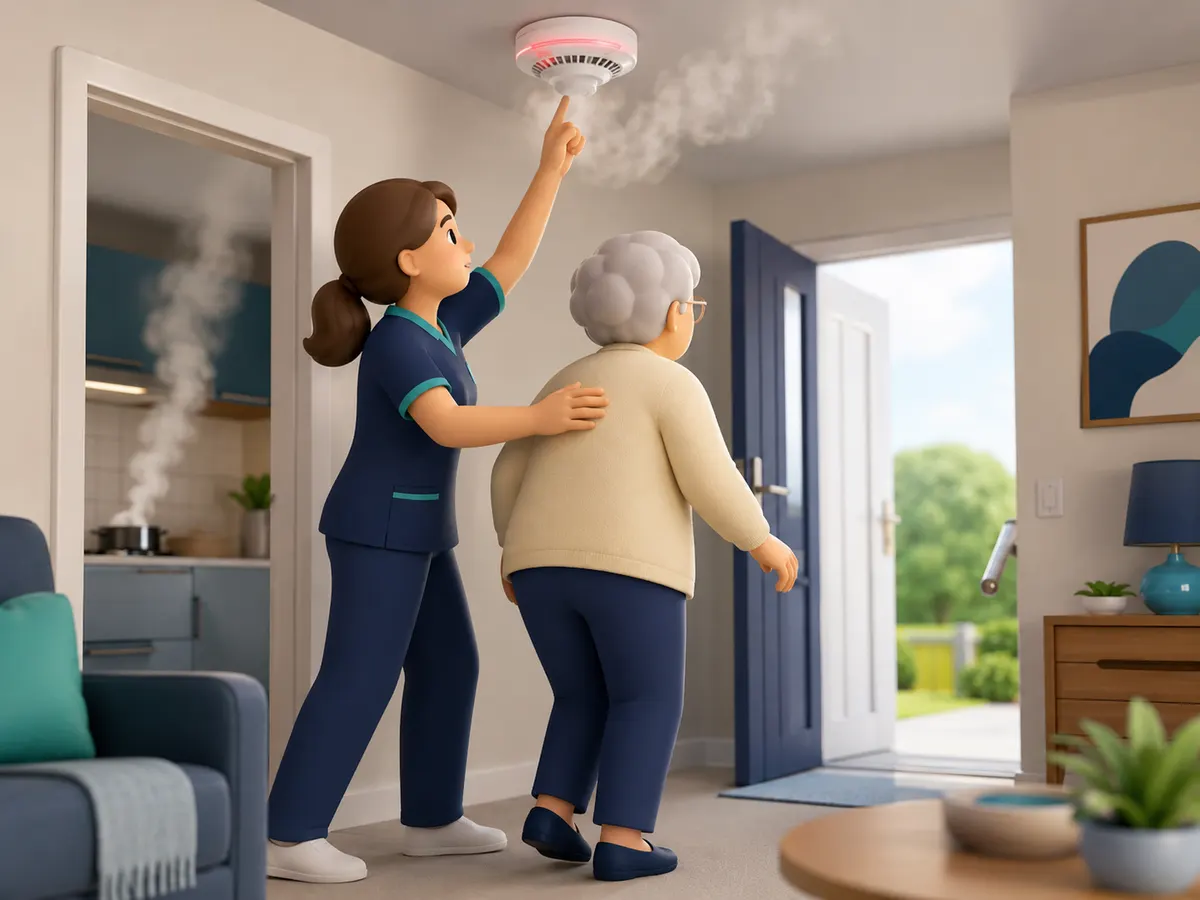
Fire is rare, but it is the hazard that allows for no hesitation at all. If smoke or fire is noticed, the person being cared for is guided calmly and directly outside — closing doors behind you if it's safe to do so, since a closed door slows fire from spreading — and 999 is called from outside. Nobody ever goes back inside for any reason until the fire service says it is safe to.
Infection rarely feels like a dramatic emergency, but it is one of the most common reasons an older or frail person ends up in hospital, and it can take hold quickly in someone whose immune system is already weaker. A cut left uncleaned, a chest infection that starts as a simple cough, or germs carried between visits on unwashed hands can all escalate faster in an older body than a younger one.
The good news is that the everyday habits of infection prevention — thorough handwashing, fresh gloves and aprons for each task, prompt cleaning of anything soiled, keeping wounds clean and covered — do most of the protective work quietly, without ever needing to be dramatic about it. Noticing the early signs of infection matters just as much: a wound that's red, warm, swollen or weeping; new confusion in someone who is normally clear-headed, which in older people can be one of the very first signs something is wrong; a temperature, or simply someone who "isn't themselves."
Carelo gives carers the app this handbook was written for: calls, GPS check-in, notes and medication at the door. From £59 a month for agencies; £30 a month for families who employ their own carers.
Book a demo