Door to door, task to task — the whole shape of a visit done properly, with dignity built into every step.
A visit begins before a single task does. The knock on the door, the pause that follows it, the identity badge held up without needing to be asked for — all of it tells a person, before a word of care has been given, exactly what kind of hour they are about to have. Arriving well is not a small courtesy tacked onto the start of a visit. It is the first piece of care itself.
Where a keysafe is used to gain entry, the code belongs to the client alone. It is never written down where someone else might see it, never shared beyond the people who are meant to have it, and the box is closed properly again the moment the key is taken or returned. A keysafe only works as a safeguard if it is treated with exactly the same care as a spare key handed over in person.
Before any task begins — before a kettle is filled or a wash is started — the care plan and any handover notes are read properly, not skimmed. This is where allergies are listed, where a preference for a particular soap or a particular side of the bed is recorded, where yesterday's carer may have left a note about something that changed. Skipping this step to get started faster almost always costs more time than it saves, and it is where real mistakes begin.
A good carer treats the care plan as a living document, not paperwork filled in once and forgotten. It is checked at the start of every visit, because plans change, health changes, and what was true last week may not be true today.
Give the person time to answer in their own moment. This is their home, and their decision when the door opens.
A visible badge lets someone confirm, at a glance, that the person at their door is who they were expecting.
The care plan and any handover notes are checked before a single task starts — every visit, not just the first one.
Personal care is the most intimate work in a whole visit, and it is where dignity is either protected or quietly lost. The rule that runs through all of it is simple to say and takes real skill to practise: uncover only what needs to be uncovered, keep the room warm, and let the person lead as much of the task as they are able to.
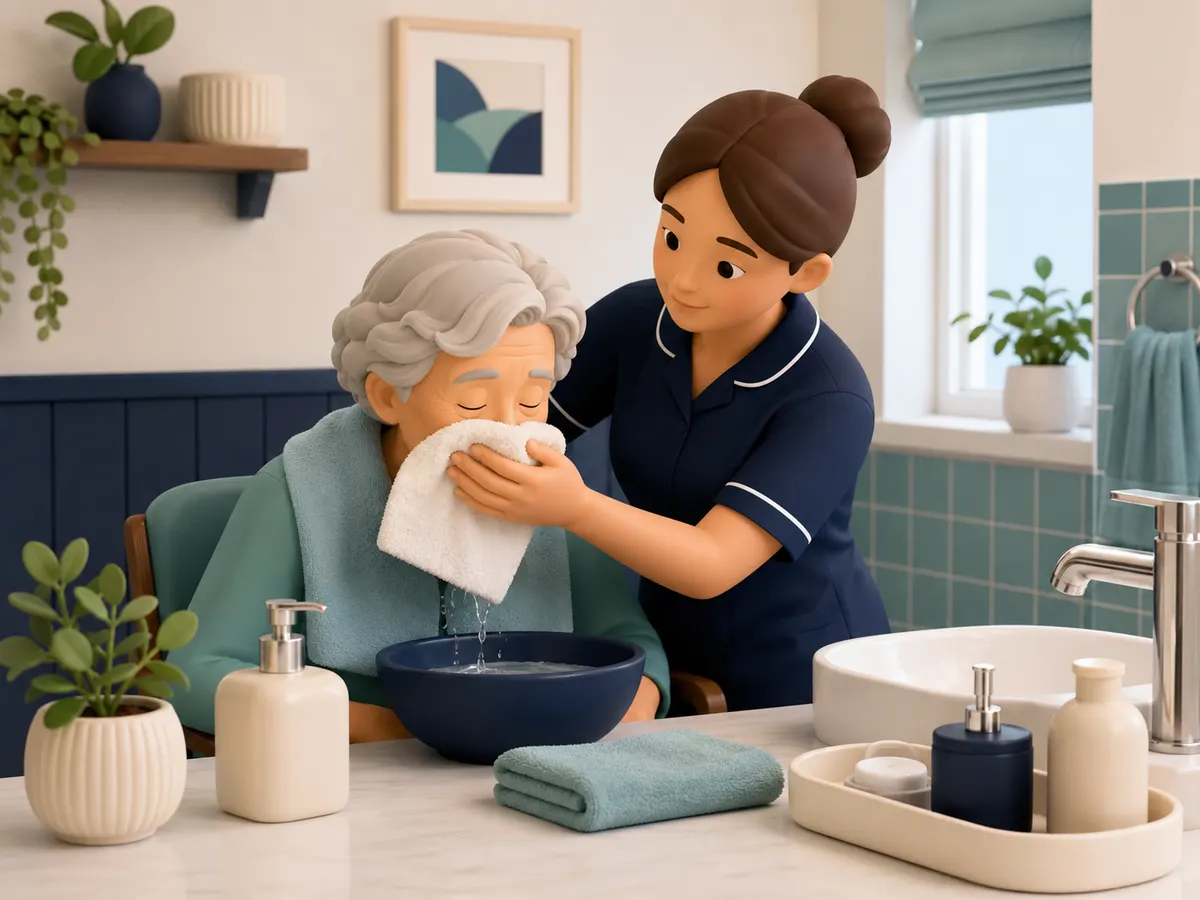
Even something as small as washing a face deserves proper attention. Water is tested against the carer's own wrist before it ever touches someone else's skin — warm, never hot — and the wash moves from the cleanest areas outward, using a fresh part of the flannel as needed. Narrating softly as the flannel moves, rather than working in silence, turns a task done for someone into a task done with them.
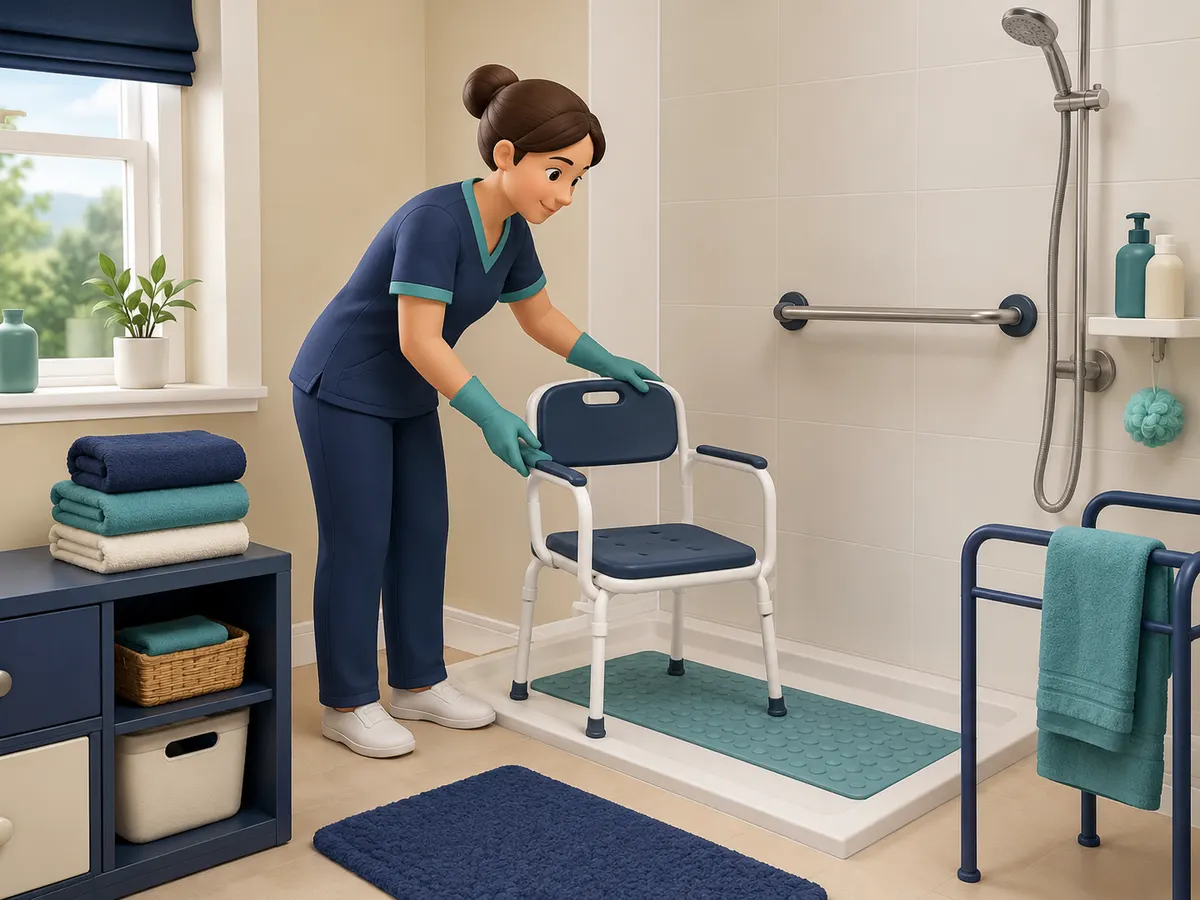
By the time someone reaches a shower or a bath, its safety should already be decided. The chair's height and stability are checked by hand, non-slip mats are in place both inside and outside the shower area, and everything needed — towels, soap, a robe — is laid out within reach before the wash begins. Nobody should ever be left waiting, exposed, while something is fetched from another room.
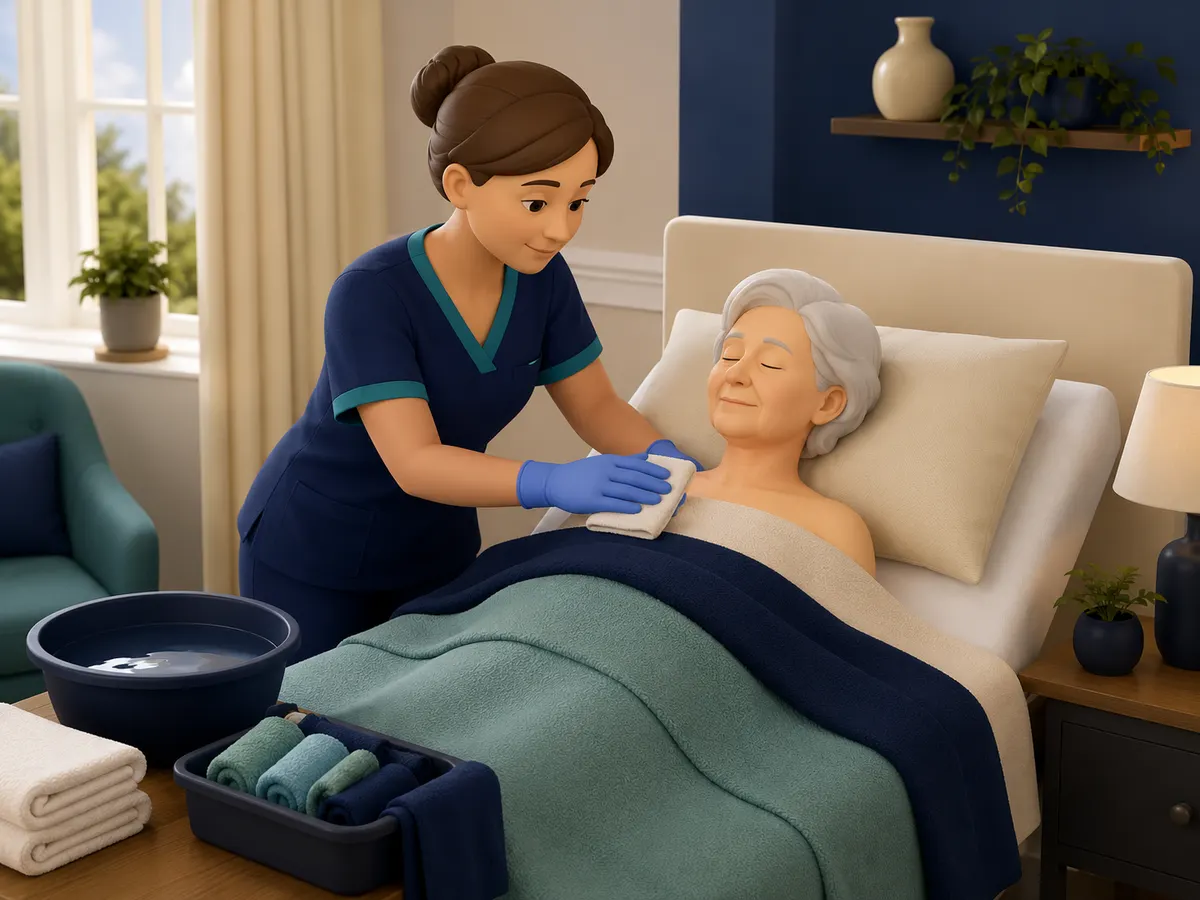
For anyone who cannot get to a bathroom, a bed bath asks for the same principle taken even further: only the part of the body actively being washed is ever uncovered, and it is covered again before the next area begins. A warm, draught-free room and water checked before use turn what could be an uncomfortable task into something closer to comfort.
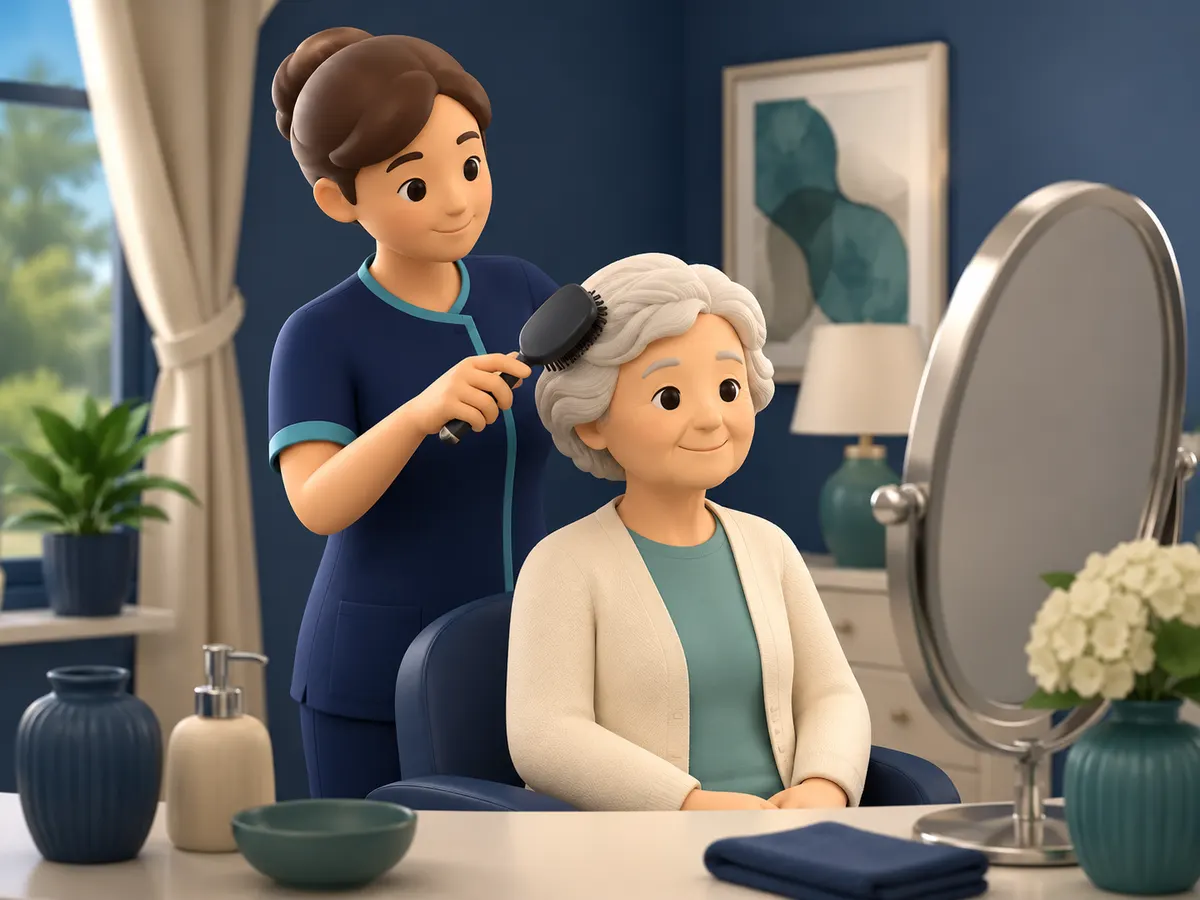
Grooming is easy to treat as an afterthought on a busy visit, yet few things restore someone's sense of themselves as quickly as having their hair brushed properly, in front of a mirror, by someone unhurried. Brushing from the ends upward, section by section, avoids pulling at a scalp that may be more delicate with age, and asking how someone likes it worn keeps them the author of their own appearance.
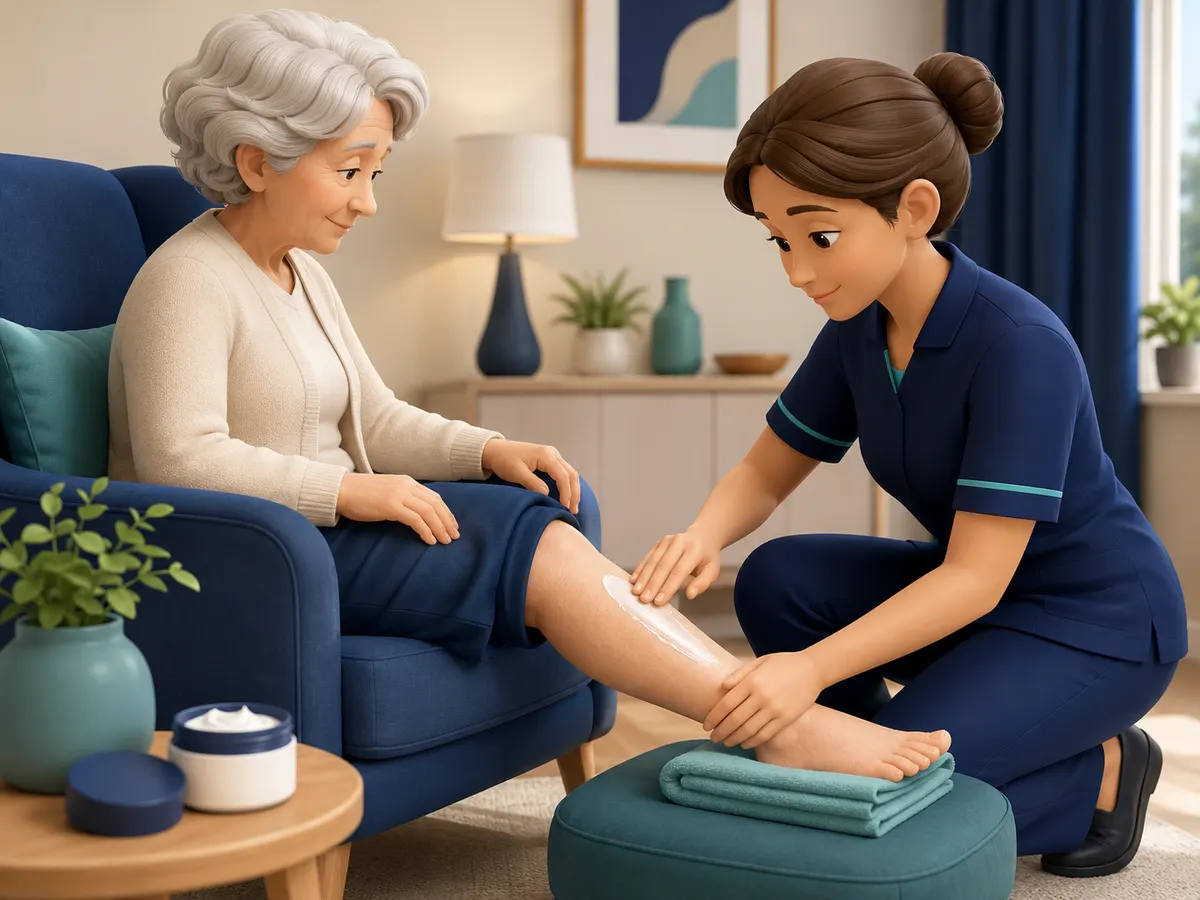
Moisturising looks like a simple comfort task, and it is one, but it also opens up one of the best chances in an entire visit to check the skin properly, hands-on, without anyone feeling examined. Any redness, dryness, broken skin or swelling noticed while working in the cream is worth mentioning in the notes or to the office — hands that moisturise are often the first hands to notice something is wrong.
A face washed with care, hair brushed properly, skin checked without being stared at — dignity in personal care is built from a hundred small choices, not one big one.
A clean mouth affects far more than fresh breath alone — it affects eating, speaking and comfort — which is why oral care holds its place on every good care plan, even when a person needs full assistance to manage it.

Brushing gently in small circular motions, covering every surface including the tongue, protects gums that can be more delicate with age. Dentures, where worn, are cleaned separately and stored safely in their own labelled case — never left loose on a surface where they might be lost, cracked, or picked up by mistake.
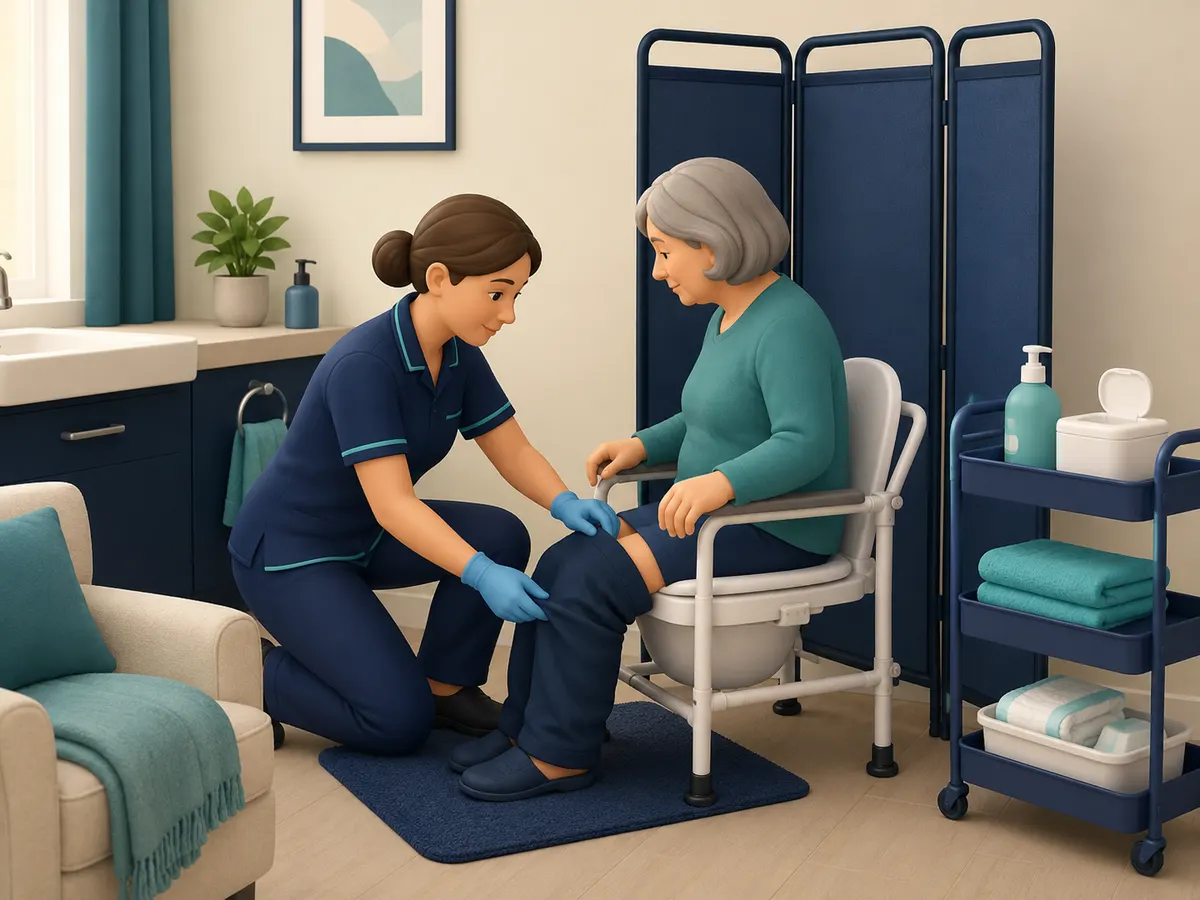
Some of the most important care work happens in moments most people never think about. A privacy screen goes up every single time this kind of task happens, not only when it is convenient — because privacy is not something to ration. Gloves go on before contact begins and are changed between tasks, protecting both the carer and the person being cared for.
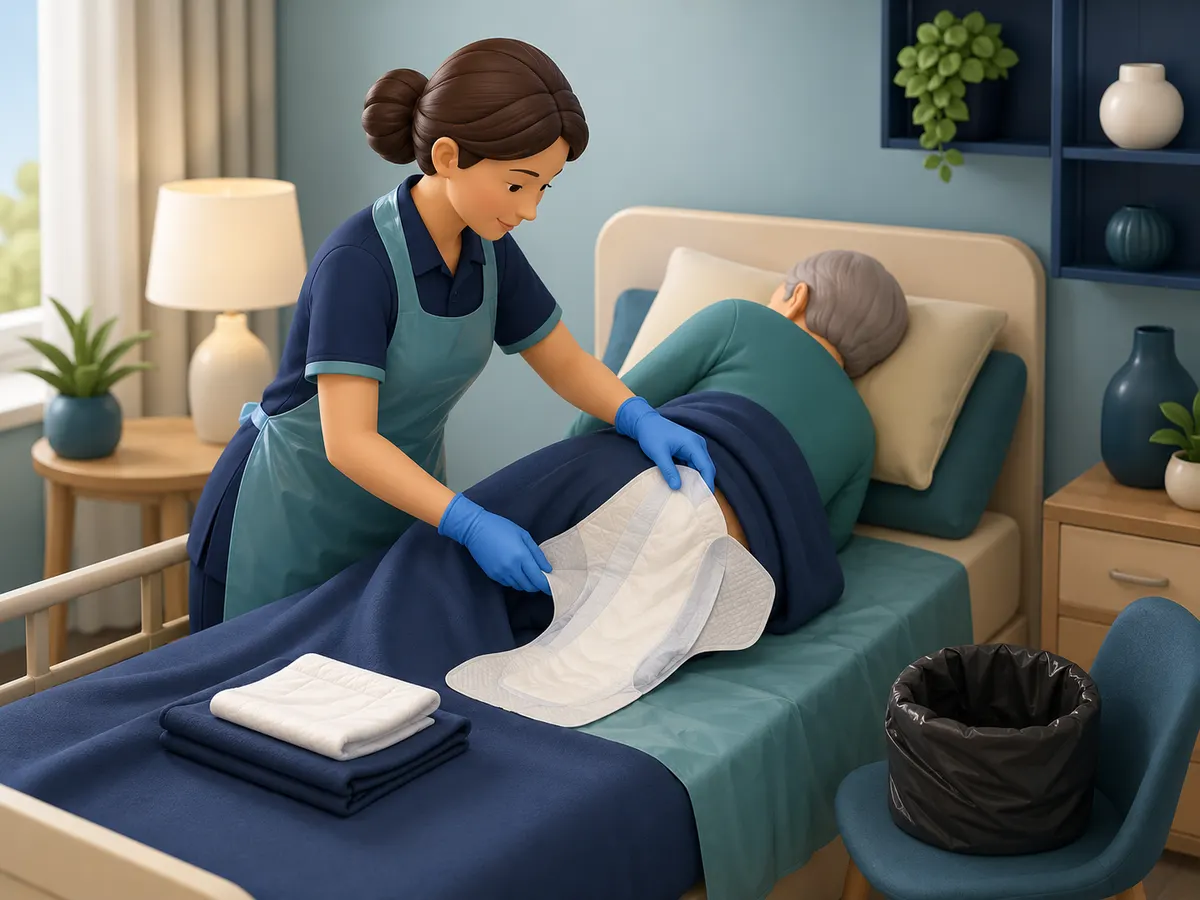
Continence care asks more of a carer's patience and respect than almost any other task, precisely because it touches on a person's most private moments. Full protective equipment is worn for every change, the work is done efficiently without ever seeming rushed, and a quick, honest look at the skin during the change catches redness or soreness early — worth recording and reporting rather than waiting to see if it improves on its own.
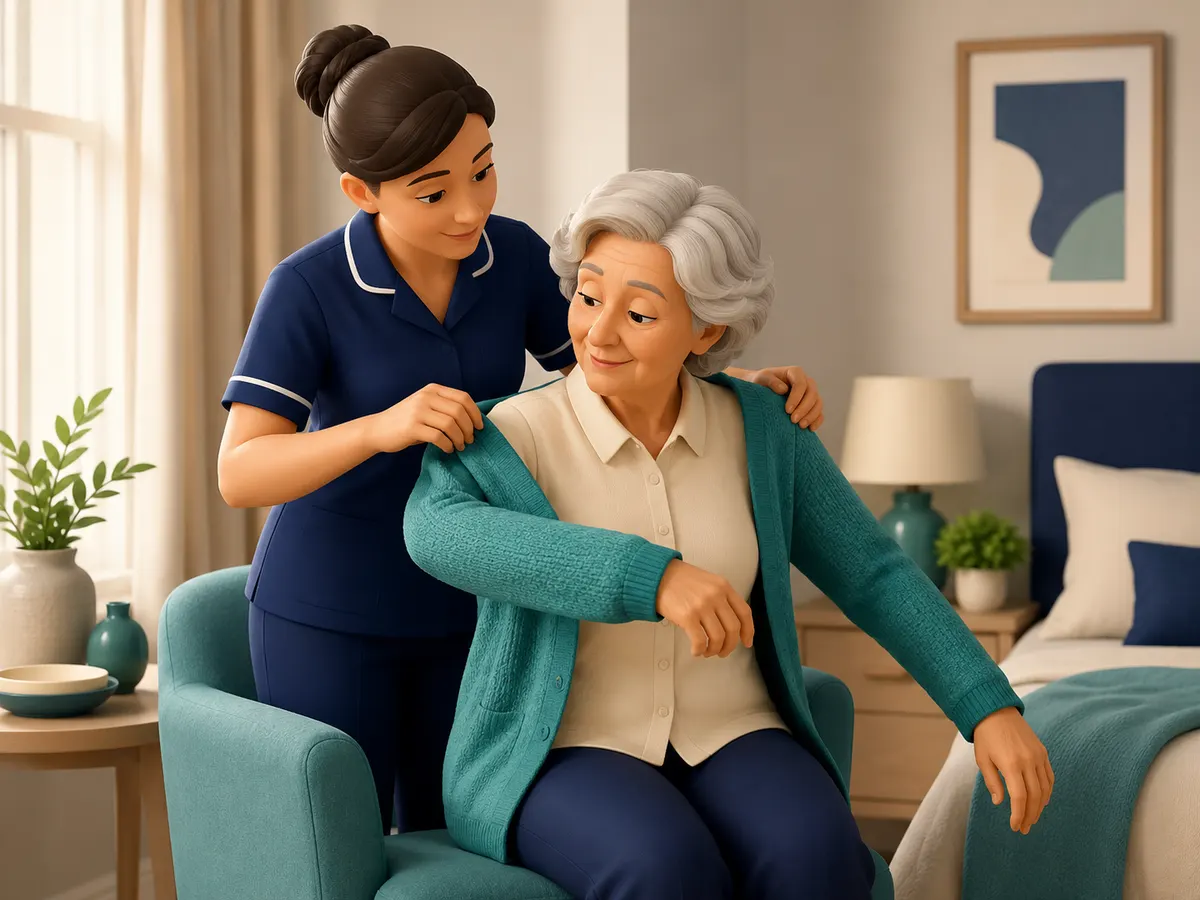
Helping someone get dressed looks like the simplest task on a visit, yet it asks for real attention to the order of movement, the person's own strength, and their preferences about how they like to be helped. Getting dressed with help should never feel like being dressed.
The weaker or less mobile arm goes into a sleeve first, and comes out last when undressing — a small habit worth applying automatically to any garment, since it avoids unnecessary strain on a joint or muscle that is already working harder than the other side. Wherever someone is able to reach and guide their own arm, they are left to do exactly that, with the carer providing structure rather than doing the whole job themselves.
Asking about preference — which cardigan, done up or open, sleeves rolled or not — is a small thing that keeps someone dressing as themselves, not as a task being completed on their behalf. Independence, even in something as small as a sleeve, is worth protecting every single time.
Good moving and handling starts long before a hand is ever offered — it starts with looking at a room the way someone unsteady on their feet would see it. A loose rug or a trailing cable is invisible to most people and a genuine hazard to someone else.
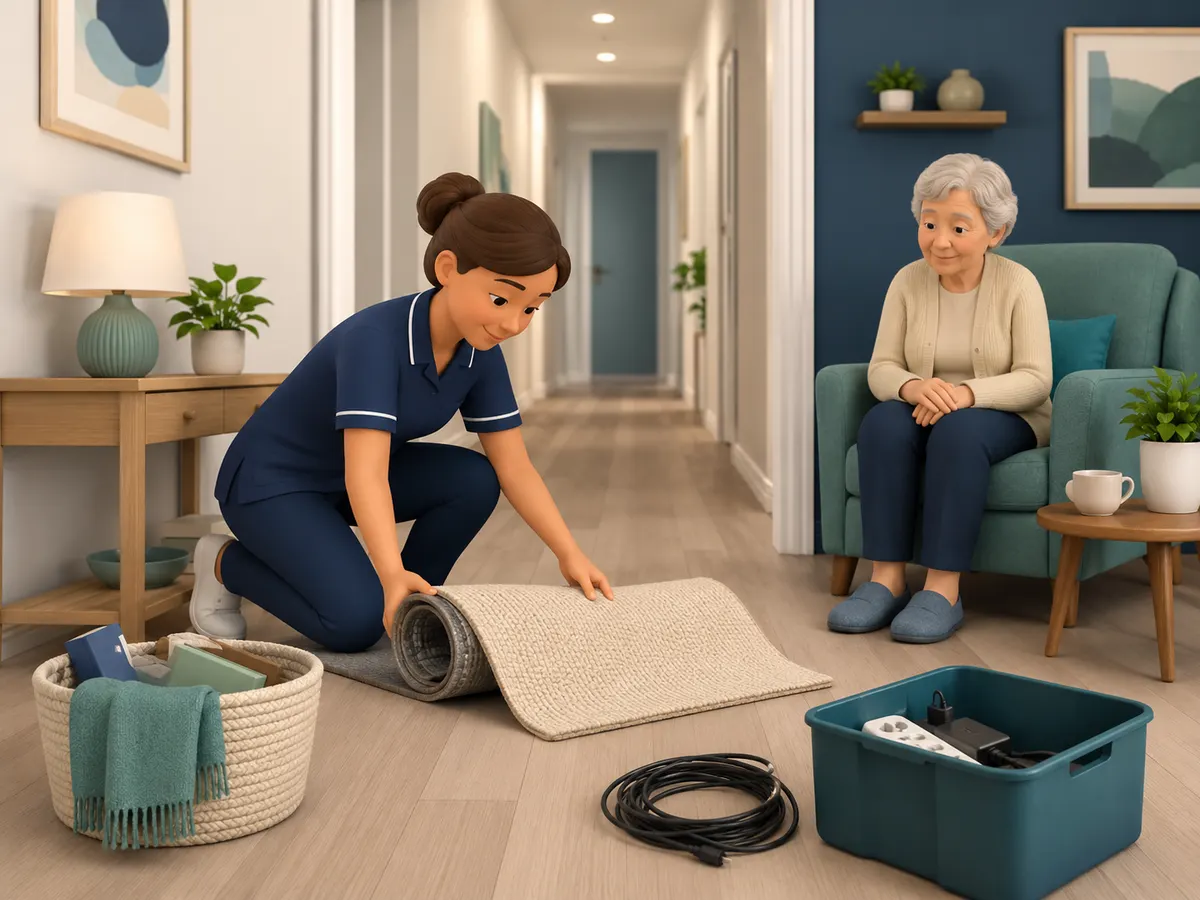
A fresh look at trip hazards every visit matters more than a one-off check, because rugs slip, cables get moved, and habits change over time. Removing or properly securing a hazard is worth far more than remembering to step around it, and raising it with warmth rather than alarm — as tidying, not as a fault — keeps a home feeling like a home rather than a hazard zone.
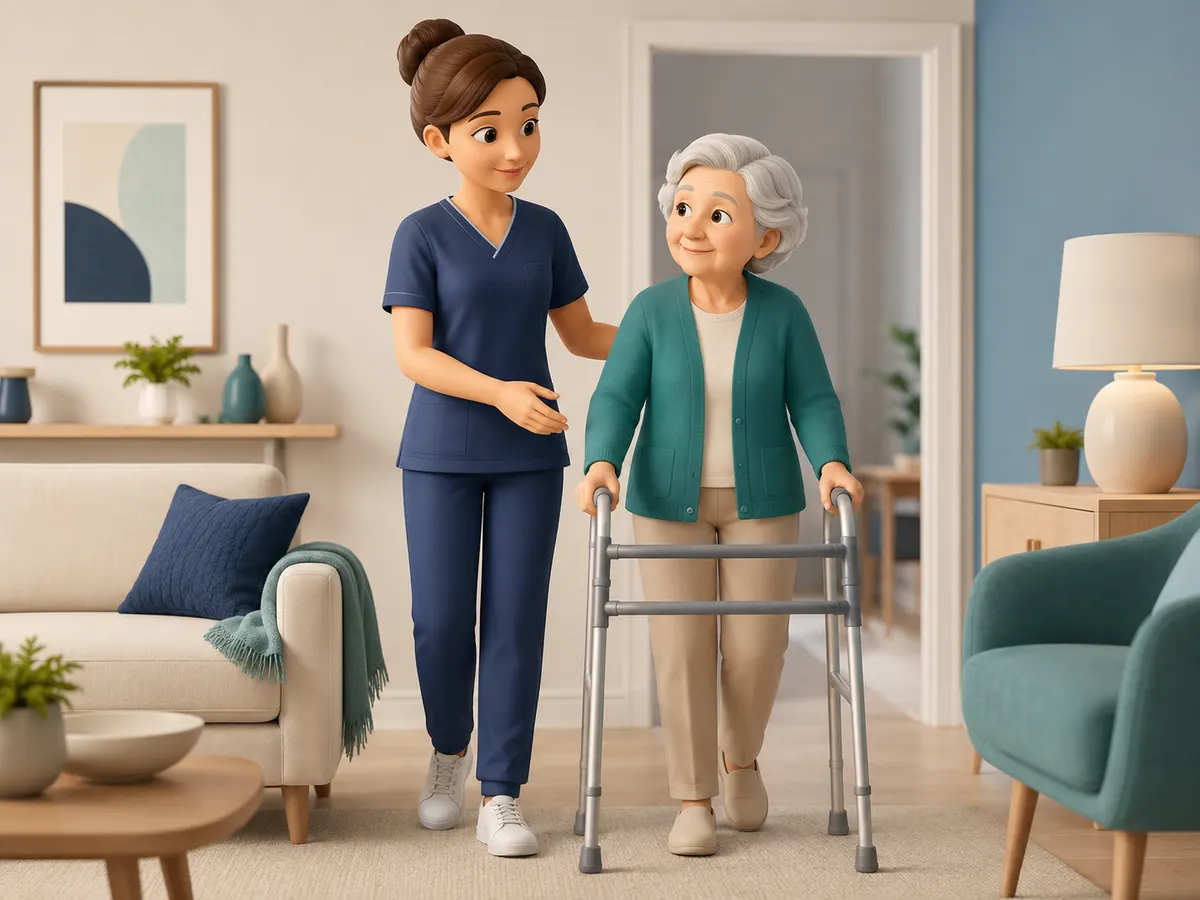
A short walk across a living room can be the most important few metres of someone's day — a chance to move under their own power, in their own home. The carer's job is to make that possible without ever taking it over: matching the person's natural pace rather than a carer's own, staying close enough to react in an instant, and offering a hand only if confidence wavers rather than reaching in early and taking the effort away.
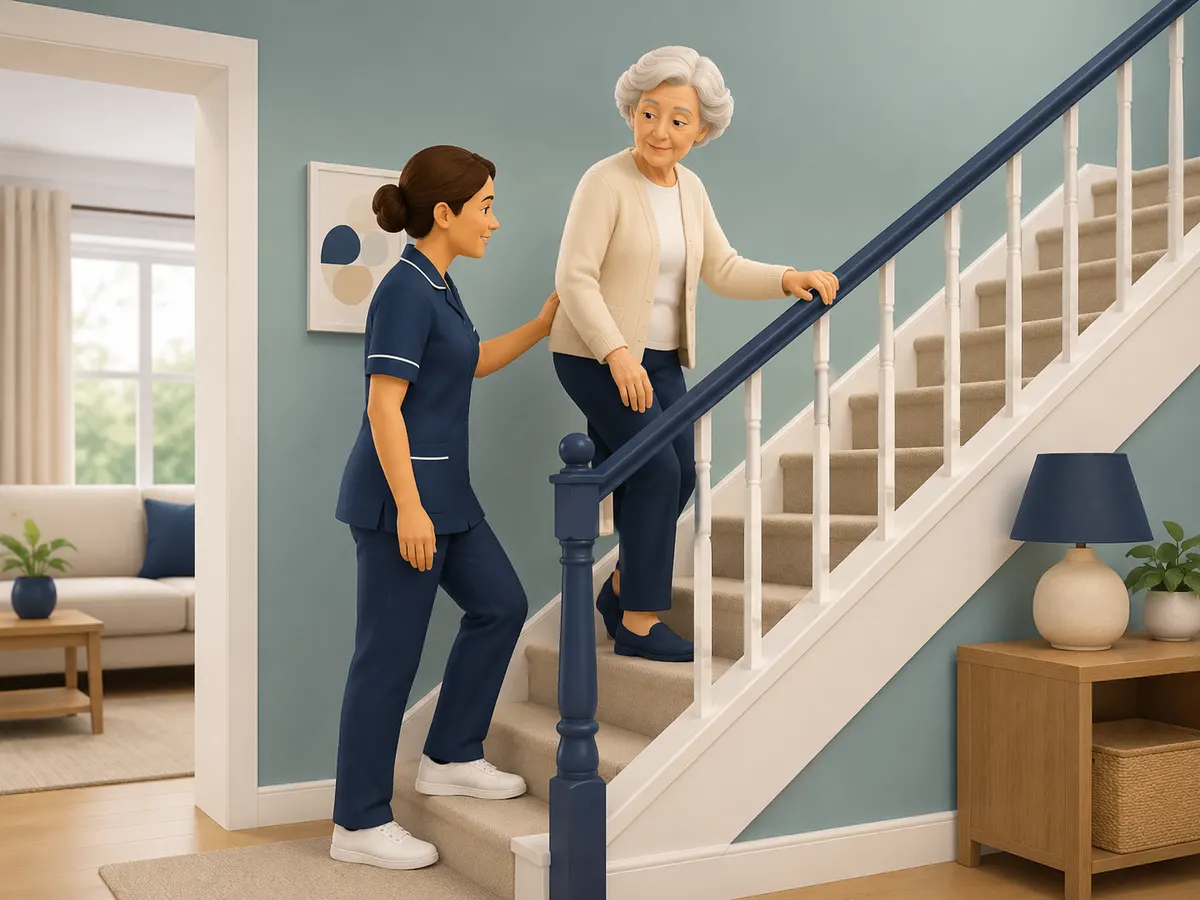
No staircase is ever just a staircase — it is the highest-risk moment in the whole visit, and it deserves the carer's full attention. One foot completes each step before the next one begins, rather than alternating feet the way a younger person might, and the pace is set by the person climbing or descending, never by the clock. A carer positioned below on the way down, and above on the way up, is there to break a stumble, not to carry someone's weight the whole way.
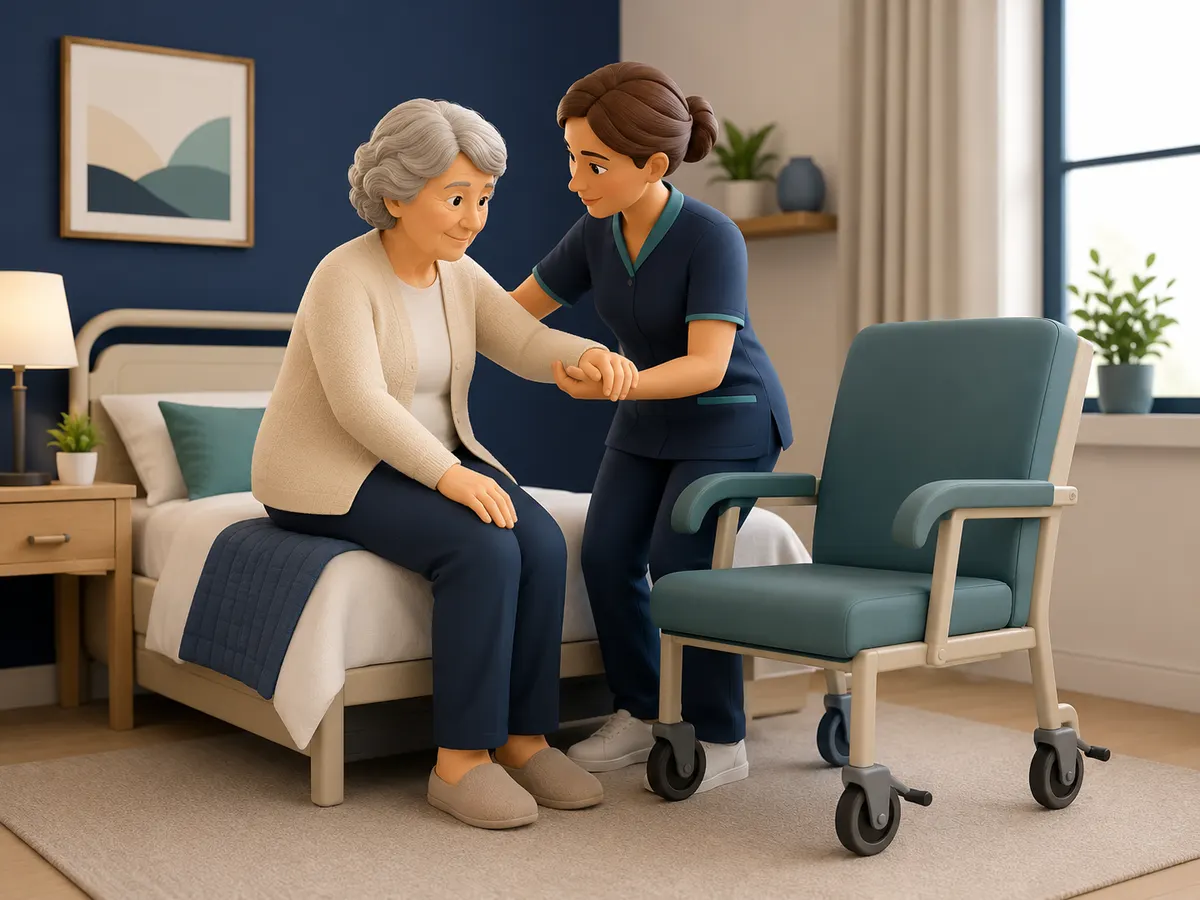
Moving from a bed to a chair asks a person to trust their own legs for a few crucial seconds, and that trust is built in how the carer holds those seconds, not in how quickly they pass. Pausing at the edge of the bed lets blood pressure and balance settle before standing, which matters enormously for anyone prone to dizziness — and brakes are locked on both the bed and any wheelchair before a single hand is offered.
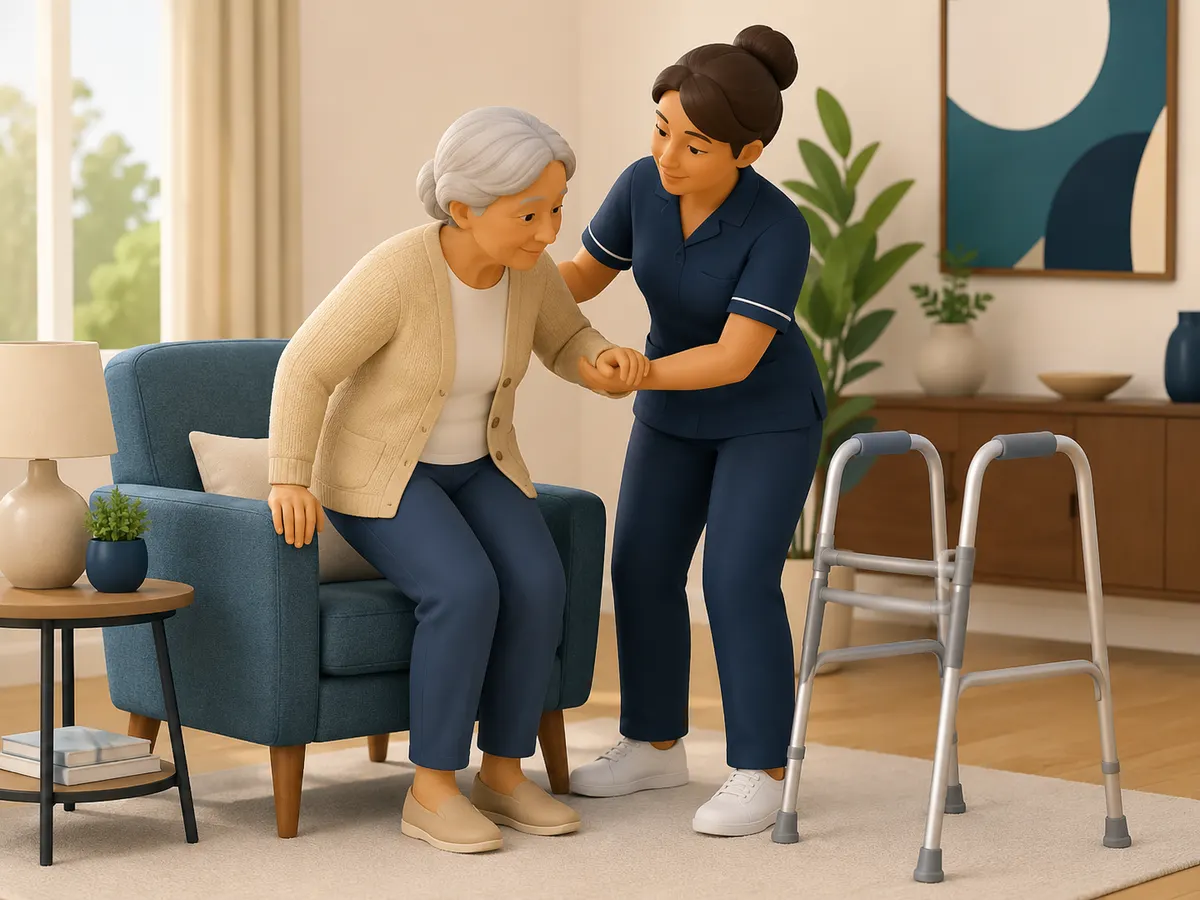
Encouraging a forward lean, rather than lifting at the shoulders or arms, lets the legs do what they are able to do, and keeps that strength from fading through disuse. A grip that guides balance is entirely different from a pull that creates movement — the second habit is where injuries happen, to both people. Given a moment to find their own balance, most people can rise far more safely than any carer could lift them.
| Before standing | Why it matters |
|---|---|
| Brakes locked, bed and chair | Nothing moves unexpectedly under a shifting weight |
| Feet flat, hip-width apart | Gives the legs a stable base to push from |
| A pause before the lean | Lets balance and blood pressure catch up |
| Frame or rail within reach | There the instant it's needed, not before |
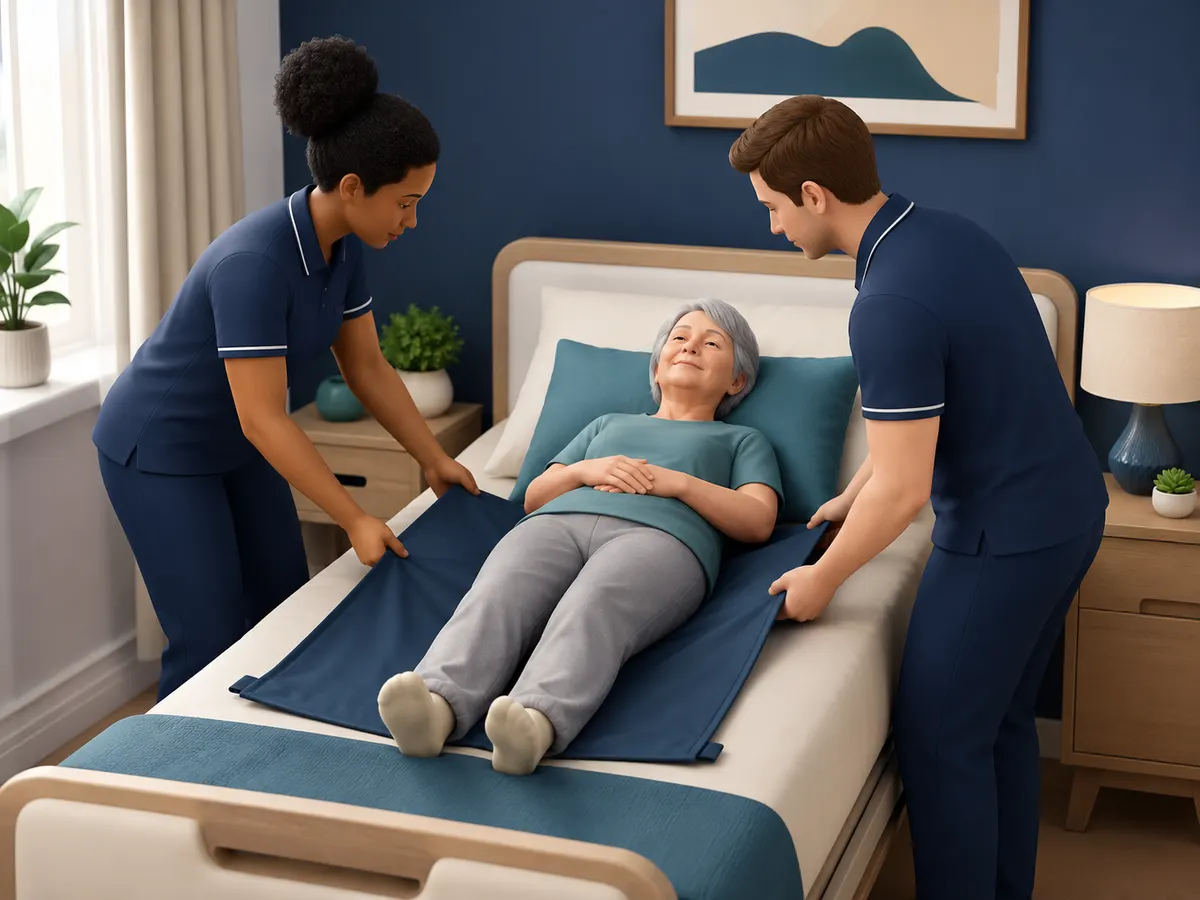
Repositioning someone in bed used to mean lifting and dragging, and comfort came a distant second to getting the job done. A slide sheet changes that completely, letting the sheet carry the weight across the mattress rather than a carer's back. Working in a pair means agreeing the moment of movement out loud — a simple word like 'ready' — so both carers move at exactly the same time and nothing twists unevenly. A slide sheet is removed the moment the move is finished; it is never left underneath a resting person.
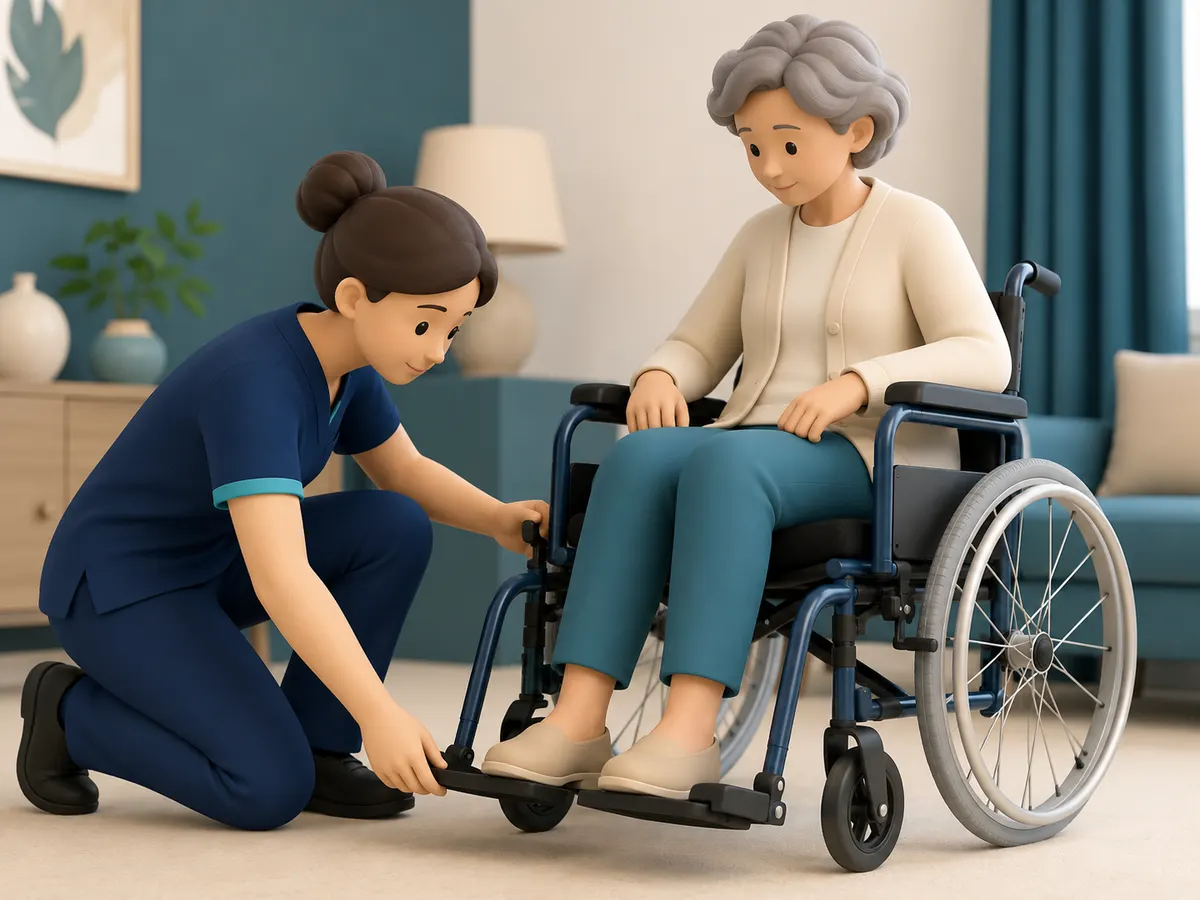
A wheelchair only feels safe once every part of it has been set up properly, much of it at floor level, out of sight, before the person ever notices it was done. Brakes are checked and locked before any adjustment is made, and feet are fully supported on the footplate rather than left dangling — protecting the backs of the knees and stopping legs from catching or twisting once the chair moves.
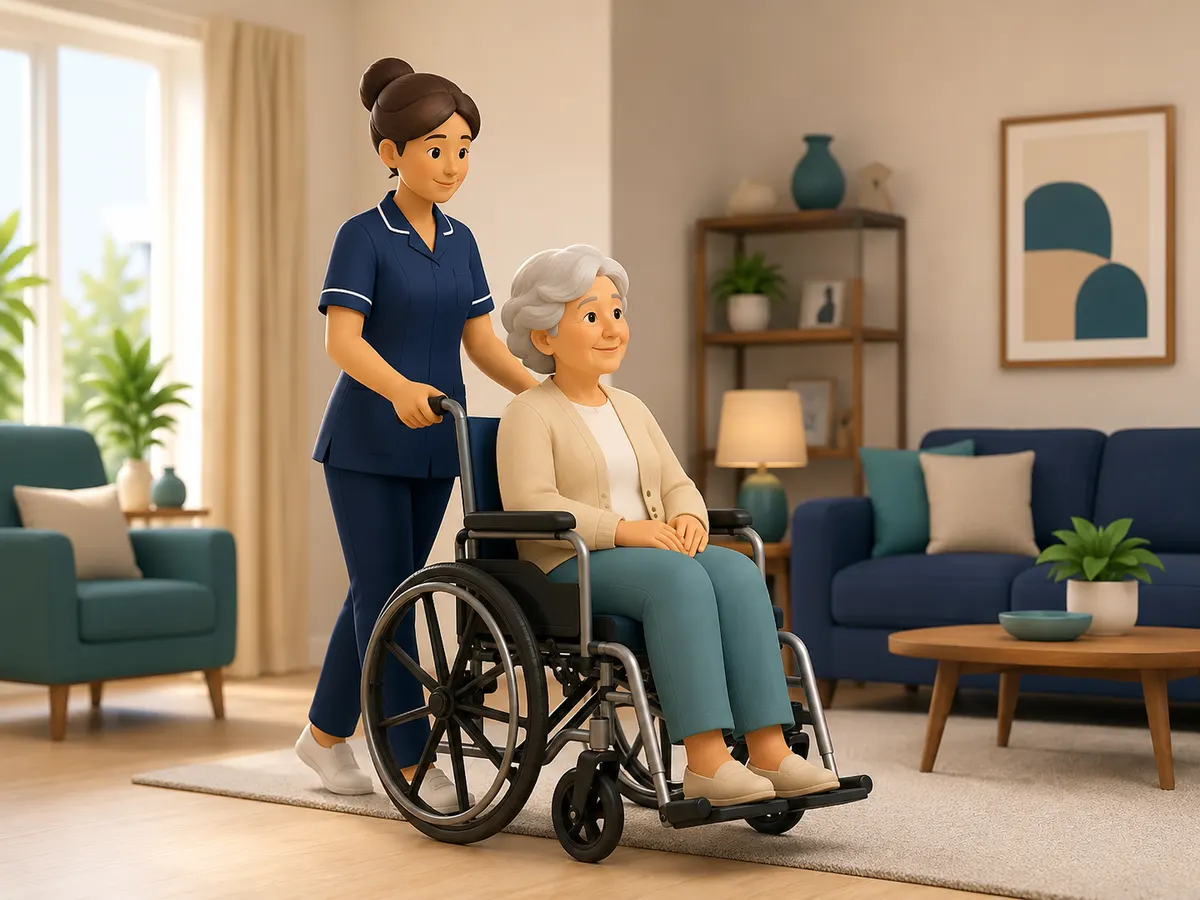
From a wheelchair, the world looks lower, narrower, and largely out of the person's control unless the carer makes it otherwise. Describing where the chair is heading, and warning before any turn or change of surface, gives a genuine sense of control that a silent push never can. Door thresholds and changes from carpet to hard floor are where jolts happen, so the pace slows there rather than staying constant throughout.
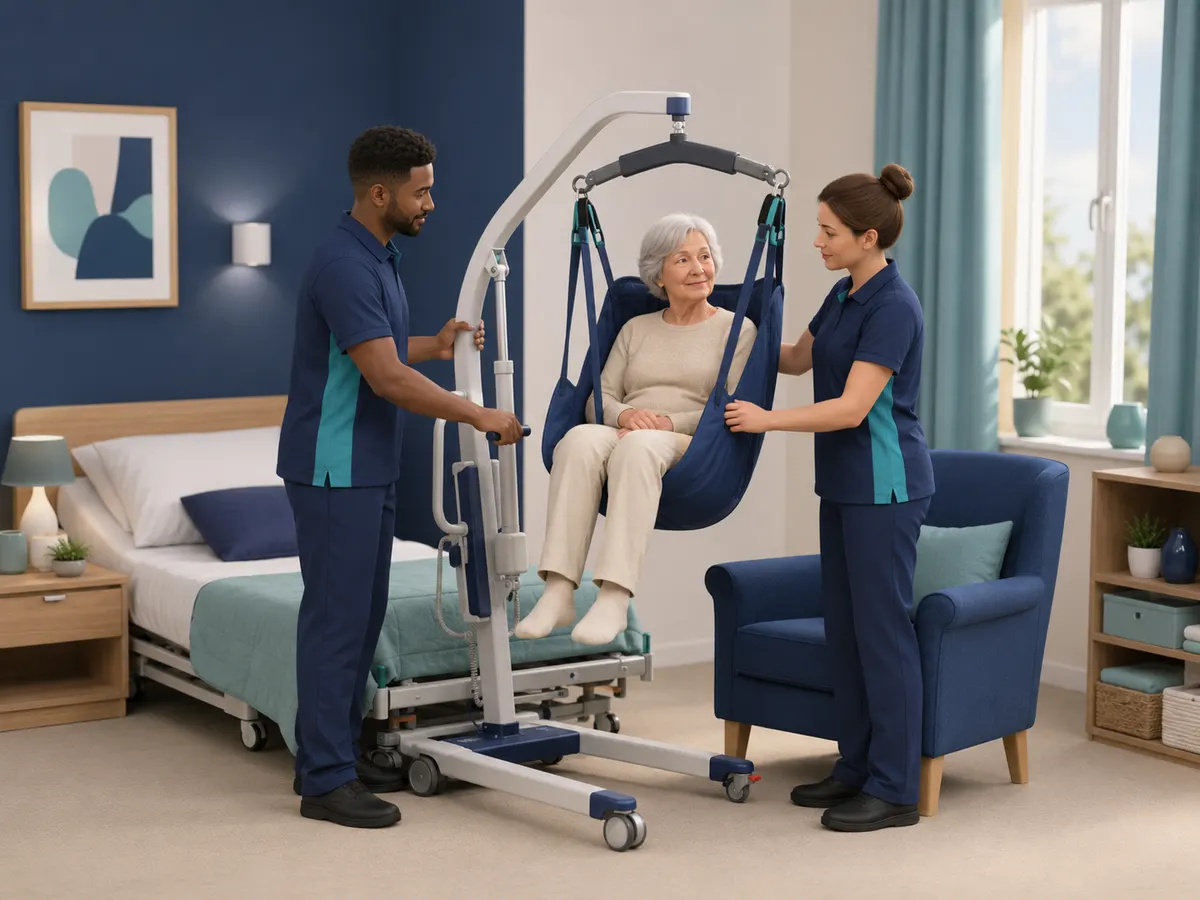
Some transfers cannot safely be done by hand alone, and that is exactly what a hoist is for — not a shortcut, but the right tool used properly, by two carers who trust each other completely. A hoist is only ever used by carers trained specifically on that equipment, and only with a sling checked for the right size and correct fit. Talking calmly throughout matters more during a hoist lift than almost any other kind of move, since suspension can feel disorientating even when nothing at all is wrong.
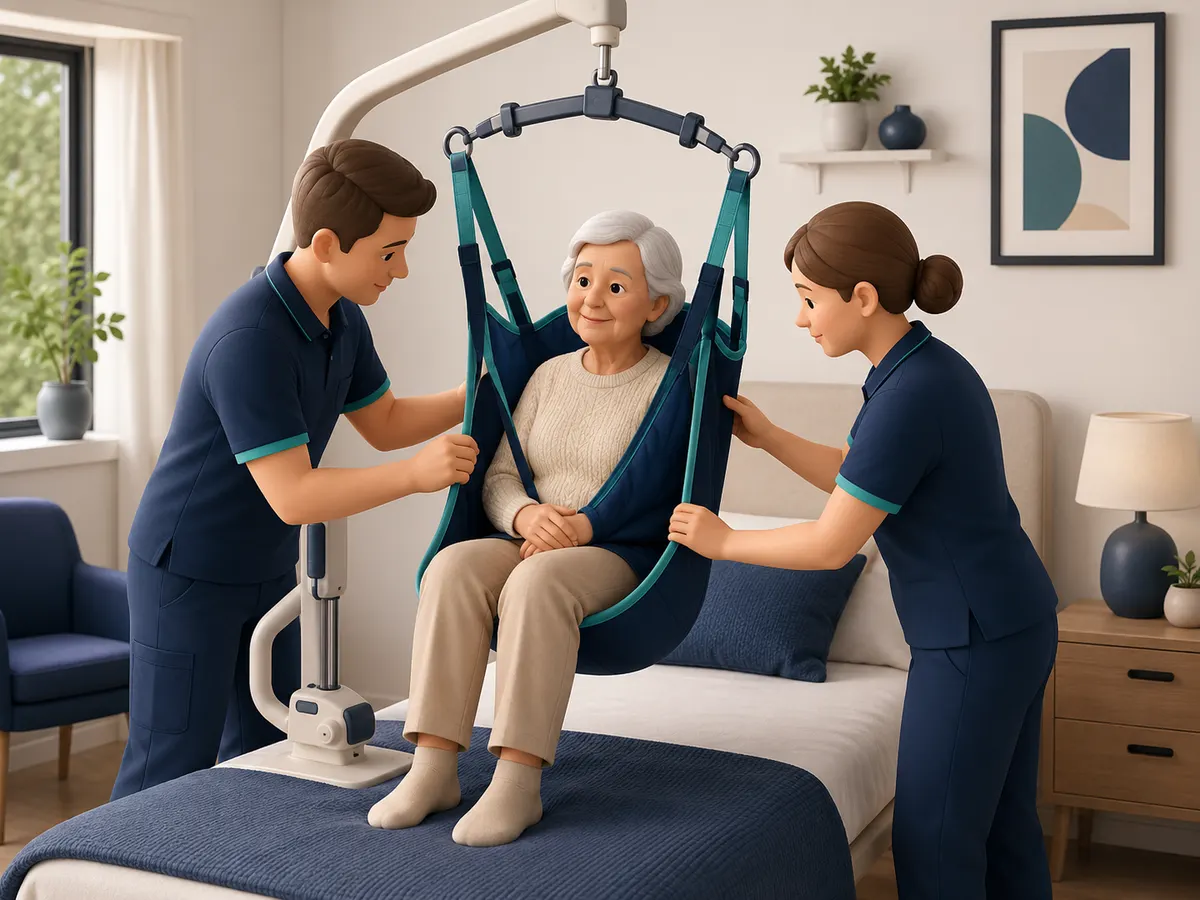
The most important part of any hoist transfer often happens before the machine moves at all, in the careful settling of straps. Even, untwisted straps on both sides distribute weight properly and prevent the sling riding up or pinching during the lift, and a hoist lift is never begun while a strap still looks twisted or uneven — it is settled first, every time.
A hoist transfer with two carers present means one pair of hands is always free to respond, from the first check to the last.
Straps settled even and untwisted before a single inch of lift — never assumed fine because it was fine last time.
A calm, familiar voice through every stage of a hoist lift keeps a disorientating moment feeling safe.
Food and drink are as much a part of care as any wash or transfer, and getting them right takes just as much thought. A well-prepared plate tells a person they have been considered, not simply fed — and safe preparation always starts with the care plan, checked for allergies, dislikes and exactly how food needs to be prepared before a single ingredient is touched.

Serving vegetables lightly cooked keeps their colour, their nutrients and their appeal, and a full glass of water offered alongside every meal — not just when asked — quietly protects against the dehydration that can creep up on someone without them noticing. A plate that looks appetising is itself a form of encouragement to eat.
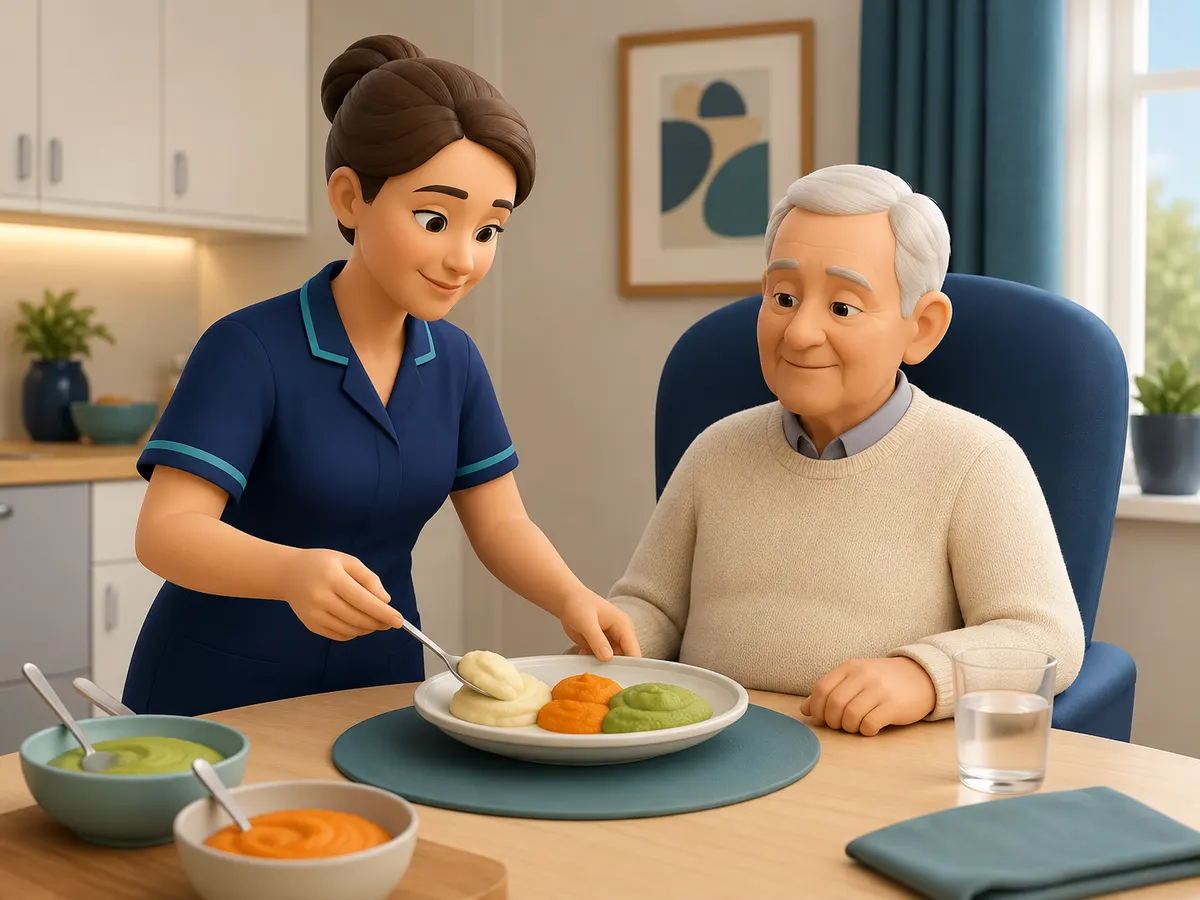
When food is prepared to a different texture, it is never a lesser meal — it is a meal made exactly right for the person eating it, matched precisely to what the care plan and any swallowing assessment call for, never guessed and never adjusted on the day without reason. Keeping different foods separate on the plate, rather than blending everything into one, helps a person recognise what they are eating and keeps mealtimes dignified. Coughing, food held in the cheek, or reluctance to open the mouth again all matter more with a modified diet, and any change is reported rather than managed alone.
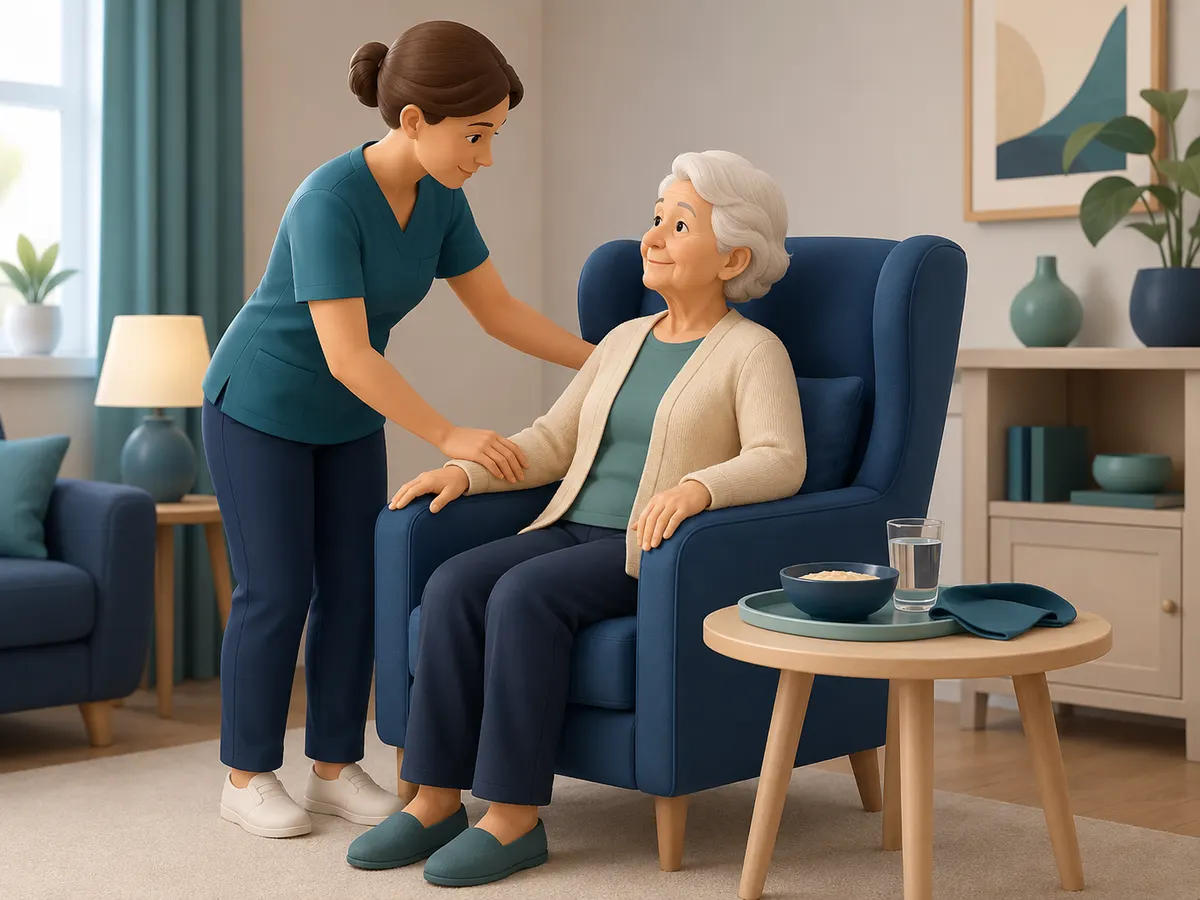
Long before a spoon is lifted, good mealtime care starts with something simple: making sure the person is sitting well. Eating while slumped or reclined makes swallowing harder and increases the risk of choking, so settling someone properly upright — hips back in the seat, feet supported — always comes before food is offered, with the meal and drink positioned within easy reach for as much independence as the person can manage.
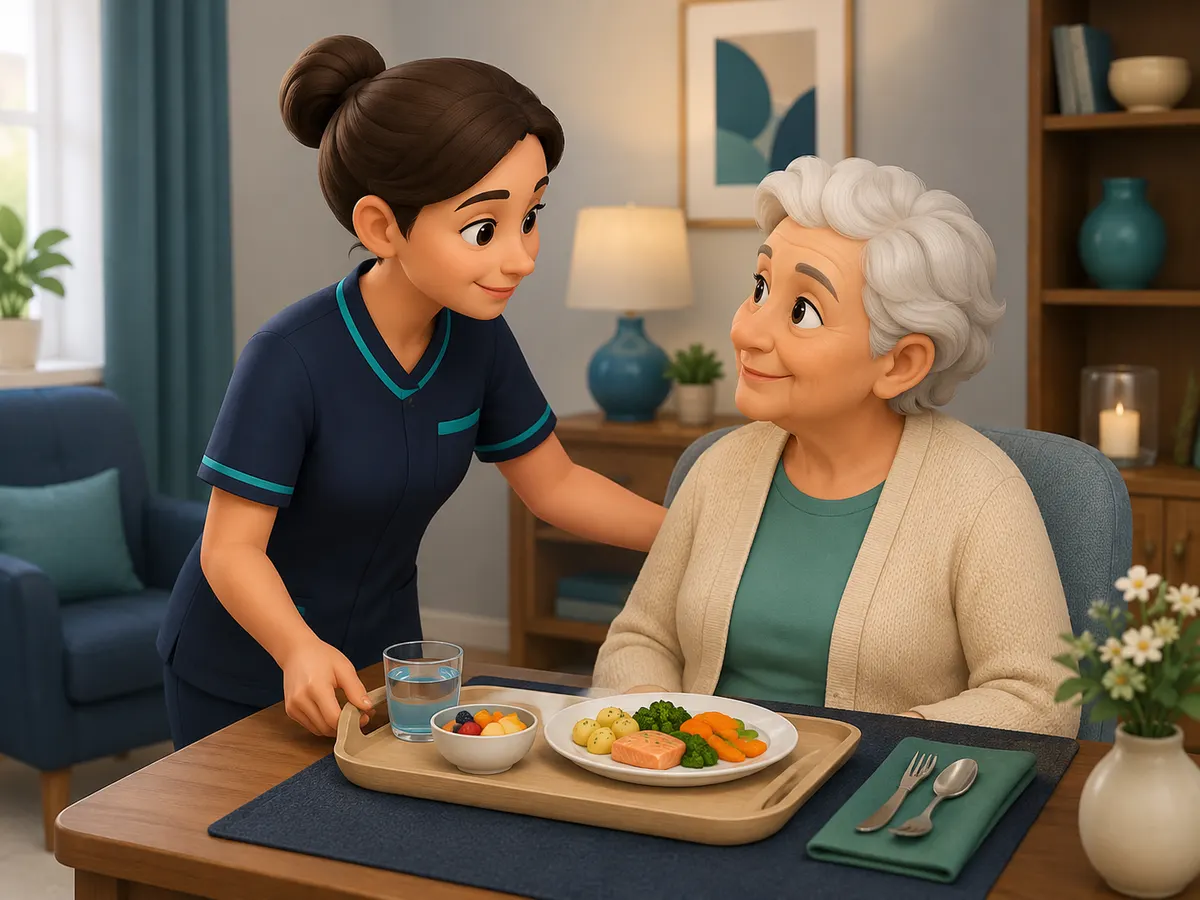
Arriving with a beautifully prepared meal is only half the job. The moment just before it is served — a hand on the shoulder, a question asked, real eye contact — is what turns feeding into care rather than a task simply happening to someone. Checking in before a meal arrives, asking how someone is feeling and whether they're hungry, gives them a genuine say in a moment that could otherwise just happen to them.
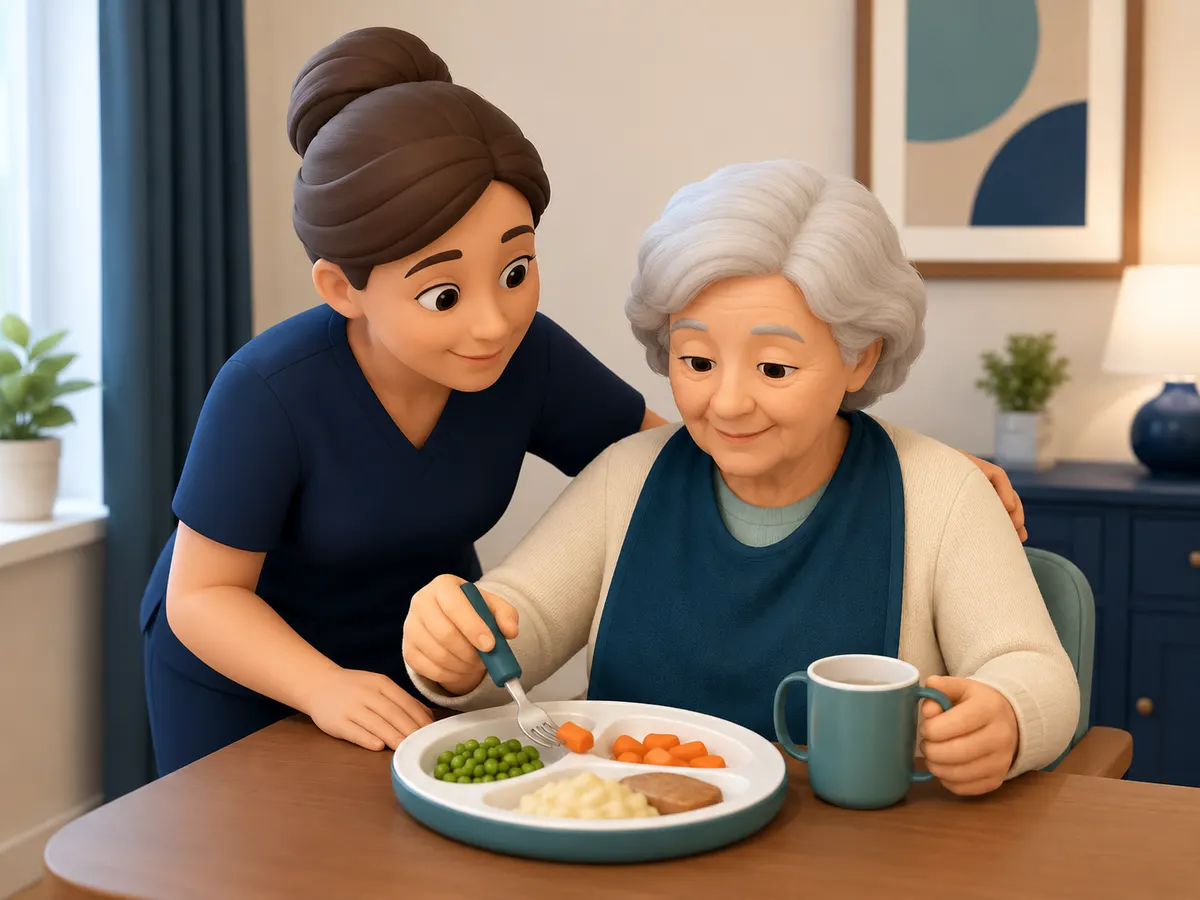
Being fed by another person is one of the more vulnerable moments in anyone's day. Assisted eating works best at the person's own pace — a small amount offered, a wait for it to be swallowed, readiness checked with eye contact before the next forkful arrives, rather than feeding to a fixed rhythm. Leaving a drink within someone's own reach, where they are able to manage it, keeps a thread of independence running through the meal even when help is needed elsewhere.
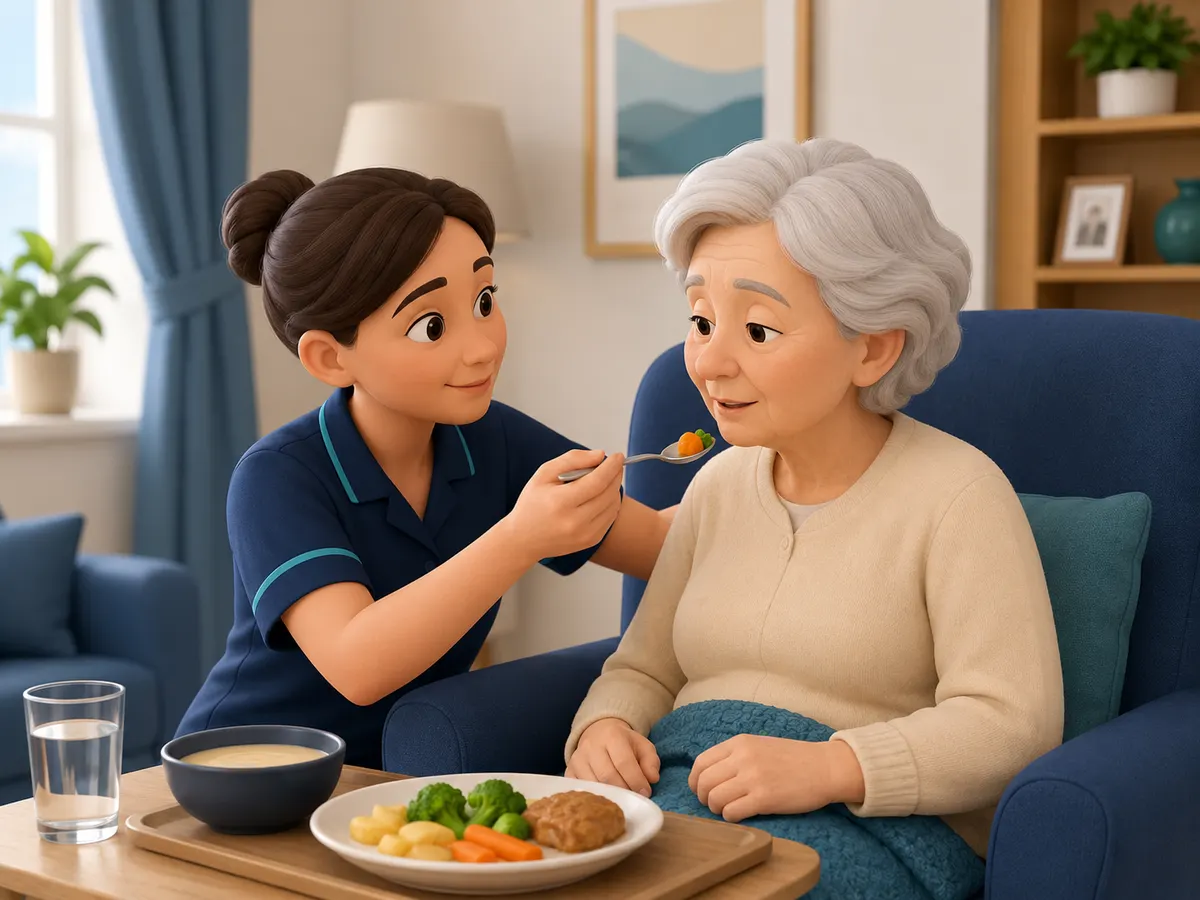
Watching a person's face as each spoonful approaches — not the plate, not the clock — is how a carer notices hesitation, discomfort or tiredness before it becomes a problem. A blanket over the lap, a settled chair and a calm room all remove the small discomforts that could otherwise put someone off finishing their meal.
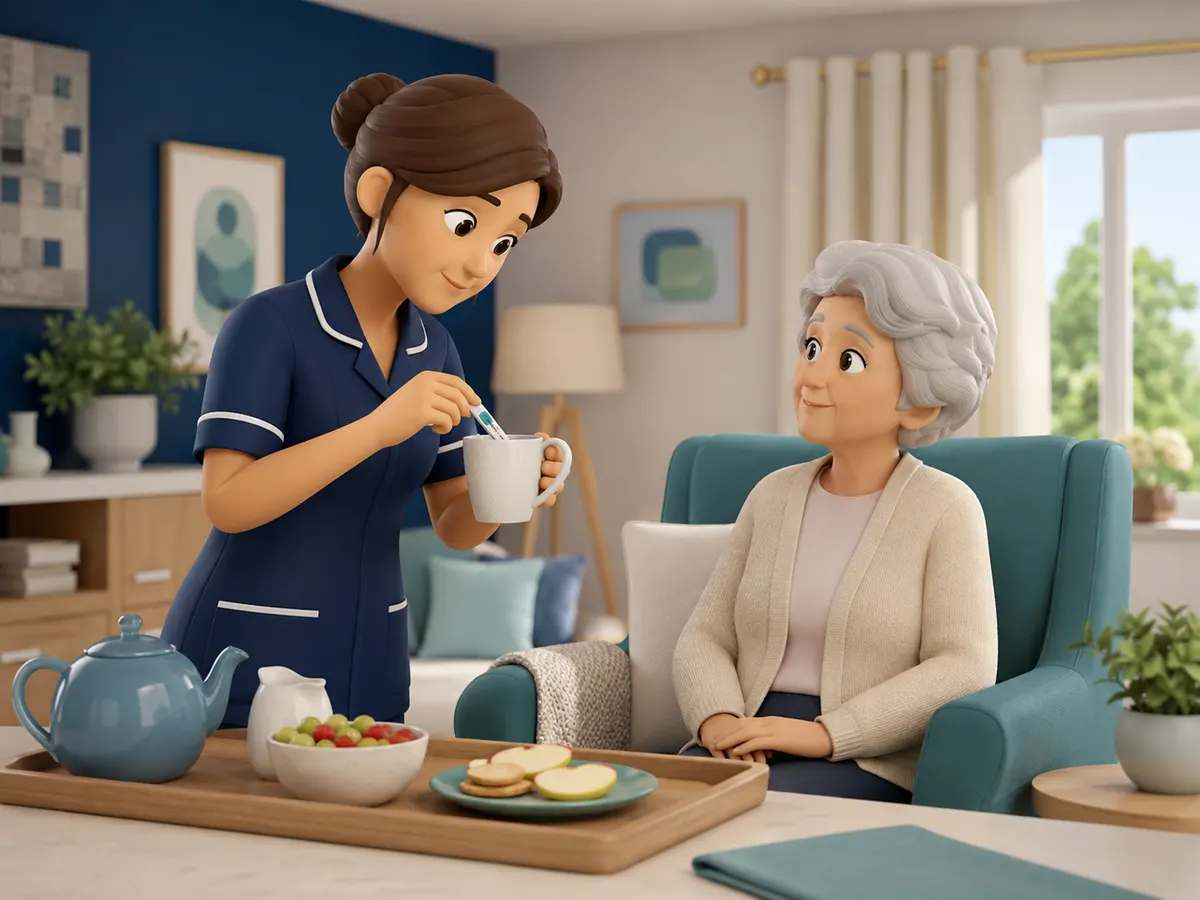
A hot drink is always checked for a safe, comfortable temperature before it reaches someone's hands, particularly where grip or sensation has weakened with age. Snacks between meals matter as much as the meals themselves for keeping energy and mood steady through the day, and offering a small variety — fruit, something savoury, something sweet — respects a person's right to choose rather than simply accepting what's given.
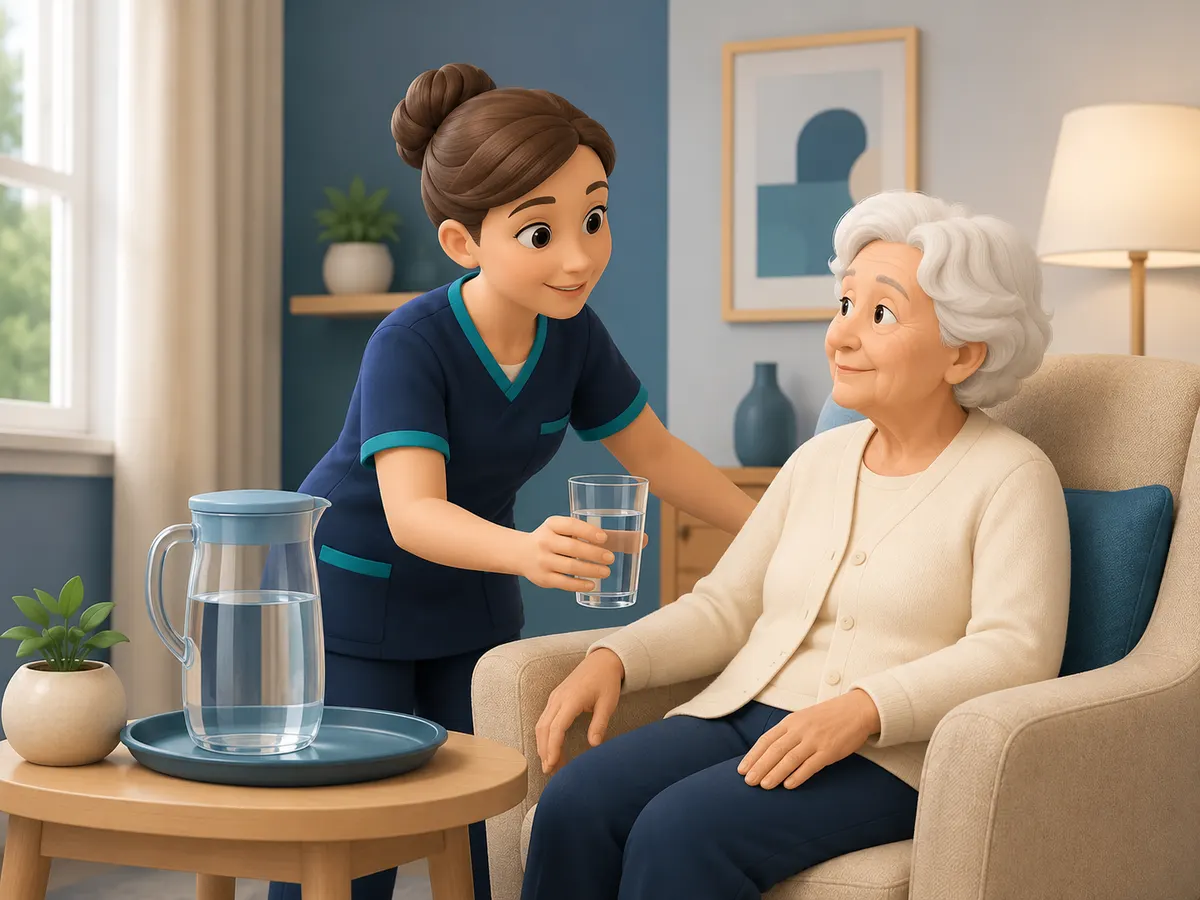
The sense of thirst weakens with age, which means many older people simply do not feel the urge to drink even when their body needs fluid — so water is offered proactively rather than waited for. Dry lips, confusion, dark urine and tiredness are all worth watching for, and fluids are offered more often whenever any of them appear.
How a visit ends matters just as much as how it begins. A few unhurried minutes spent settling someone properly, rather than simply switching off the light, can mean the difference between a peaceful stretch ahead and a difficult one.
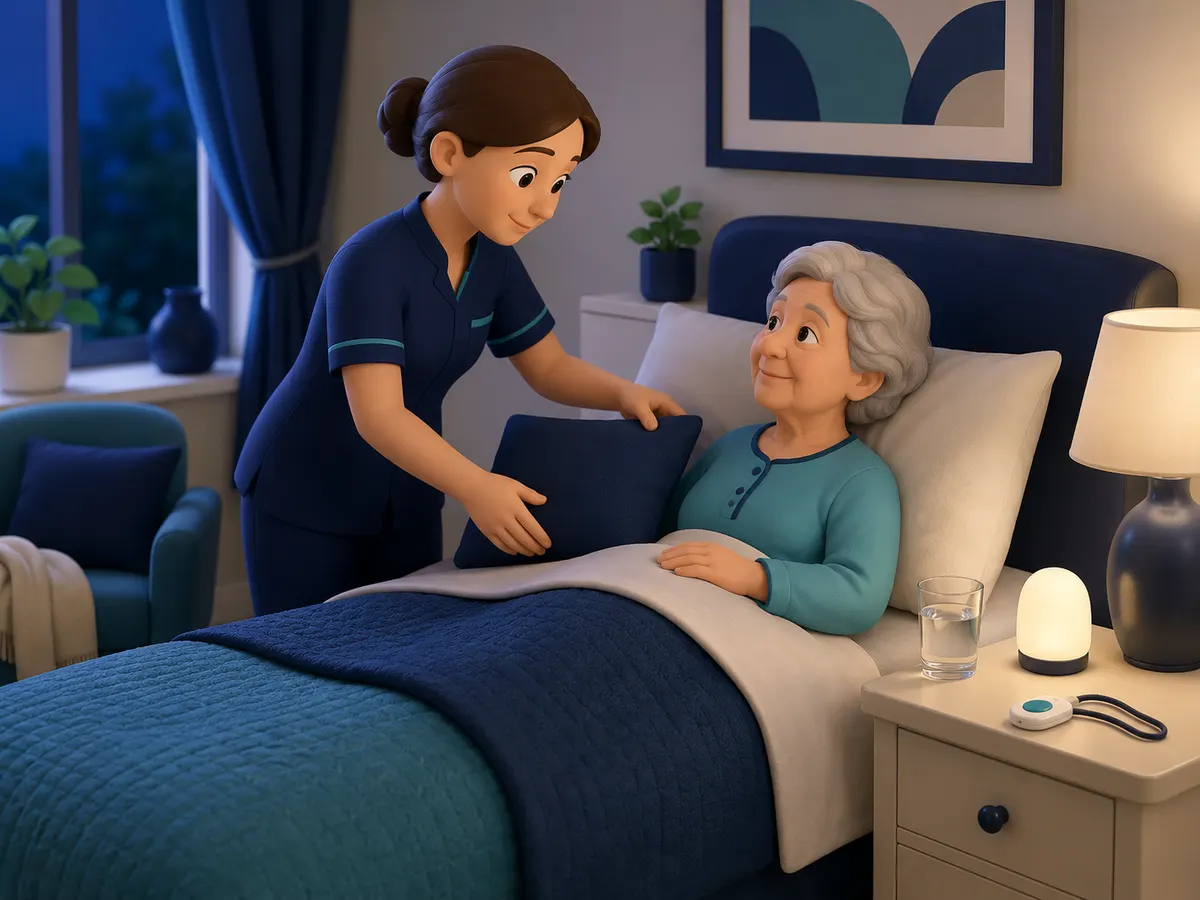
Everything a person might need before the next visit — water, the call alarm, glasses, a light switch, a walking frame in its usual place — is left genuinely within reach, not merely somewhere in the same room. A soft, warm light left on rather than total darkness helps many people feel safer, and a call alarm is tested to make sure it actually works, not just assumed to be close enough. Doors are left exactly as the person wants them, locked or on the latch according to their own wishes.
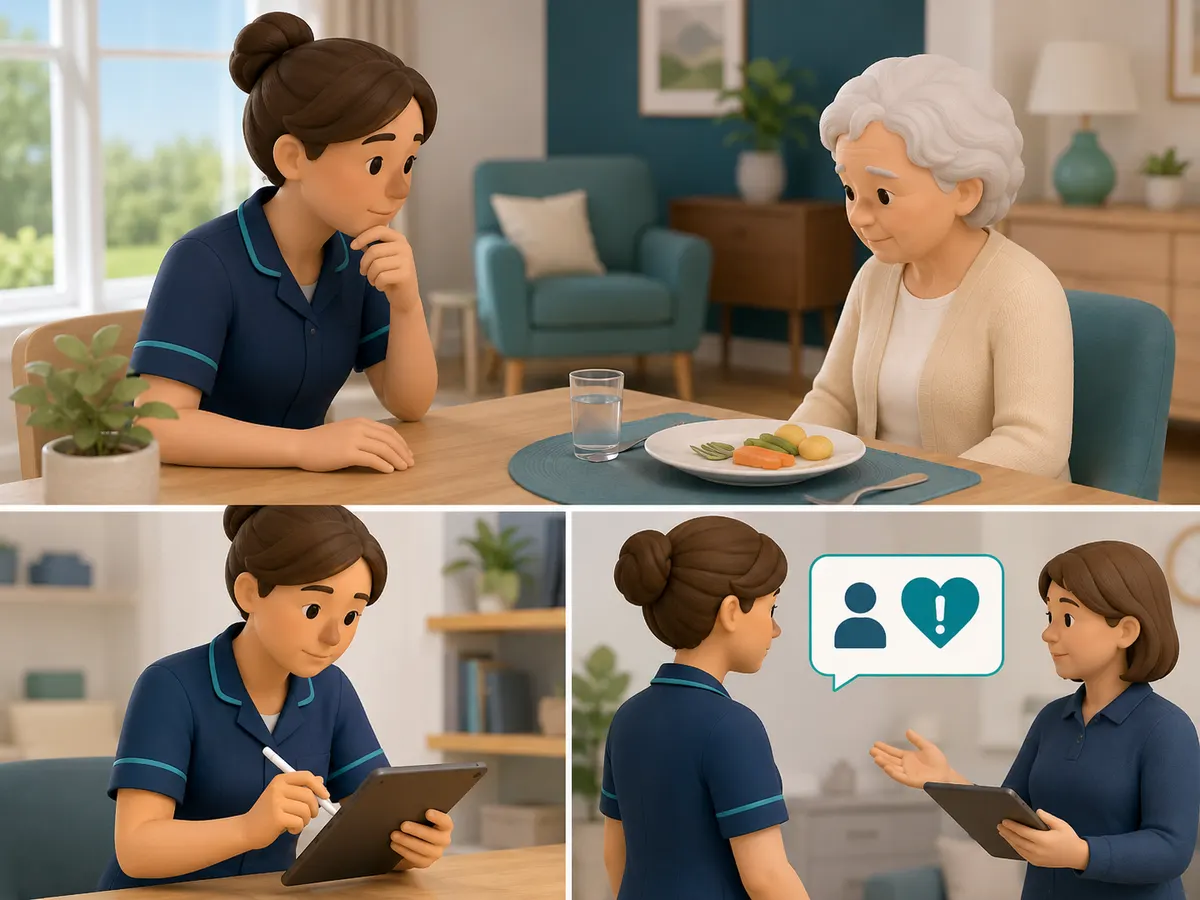
The visit record is written where the visit actually happened, with the person still there, not filled in later from memory. That single habit is what keeps a record honest and useful to whoever reads it next — the next carer, a nurse, a family member, or the office. What was offered and what was actually eaten are both worth recording, since the gap between them often tells the real story.
Notes are written plainly and factually — what was observed, what was done, what was said — rather than reassured away with a vague 'all fine'. A concern noticed during a visit, however small it feels, is passed on the same day rather than left for the next one; an honest record, shared promptly, is what turns one carer's attention into properly joined-up care.
A visit is not finished the moment the door closes behind you. It is finished once everything needed is in reach, and everything worth knowing is written down.
Carelo gives carers the app this handbook was written for: calls, GPS check-in, notes and medication at the door. From £59 a month for agencies; £30 a month for families who employ their own carers.
Book a demo