The work almost nobody sees — and the work that quietly protects everyone in the room.
Nobody remembers being cared for by someone with beautifully clean hands. They remember the conversation, the warmth, the meal made properly, the transfer done gently. Yet underneath every one of those moments sits a layer of hygiene practice that, done properly, is genuinely one of the most protective things a carer does all day — and, done carelessly, can undo a great deal of good work elsewhere.
The people receiving home care are often more vulnerable to infection than most — older, sometimes managing several health conditions at once, sometimes with a weaker immune system than they used to have. A minor infection that would pass unnoticed in a younger, healthier person can become a genuine crisis for someone frail. That is precisely why hygiene, though it is the quietest part of the job, deserves the same seriousness as any hands-on task.
The person being cared for is usually the one with the least ability to fight off an infection that reaches them.
Good hygiene practice is not one-directional — it keeps carers well too, visit after visit, year after year.
A carer moves between several vulnerable people in a single day. Good practice at one visit is protection carried into the next.
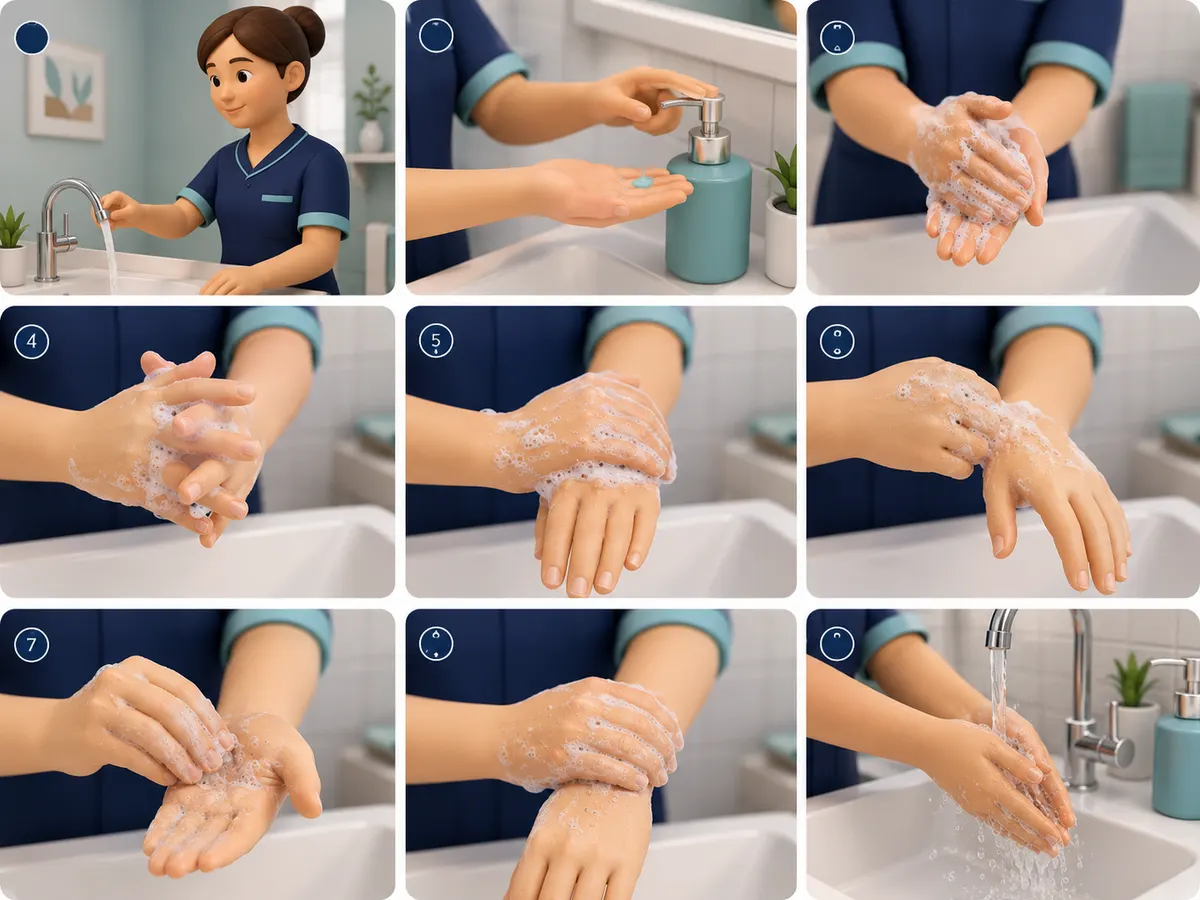
Handwashing looks so ordinary that it is easy to underestimate. Done properly, it is the single most effective thing a carer does all day to keep a vulnerable person safe — and it is also the thing most likely to get rushed when a visit feels busy.
The parts people miss are always the same — thumbs, fingertips, the skin between the fingers — so a good wash deliberately visits each of them rather than trusting a quick rub under the tap. Hands are worked with soap for around 20 seconds, roughly the time it takes to say a short rhyme twice over, and only once every surface has been properly covered does the water come back on to rinse the lather away.
| The moment | Why it matters |
|---|---|
| Before touching a person | Nothing carried in from outside reaches them first |
| Before food or medication | What goes into someone's body deserves clean hands |
| After any bodily fluid contact | Even briefly, even with gloves worn throughout |
| After touching the person | What was picked up during care doesn't travel onward |
| After touching their surroundings | Surfaces, equipment and furniture carry germs too |
Twenty unhurried seconds is a small price for keeping someone safe.
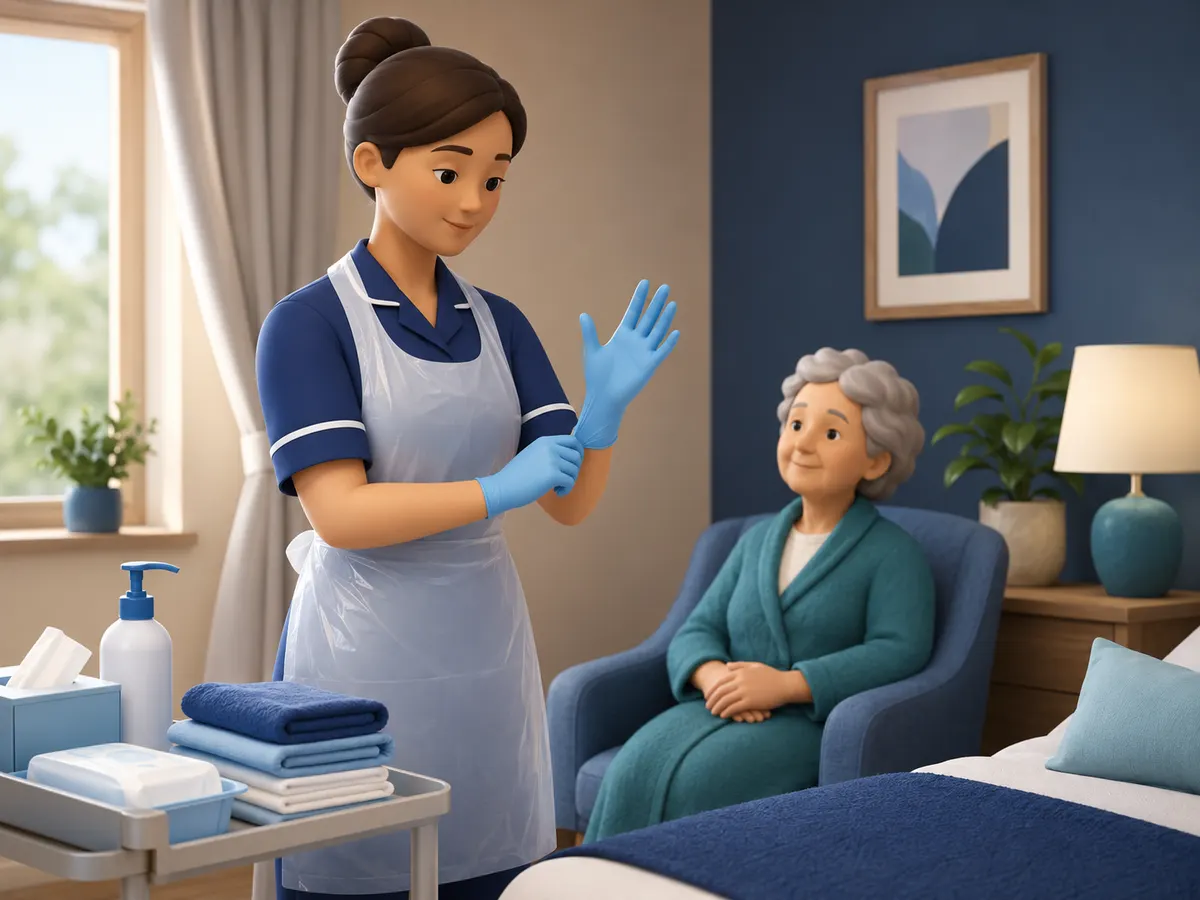
Gloves and aprons protect the person being cared for as much as the carer wearing them, and how they go on matters. A fresh apron and a fresh pair of gloves are used for each person and each individual task — never carried from one visit into the next, and never kept on simply because they were put on ten minutes ago. They go on just before the hands-on part of a task begins, not the moment a carer walks through the front door, so the person is never made to feel like a risk before anything has even started.
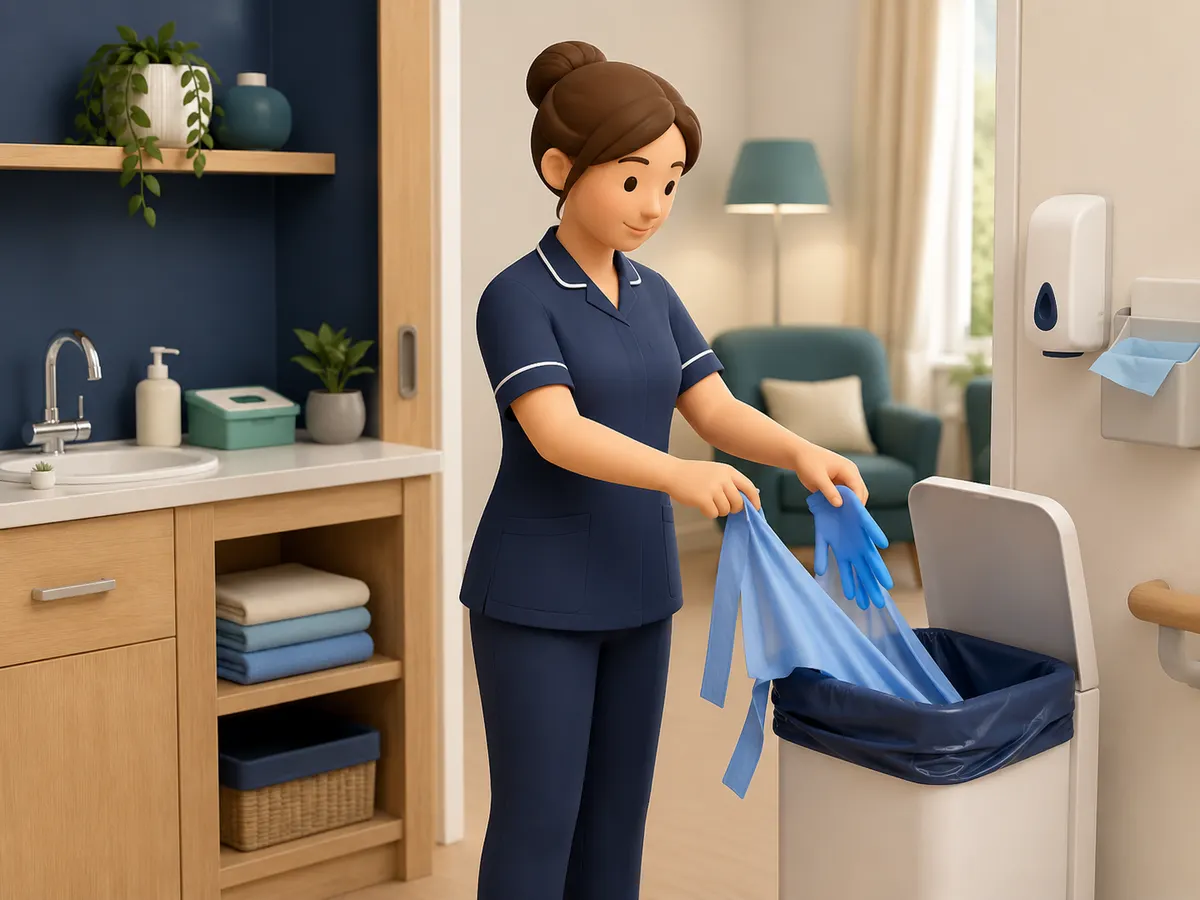
How gloves and aprons come off matters just as much as how they go on — this is where contamination is either contained or spread. Gloves are always removed by turning them inside out, trapping whatever was on the outside where it cannot transfer to skin or surfaces, and the apron is broken at the neck and pulled forward over the head so its soiled side never brushes against clothing. Both go straight into a lined bin, and hands are washed immediately afterwards — even though they were gloved throughout.
Cleaning in someone's own home is a balancing act. It has to keep the space safe without ever making it feel clinical — a home should still feel like a home, tidied and protected rather than sanitised into something unfamiliar.
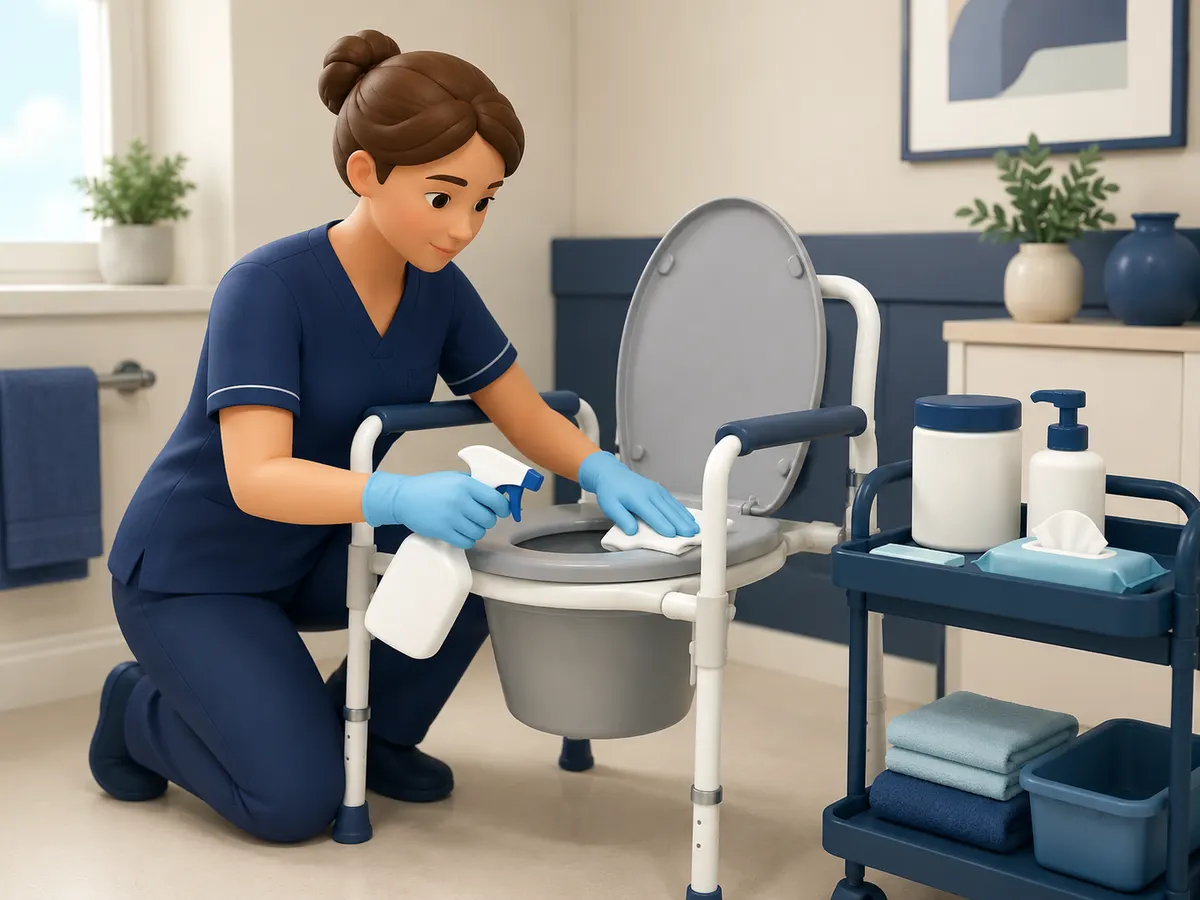
A commode is cleaned after every single use, not once at the start or end of the day, because it is used by one person but touched by hands that go on to touch everything else in the room. The frame and armrests get just as much attention as the seat, since that is where hands actually land, and any spray or cleaning product is given a moment to work before it is wiped away.
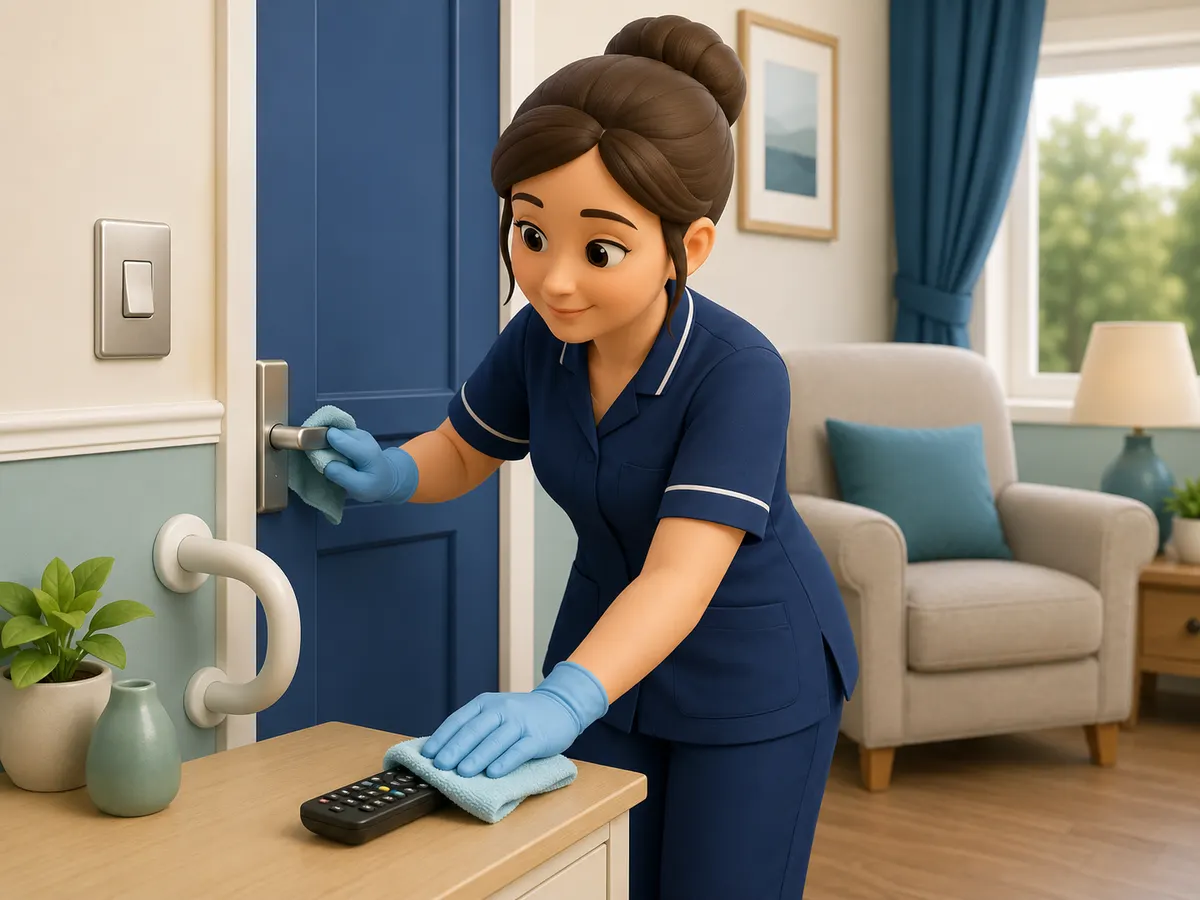
A door handle gets touched dozens of times a day by everyone who passes through, yet it is rarely thought of as something that needs cleaning at all — the same is true of a remote control or a light switch. A regular wipe of these frequently touched surfaces takes moments and barely disturbs the room, but it covers a great deal of ground.
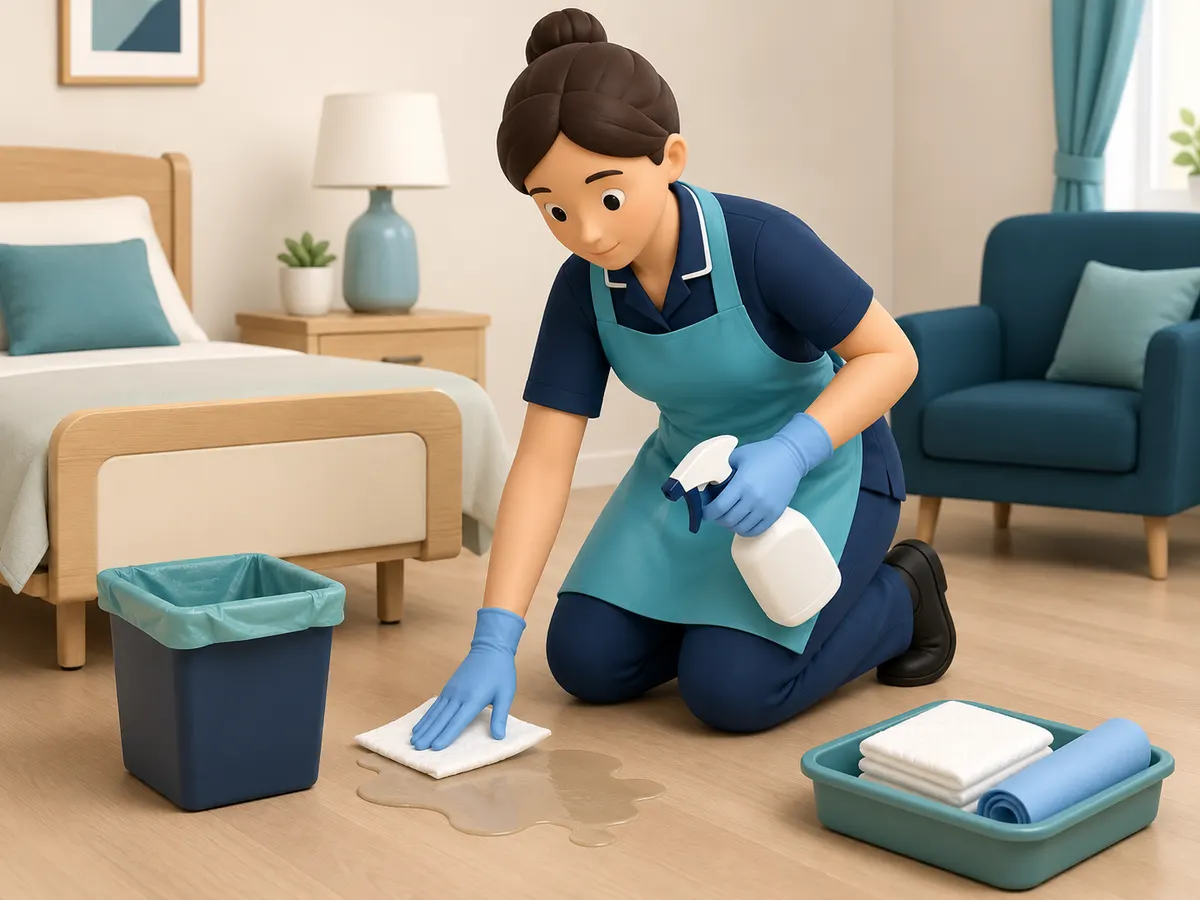
A spill left even a few minutes too long becomes two problems instead of one — a hygiene risk and a fall risk at exactly the same time. It is dealt with the moment it is noticed, cloths and paper towel used on it are never reused on another surface, and the floor is left properly dry, not just visibly clear, before anyone walks across it.
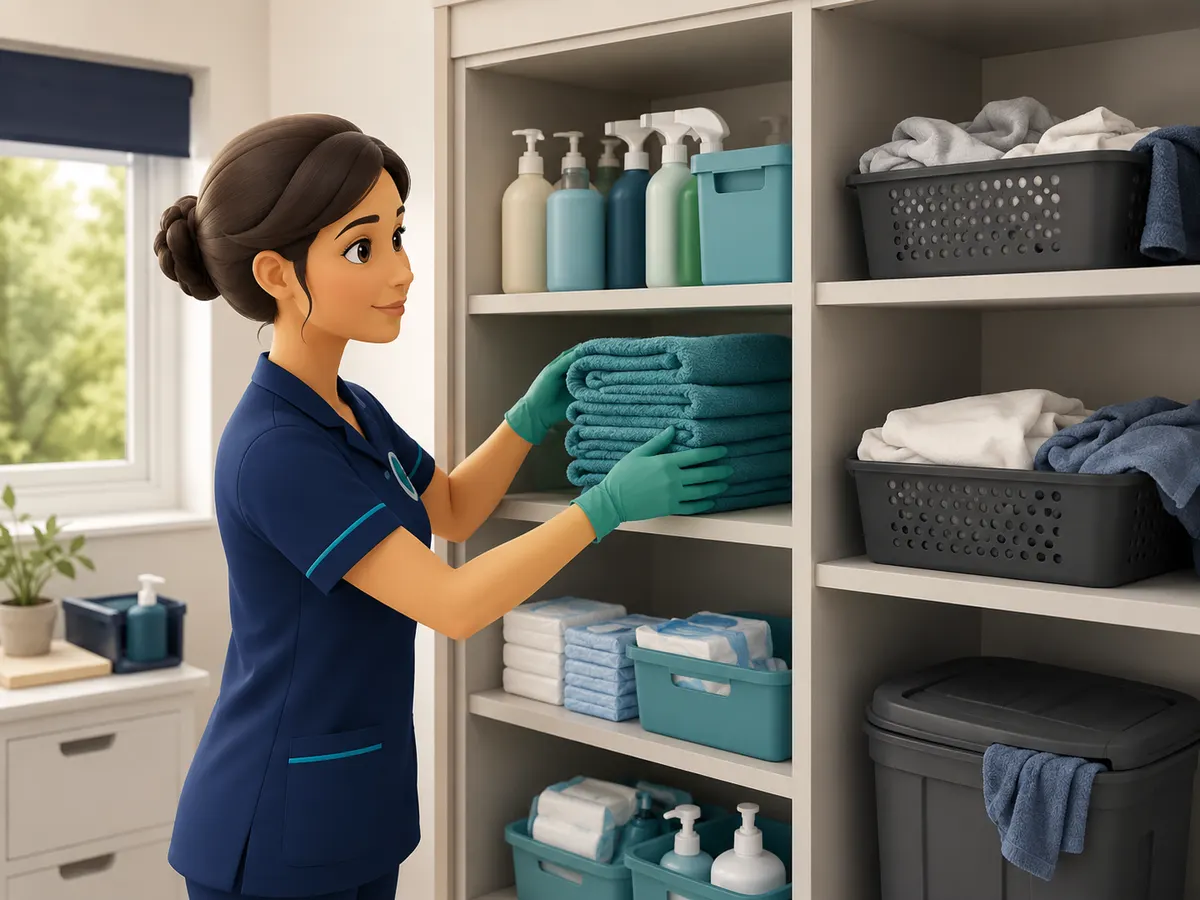
An organised supply cupboard is a quiet form of infection control in itself. Clean towels here, used linen there, products grouped and labelled — nobody ever has to guess what is safe to use, and clean items are never left anywhere near anything that isn't.
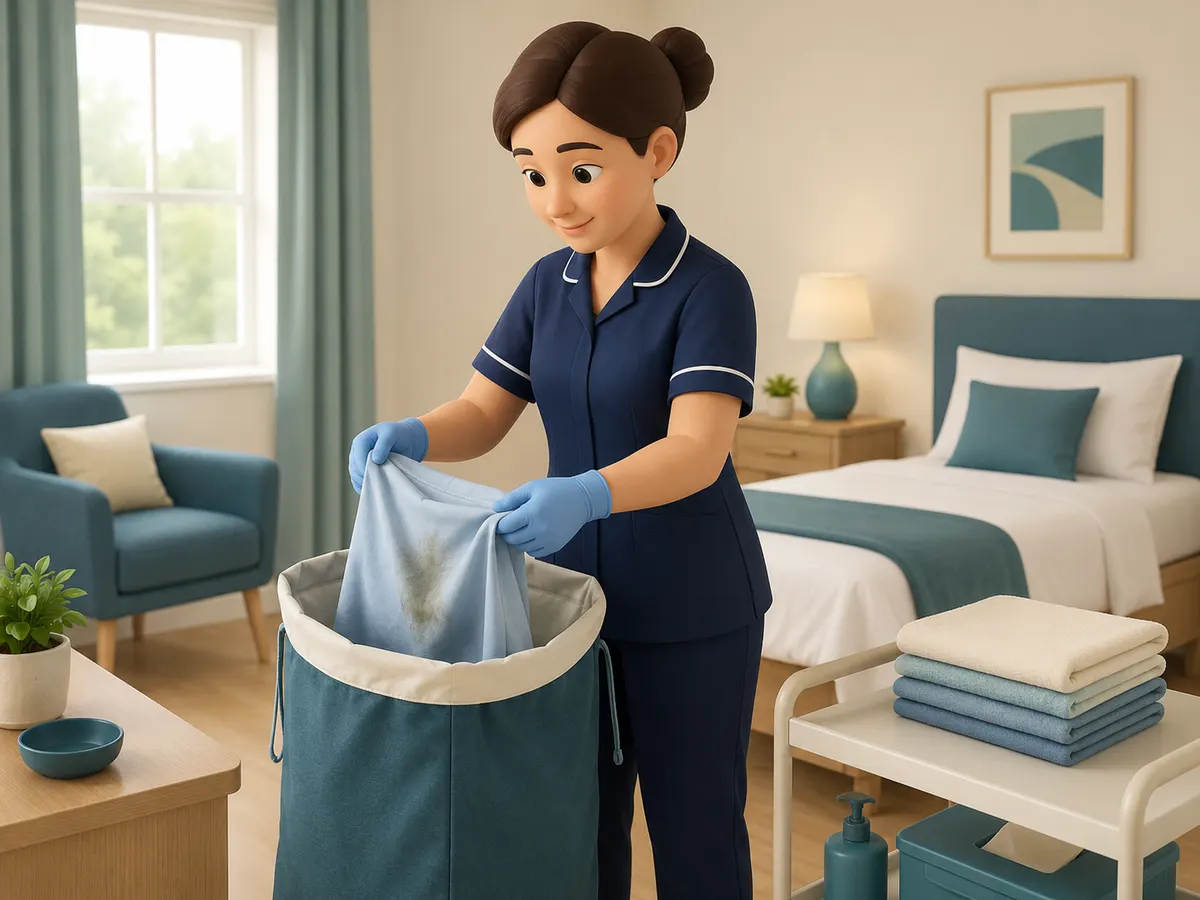
Laundry seems like the least complicated job of the day, until a stained garment is handled carelessly and ends up spreading far more than dirt. Soiled laundry is never shaken out, which only releases whatever is on the fabric into the air of the room. It goes into its own designated bag immediately, kept apart from clean linen at every stage — not just at the washing machine — and gloves are worn for the task, with hands washed afterwards regardless.
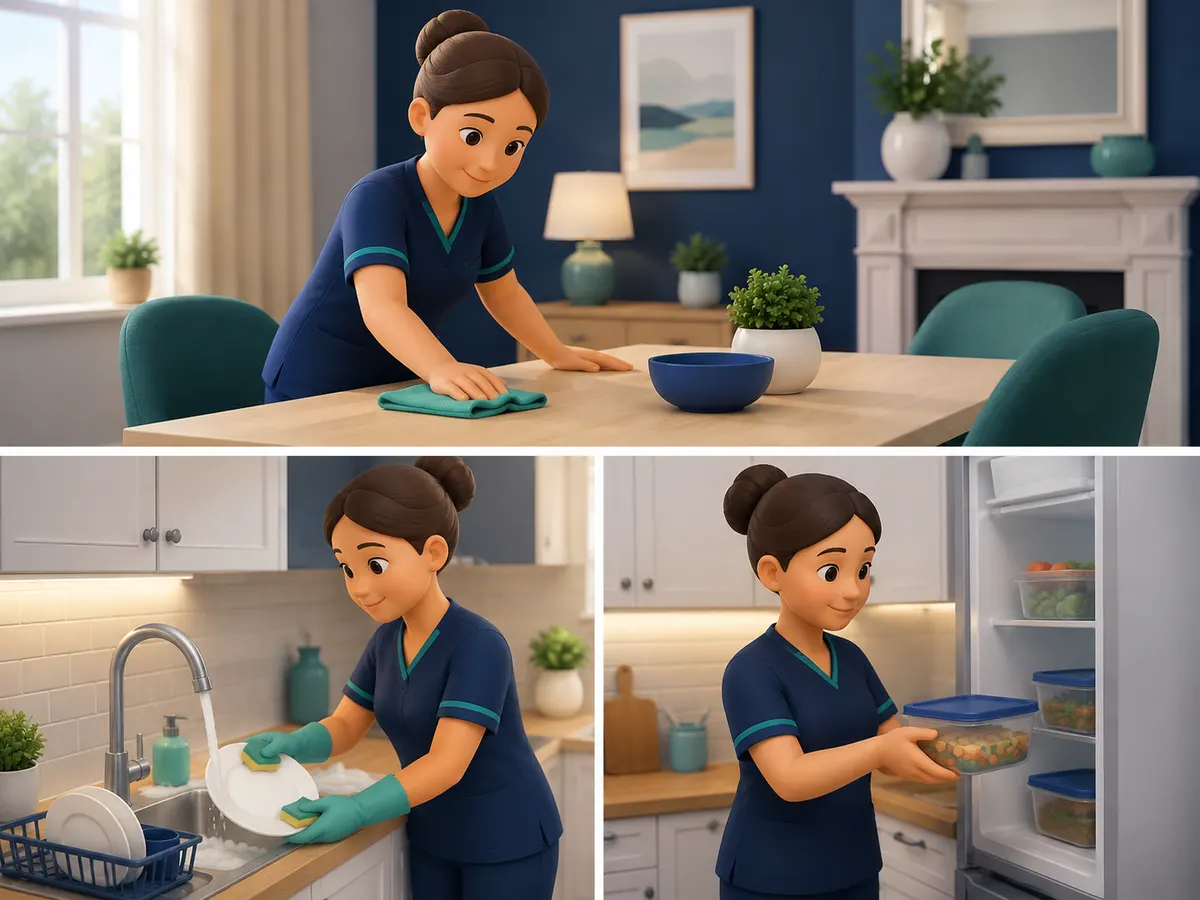
A carer's work in the kitchen rarely gets noticed, because the whole point is that it leaves no trace. Cleaning as the meal goes, rather than leaving everything to the end, stops a kitchen ever building up mess that could harbour bacteria or attract pests, and gloves go on for washing up and food handling alike, protecting both hands and food from cross-contamination.
Any leftovers go into the fridge in a lidded container, clearly labelled with the date, so nobody in the household is left guessing how long something has sat there. Raw and cooked food are always kept separate, on different shelves or in different containers, and a kitchen a carer has worked in should look exactly as it did before — only cleaner, never rearranged for someone else's convenience.
When the person being cared for has a cold, flu, or something more serious, the instinct to comfort them closely is exactly right — it simply needs a little extra protection built around it.
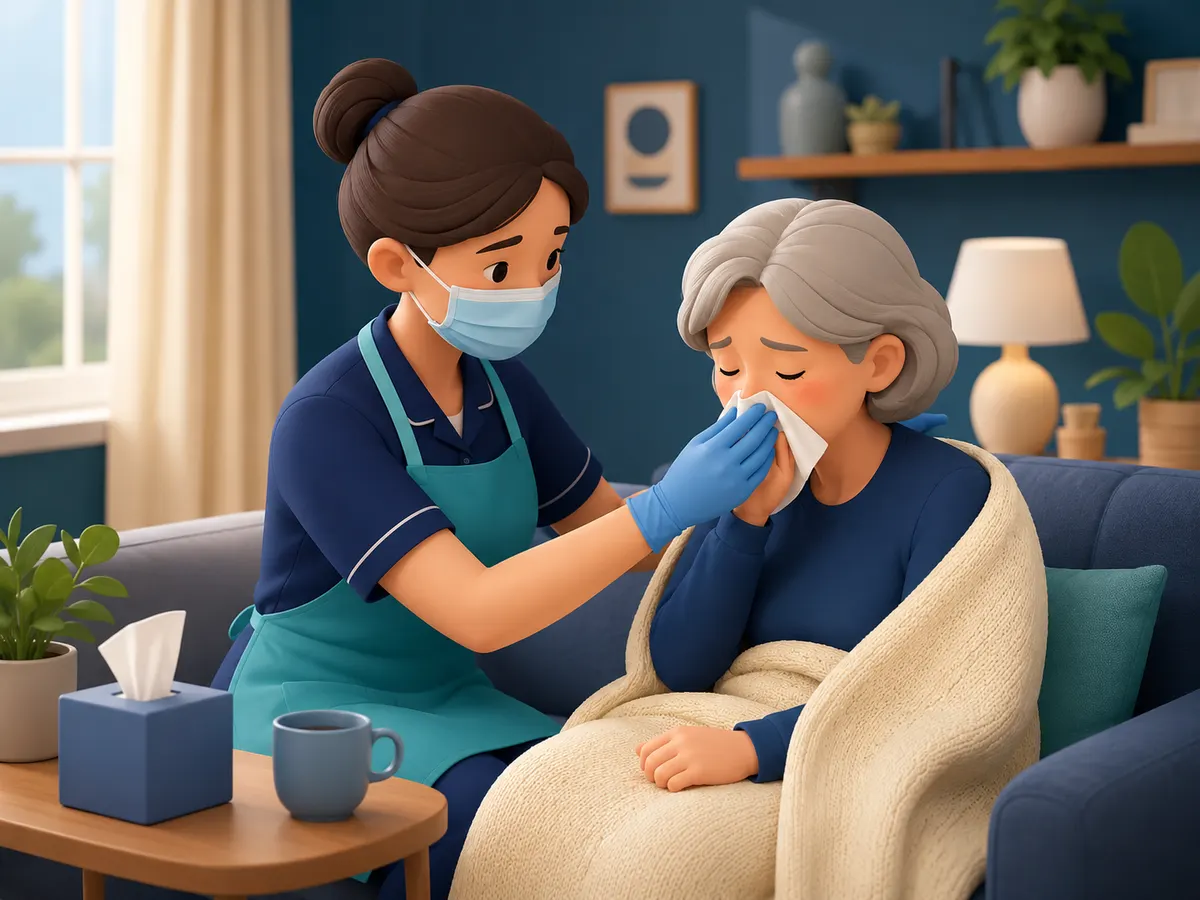
A mask worn during a visit where someone has cold or flu symptoms protects the carer without taking away the closeness of care — a steady hand and a tissue offered gently still say the same thing a bare hand would. It also protects every other person that carer will see afterwards, some of whom may be far more vulnerable to picking up an infection. This is never about fear of the person being cared for; it is about staying fit to look after the next one too.
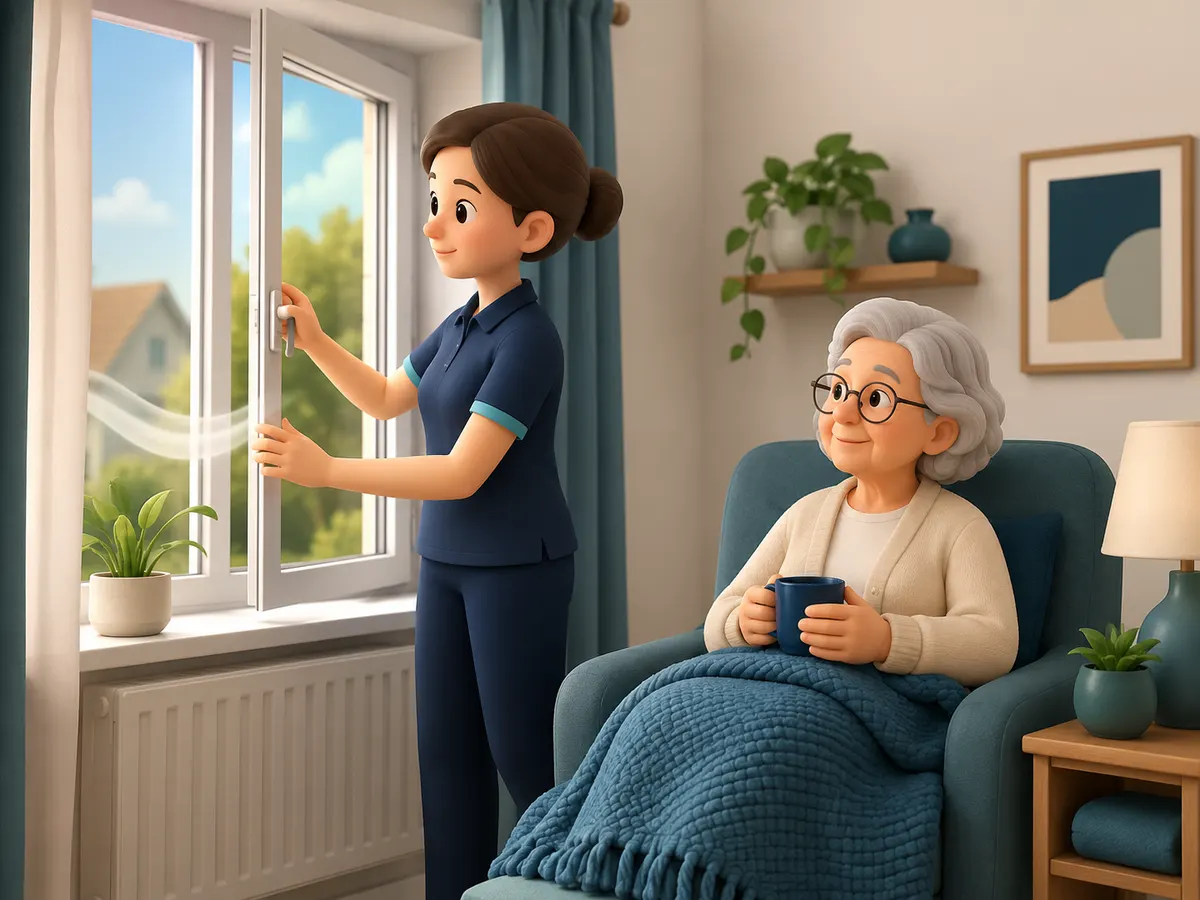
Not every hygiene measure involves a spray bottle or a pair of gloves. A few minutes of fresh air clears stale air and moisture from a room without any product or effort at all, and it costs nothing. It is done thoughtfully — a blanket and a warm drink close by, the window not left open so long the room turns cold — because comfort and hygiene are never in competition.
Used gloves, aprons, dressings and continence products all go straight into a lined bin at the point of use, never carried around a home or left waiting on a surface. Where a client's care plan or local guidance calls for waste of a particular kind to be bagged separately, that instruction is followed precisely rather than treated as optional. A bin that is emptied regularly, tied off properly, and never allowed to overflow is as much a part of infection prevention as any wash of the hands.
The work that saves the most lives is very often the work nobody thanks you for, because nobody ever saw it happen.
Carelo gives carers the app this handbook was written for: calls, GPS check-in, notes and medication at the door. From £59 a month for agencies; £30 a month for families who employ their own carers.
Book a demo