A direct payment is public money, and the council that pays it has a duty to check it is spent on the care in the plan. That means a review: usually once a year, sometimes sooner, always with a request for records. Families who keep the right things as they go find the review takes an afternoon. Families who do not can face weeks of reconstruction and, in the worst cases, a demand to repay. This page sets out what reviewers ask for and the simplest way to have it ready.
Under the Care Act 2014 a council must be satisfied that a direct payment is being used to meet the needs in the care and support plan, and that the person receiving it, or the nominated person managing it, is able to manage it. Reviews are how it checks. Most councils ask for records at the first review, a few months in, then yearly. Some run spot checks between reviews, and any complaint or safeguarding concern can trigger one.
A review is not an accusation. Reviewers are mostly looking for two things: that the money went where it should, and that the care is happening. The second is where most families are weakest, because nobody told them to keep a care record.
The bank statement proves a payment to a carer. It does not prove the carer worked the hours, or that the hours delivered the care in the plan. That proof lives in two places: the hours record and the care record. Most families have neither in a form a reviewer can use. The hours are on paper timesheets filled in at the end of the month; the care is in a WhatsApp group that says "all good today".
When a reviewer presses, the family has to reconstruct a year from memory. That is where reviews turn unpleasant, and where repayment demands come from. Not because the care did not happen, but because nobody can show it did.
Councils set their own retention rules in the direct payment agreement; many ask for records to be kept for the life of the payment plus a period after it ends. HMRC requires employer payroll records to be kept for three years after the tax year they relate to. The safe approach is to keep everything for as long as the payment runs and at least three years beyond, and to keep it somewhere that can be searched by date and by carer. A box of paper satisfies the rule and fails the review.
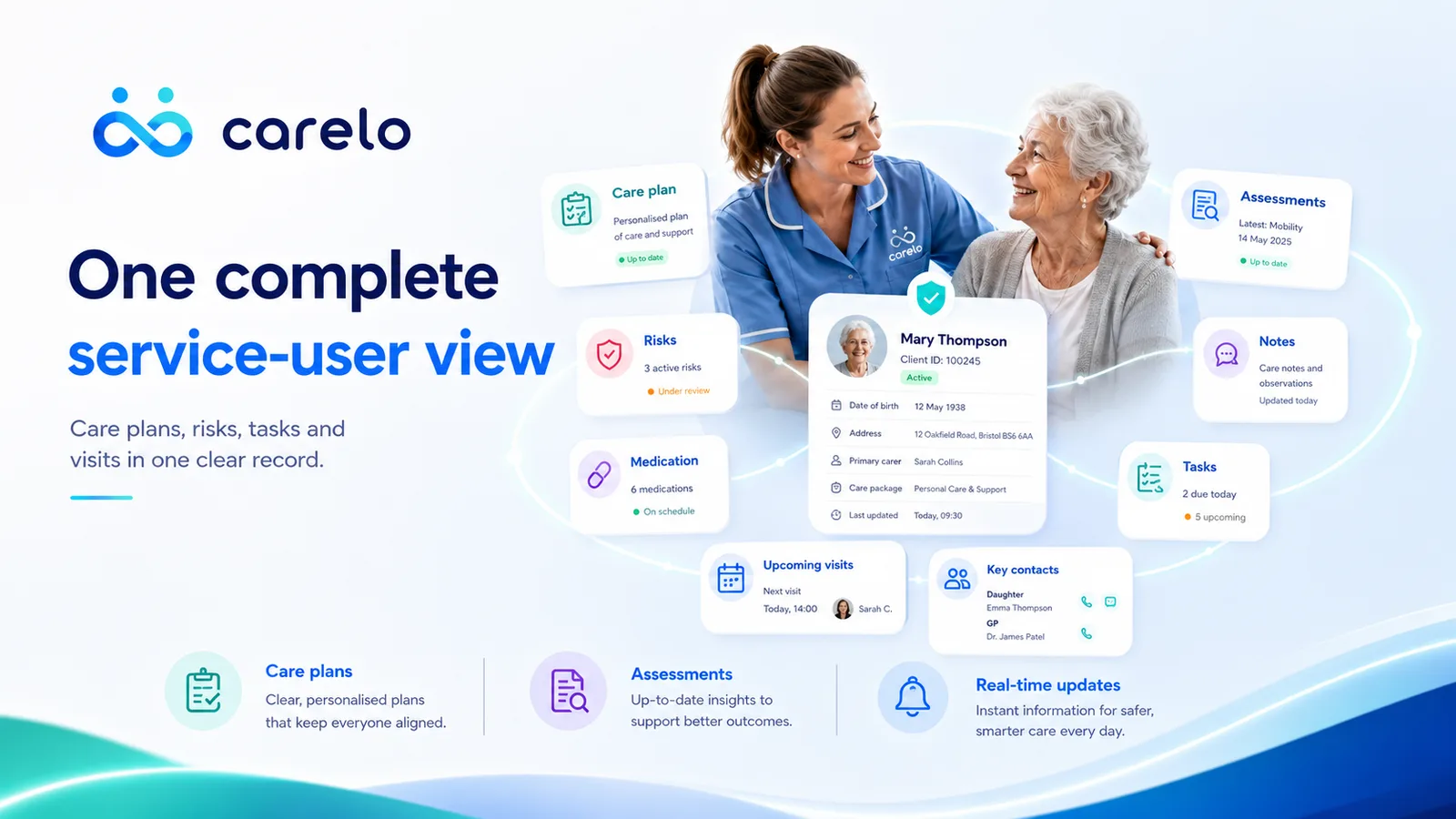
The families who find reviews easy share one habit: the record is made at the call, by the carer, on a system that keeps it. Hours come from check-ins at the door. Notes are written before the carer leaves. Medication is recorded dose by dose. When the review letter arrives, the hours by carer for any period, the visit record and the medication chart are printed or exported in a few minutes, and the payroll reports match them because they came from them.
Hours that prove themselves. Every call is checked in and out at your door, with the time and the location. Hours per carer for any period come from those stamps and export as timesheets for your payroll service, so the payslips the reviewer sees were built from the same hours they are now checking.
A visit record in the carer's words. Each call carries the notes the carer wrote before they checked out. The diary holds every note ever written about your loved one, searchable by date and by carer.
A medication chart like a provider's. Every medicine with its dose and times, every dose recorded as given, prompted, not required, refused, not given or other, with a reason where needed, with the carer's initials. Print the MAR chart for any month.
Employer dates in one place. DBS and right-to-work dates on each carer's record, with a warning when one is running out.
Export whenever you like. The record belongs to your household. Export it or print the parts a reviewer asks for. If you ever stop the plan, it is kept for 90 days to export, then deleted.
Carelo keeps the care record and the hours. Bank statements, payslips and insurance documents stay with your bank, your payroll service and your insurer.
Yes, where it finds money spent outside the plan or an unspent balance above the agreed contingency. Clear hours and care records are the best protection, because they show the money met the needs in the plan.
Only what the review asks for and only what you choose to share. The record belongs to your household. Most families find that a printed month of visits ends the conversation quickly.
It is accepted by many councils, but it proves only that two people agreed a number at the end of the month. A check-in stamped at the door on the day is much harder to question.
Many councils allow reasonable costs of managing the care, and software that keeps the required records is often accepted. Councils differ, so ask your direct payments team and show them this page.
Start now. The plan is set up within one working day and the record builds from the first call. For the past, gather bank statements and payslips first; reviewers understand that the care record starts when the system does.
£30 a month. Fourteen days free. Set up within one working day.
Start your free trial