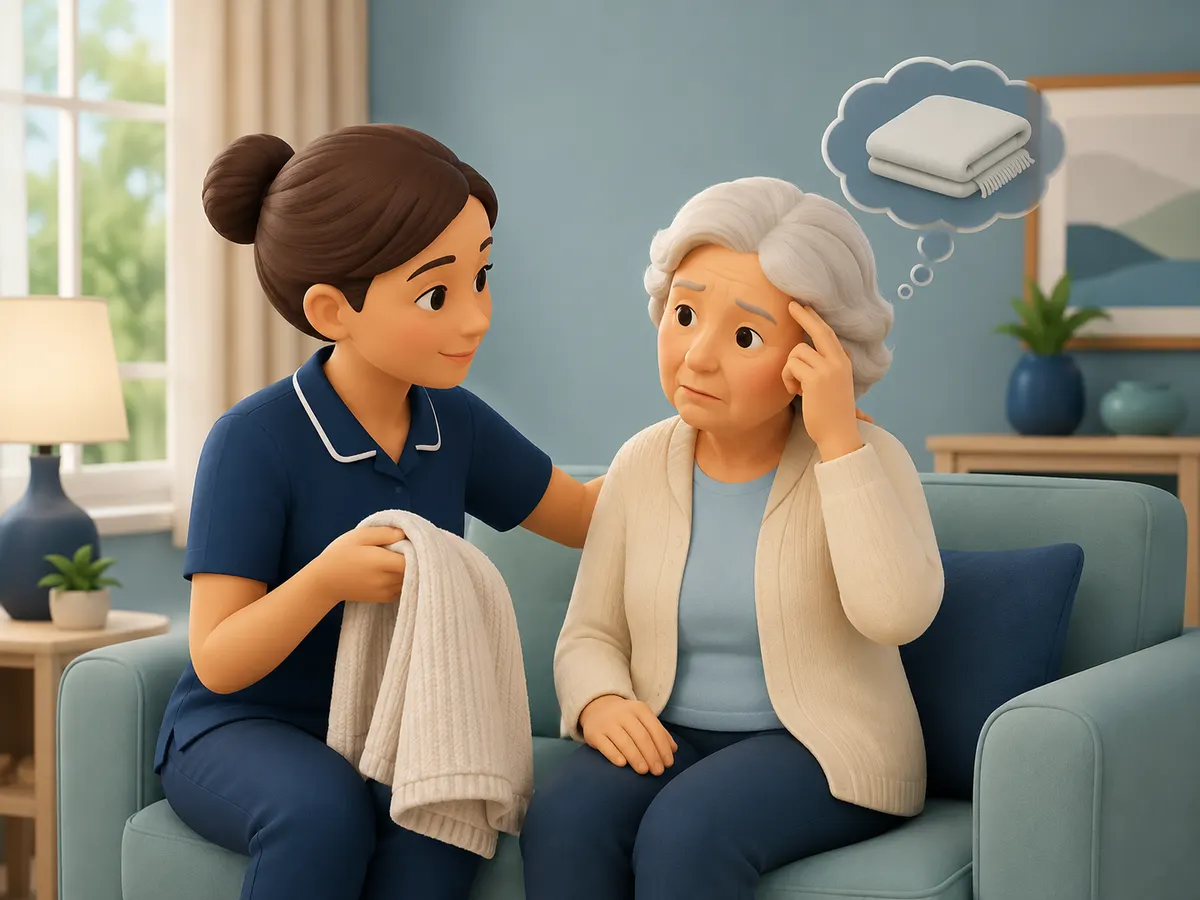
Meeting each person exactly where their world is today — with patience, warmth, and no correction.
Dementia is not a normal part of growing older, and it is not something that happens to everyone who lives a long life. It is caused by changes in the physical structure of the brain, which gradually affect memory, thinking, communication and the ability to manage daily life.
Alzheimer's disease is the most common cause of dementia, though it is not the only one — vascular dementia, Lewy body dementia and others each affect the brain in slightly different ways. Whatever the cause, the changes are real, physical, and not something the person could think or try their way out of, however much effort they put in.
Around 1 in 11 people over the age of 65 in the UK live with dementia, and that figure rises to around 1 in 3 among people over 85 — which means most home carers will support someone living with it at some point, often many people, across a career.
Calling dementia "just confusion" undersells what is actually happening and what it asks of the people supporting it. It is a serious, progressive condition, and treating it that seriously — rather than as a personality change or a nuisance to manage — is the starting point for everything else in this chapter.
It helps enormously to imagine, even briefly, what living with dementia might actually feel like. Short-term memory often goes first, so a conversation from five minutes ago can feel like it never happened, while memories from decades ago can feel close and vivid.
Time itself can shift — someone might genuinely believe it is decades earlier, that a late husband is waiting for them at home, or that they need to collect children from a school that closed years ago. This is not the person being difficult or losing their grip; it is their brain genuinely presenting them with a different, deeply real moment in time.
Faces can become hard to place too, even much-loved ones, which is frightening for the person experiencing it long before it is upsetting for anyone watching. Approaching every one of these moments with patience, rather than surprise or correction, is what makes a carer trusted.
The single most useful skill in dementia care is validation — meeting someone in the reality they are experiencing, rather than pulling them back into a reality they no longer recognise. If someone is searching anxiously for a parent who died years ago, correcting them with the facts rarely brings comfort; it usually only brings fresh grief, delivered as if for the first time.
A far kinder response is to follow the feeling underneath the words. Someone searching for a person, an item, or a place is usually expressing worry, or a need for comfort, or a wish to feel useful — and responding to that feeling, gently and warmly, nearly always works better than winning an argument about facts.
Alongside validation, a calm tone, short simple sentences, and getting down to eye level all make an enormous difference. Rushing, raising your voice, or speaking about someone in the room as if they aren't there are among the fastest ways to cause distress, however unintentional.
You don't have to agree with someone's reality to be gentle inside it.
When someone living with dementia becomes overwhelmed or distressed, reasoning with them in the moment rarely helps, because a distressed body needs to settle before a confused mind can follow along. This is where a technique called co-regulation — literally calming down together — becomes one of the most valuable tools a carer has.
Sitting close, breathing slowly and visibly, and keeping words few and soft gives an overwhelmed person something steady to match, without asking them to think or respond to instructions they may not be able to process in that moment. It looks like doing very little, but it is genuinely active, skilled support.

Wellbeing for someone living with dementia rarely comes from big occasions — it comes from small, shared, unhurried moments where the person is doing something, choosing something, being followed rather than led. Arranging flowers, sorting buttons, folding laundry together: the activity itself matters less than the experience of deciding.
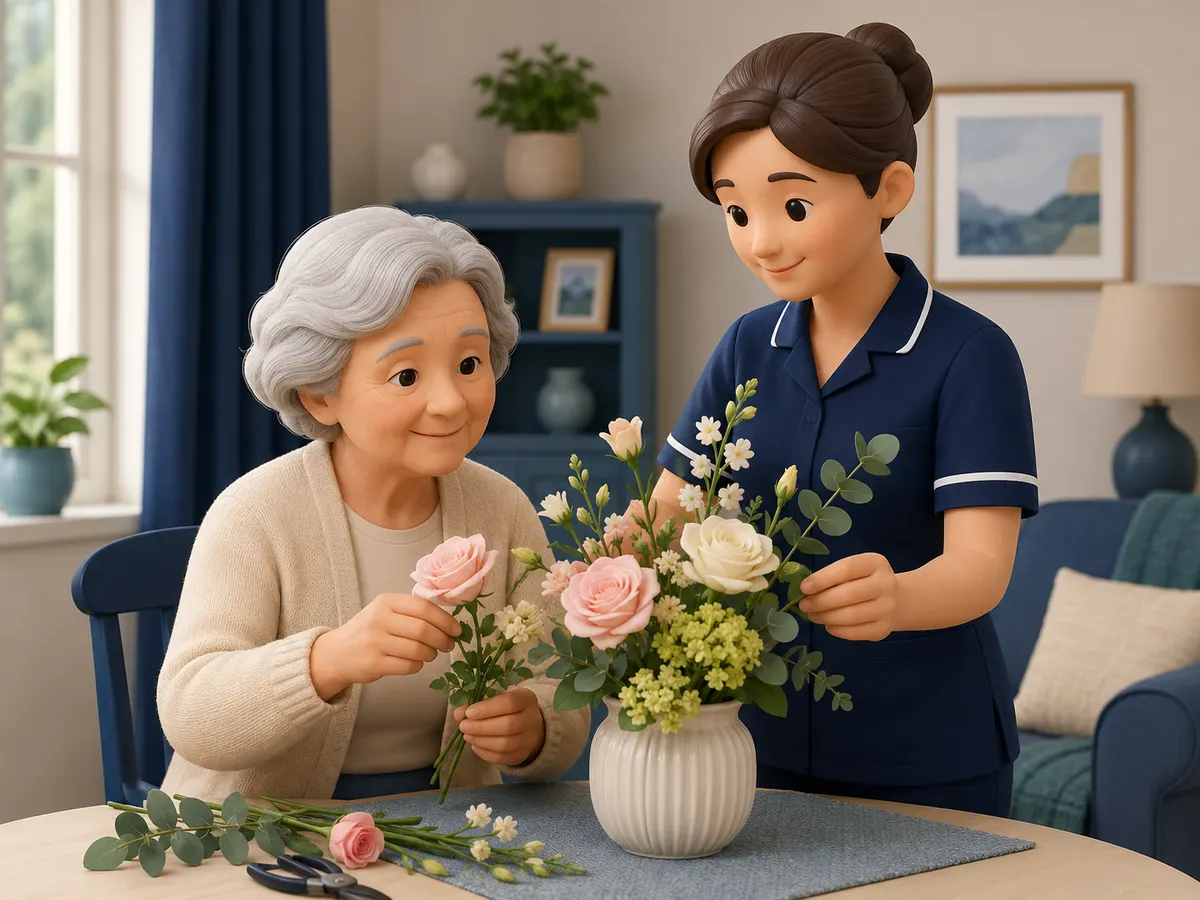
Photographs and old objects can open doors that direct conversation cannot. Looking through a photograph together is not a memory test with a right answer — it is an invitation to share whatever comes back, however it comes, and to enjoy the story exactly as it is told, without gently correcting the details.

A familiar routine is genuinely stabilising for someone living with dementia — the same chair, the same order of tasks, the same gentle greeting at the door, all give a sense of safety that words alone cannot provide. Where possible, that familiarity is protected and not disrupted for the sake of convenience.
Part of a carer's role is also simply noticing, without judging, when something in a person's home or routine has changed — and recording it plainly rather than acting alone. Clutter building up, a room left unheated, or belongings piling up over time can all be a sign that daily life has become harder to manage, and what a carer notices, recorded factually, helps the office arrange the right kind of support.

Not every visit needs to be busy or full of activity, either. Sometimes the kindest thing a carer can offer is calm, patient company while a difficult feeling passes on its own, with no pressure to finish a task or explain a mood.

It is worth saying plainly: the person is still there. Dementia changes memory and communication, but it very rarely erases someone's sense of humour, their warmth, their preferences, or their essential character — all of which deserve to be recognised and enjoyed, not just managed around.
Families living alongside dementia often carry a heavy, ongoing worry, and a carer's honest observations — shared kindly, even when a little awkward to raise — matter enormously to them. A cold room, a change in mood, or something that doesn't quite fit anywhere else on a form is always worth mentioning plainly and promptly, rather than staying quiet to avoid an uncomfortable moment.

Supporting a family well often means simply being a reliable, honest witness to how someone is really doing, week to week — which, alongside warm, patient, person-led care, is exactly what makes a real difference to the whole household living with dementia, not just the person diagnosed with it.
The awkward conversation is almost always easier than the one that comes after staying silent.
Carelo gives carers the app this handbook was written for: calls, GPS check-in, notes and medication at the door. From £59 a month for agencies; £30 a month for families who employ their own carers.
Book a demo